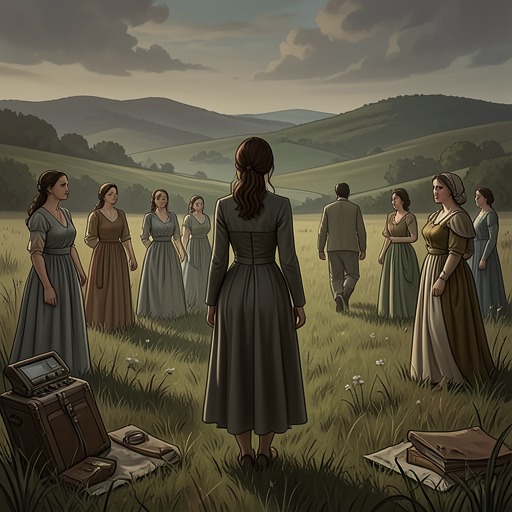
Event 1
Simone de Beauvoir and Jean-Paul Sartre meet

The meeting of [Simone de Beauvoir](entity:character-recall-character-simone-de-beauvoir-b0ac2b46e30f) and [Jean-Paul Sartre](entity:character-recall-character-jean-paul-sartre-5c89dd06a0dc) in 1929 began as a collaboration between two philosophy students preparing for [France](entity:location-recall-location-france-f5cafc8a8ad4)’s fiercely competitive agrégation. It became an intellectual partnership whose ideal of freedom and equality coexisted with an enduring imbalance—a tension that helped illuminate the questions Beauvoir would later pursue in The Second Sex.
## The Examination and Their First Collaboration
Beauvoir was studying at the [Sorbonne](entity:organization-recall-organization-sorbonne-c2c163f1a0a3) and Sartre at the École Normale Supérieure when they met as university students. They prepared for the agrégation together, an examination that could qualify its successful candidates for secure teaching posts and give Beauvoir a way to leave her family. Their first study date was already a meeting of intellectual equals in practice: Beauvoir explained Leibniz to Sartre.
The results made their partnership’s first asymmetry visible. Sartre placed first; Beauvoir placed second, becoming the ninth woman ever to pass the examination. The account presents this order—first and second—as a lasting feature of their shared creation myth. Their collaboration began in mutual intellectual recognition, but its public measure was an achievement ranked in a hierarchy with Sartre ahead.
## A Partnership of Essential and Contingent Loves
Their relationship was built around an ideal of love without domination. Sartre proposed marriage after Beauvoir’s father confronted them about living together more or less openly; Beauvoir rejected the proposal. Instead, the two described their bond as an essential love that could coexist with other, contingent relationships, freely pursued and honestly acknowledged.
The ideal depended on frankness and radical freedom, but its consequences were not equal. Beauvoir and Sartre could treat their own partnership as a chosen experiment while other people involved in their relationships bore its costs. Beauvoir later reflected that they had failed to reckon with the reality of the pain they caused as well as suffered. Their meeting therefore initiated not only a model of intellectual and romantic independence, but also a relationship whose claims to equality did not erase the unequal burden of free love for a woman and a man.
## From Intellectual Partnership to The Second Sex
Sartre’s existentialist account of the opposition between a sovereign subject and an objectified Other gave Beauvoir a conceptual framework for The Second Sex. Her own experience as a woman—and as Sartre’s partner—also impelled her to examine how women are defined in relation to men. Sartre had praised her as possessing a man’s intelligence, a compliment Beauvoir came to recognize as carrying a patronizing assumption: that intelligence and humanity were measured by a male norm.
In The Second Sex, Beauvoir formulated the consequence of that norm: humanity is treated as male, while woman is defined not in herself but in relation to man. The intellectual closeness suggested by the pair’s image of themselves as a single unit could not make their positions identical. Their meeting thus became significant beyond their private partnership: it joined the philosophical vocabulary through which Beauvoir could analyze otherness to the lived experience that made that analysis urgent.
## Significance
The encounter’s defining contrast is between collaboration and hierarchy. Beauvoir could teach Sartre during their preparation, yet he finished ahead of her in the examination; they imagined a love free of domination, yet Beauvoir later recognized that its burdens fell differently on women and men. These tensions do not cancel the partnership’s intellectual importance. They help explain how a relationship conceived as a bond between equals could also expose the limits of equality within a male-centered world.
Event 2
Simone de Beauvoir passes the agrégation in philosophy

[Simone de Beauvoir passes the agrégation in philosophy](entity:event-recall-event-simone-de-beauvoir-pass-dba54aa3c820) in 1929, a demanding examination that confirmed her exceptional academic ability and helped free her from dependence on her family. She placed second to [Jean-Paul Sartre](entity:character-recall-character-jean-paul-sartre-5c89dd06a0dc), a result that became both a professional distinction and the first ordering of the couple’s shared creation myth.
## Preparation and Stakes
As university students, Beauvoir and Sartre prepared together for [France](entity:location-recall-location-france-f5cafc8a8ad4)’s intensely competitive postgraduate examination in philosophy. Beauvoir was studying at the [Sorbonne](entity:organization-recall-organization-sorbonne-c2c163f1a0a3), while Sartre attended the Ecole Normale Supérieure. Their preparation was collaborative: on their first study date, Beauvoir explained Leibniz to Sartre, a small but telling reversal of any assumption that intellectual authority belonged automatically to him.
Passing carried practical as well as intellectual stakes. Success qualified Beauvoir for a lifetime teaching position at a lycée and offered a way to establish herself apart from her family. She had already shown singular brilliance to her teachers and to herself, sustained by an insatiable curiosity and an unusual capacity for synthetic reading and analysis. The examination tested that ability within an institution whose prestige and competitive rigor made the result consequential.
## The Result
When the results were posted, Sartre placed first and Beauvoir second. She was the ninth woman ever to pass the agrégation in philosophy. The achievement was therefore remarkable in its own right, but its meaning in the account is not limited to rank: Beauvoir entered a profession and an examination culture in which women had only rarely succeeded at this level.
The result joined personal achievement to a durable symbolic hierarchy. In the couple’s later creation myth, the order was “[Adam](entity:character-recall-character-adam-7e6d3c5ddcc8) before [Eve](entity:character-recall-character-eve-09bb1968b5f4)”: Sartre’s first place and Beauvoir’s second became an emblematic precedence that accompanied their partnership. The contrast is sharpened by the preparation itself, in which Beauvoir could be the one explaining a philosopher to Sartre, even as the formal ranking placed him ahead.
## Consequences and Significance
The examination gave Beauvoir a route to professional independence. She taught at lycées in [Marseille](entity:location-recall-location-674701579776) and Rouen from 1931 to 1937, and in [Paris](entity:location-recall-location-paris-c02b439ce220) from 1938 to 1943. Her success thus preceded a sustained teaching career and formed part of the foundation for her later prominence as a writer and thinker.
The event also supplied an early instance of the tension between Beauvoir’s intellectual equality with Sartre and the symbolic precedence assigned to him. Their ideal was a love without domination, yet the examination’s ranking entered the story they told about themselves as a couple. Its significance lies in both registers: Beauvoir’s rare and hard-won academic distinction, and the lasting narrative through which a difference of one place could stand for a broader question of authority between a woman and a man.
Event 3
French women’s enfranchisement

[French women’s enfranchisement](entity:event-recall-event-french-women-s-enfranch-69508e6f9acd) is a landmark in the changing political position of women, but [Simone de Beauvoir](entity:character-recall-character-simone-de-beauvoir-b0ac2b46e30f) places it within a wider argument: a change in formal rights does not, by itself, undo the social arrangements that have made women subordinate. Her account links women’s political status to the history of male power and measures emancipation not only by legal recognition but by the concrete freedom to act, work, and shape a future.
## Historical and Political Context
In the introduction to The Second Sex, Beauvoir’s contemporary political setting makes the distance between formal citizenship and full autonomy unmistakable. She notes that French women had been enfranchised for only a year, while legal birth control remained unavailable until 1967 and legal abortion until 1975. The sequence matters: the vote represented a major gain, yet women’s control over reproduction and their wider independence remained constrained. Beauvoir also sets the issue against the scarcity of women in positions of public authority, observing that the world had not yet seen an elected female head of state.
Her historical account refuses to treat women’s political position as the result of an unchanging feminine nature. Biological and social characteristics, she argues, must be understood in relation to a situation rather than as immutable essences. The political question is therefore not whether women possess some timeless defining quality, but how institutions and customs have assigned them a subordinate place and whether the conditions of that assignment can change.
## A History Written by Men
Beauvoir’s survey of women’s history leads to the conclusion that it has largely been written and governed by men. Men created values, customs, and religions, and held the power to determine women’s status according to their own projects and interests rather than women’s. A handful of women protested, and women sometimes acted collectively, but their efforts gained leverage, she argues, when men were willing to yield to pressure. Political gains thus appear not as the automatic unfolding of progress but as changes within a field whose authority remained predominantly masculine.
She traces the changing terms of women’s subordination across different institutions. Male religious and philosophical traditions represented women’s lower status as ordained or justified; private-property society shaped the married woman’s wardship; and technical and economic changes helped alter women’s opportunities. Beauvoir also connects birth control to a partial release from the burdens of motherhood, while emphasizing that such changes arose within broader social developments rather than from a wholly autonomous feminist movement. This historical perspective places enfranchisement among consequential reforms without making it the end of the story.
## Citizenship and Material Conditions
Beauvoir’s account distinguishes formal political standing from the material conditions that determine whether a woman can exercise freedom in daily life. She describes the French peasant woman, for example, as someone who may share her husband’s responsibilities and property and may even hold substantial authority at home, yet bear an exceptionally heavy workload. Her day can encompass care of animals, field labor, meal preparation, household management, pregnancy, and child care. The work begins early and continues into the evening; she has little leisure, and the physical toll leaves her health neglected. In this portrait, social importance within a household does not erase an unequal distribution of labor or create independent time and opportunity.
The same distinction shapes Beauvoir’s discussion of women’s paid work and marriage. Work can make it possible for a woman to emancipate herself from marriage, but economic inequality and the social prestige attached to a husband’s support continue to make dependence attractive. Many women, she writes, hope to reconcile family life with a profession without being driven into exhausting compromises. Enfranchisement is therefore one part of a larger question: whether women can secure the practical means to act as independent subjects rather than merely possess a right in the abstract.
## Freedom, Time, and the Unfinished Change
Beauvoir’s existentialist framework clarifies why political rights matter without treating them as sufficient. Every person, she argues, is an autonomous freedom whose existence is realized through projects and movement toward an open future. Women’s particular predicament is that they must pursue this freedom in a world that positions them as the Other and tries to confine them to immanence. The issue is not simply whether the law recognizes a woman, but whether her circumstances allow her to pursue projects on her own terms.
That conflict also takes the form of unequal time. In Beauvoir’s account of childhood and puberty, girls’ futures can be organized around waiting for adulthood and a man, while the daily repetition of domestic labor offers no comparable sense of advance. Her image of housework is not a completed victory but a task that begins again: dishes, dust, and mending recur, and the housewife can feel she is perpetuating the present rather than creating something new. Against this closed cycle, professional and political activity point toward a future made through action. French women’s enfranchisement belongs to that opening, but Beauvoir’s wider argument insists that its promise depends on changing the social conditions that restrict women’s freedom.
Event 4
Legalization of birth control in France

The legalization of birth control in [France](entity:location-recall-location-france-f5cafc8a8ad4) is presented as a long-delayed change in women’s legal and practical circumstances. The Second Sex places the date at 1967, eighteen years after its French publication, and connects control over reproduction to the broader question of whether women can exercise freedom through projects of their own. In the book’s account, legal change matters, but it does not by itself undo the unequal distribution of care, work, and social expectation.
## Historical Delay and the Book’s Context
In the introduction, the legalization of birth control appears within a compressed measure of the distance between the book’s [1949](entity:time-recall-time-1949-6aa51a77d044) publication and the conditions under which it was written. [Simone de Beauvoir](entity:character-recall-character-simone-de-beauvoir-b0ac2b46e30f) was thirty-eight and had been enfranchised for only a year; French women would have to wait until 1967 for legal birth control and until 1975 for legal abortion. The sequence situates reproductive control among rights that remained unavailable even as women’s political and social opportunities began to change.
The introduction also warns against treating subsequent progress as complete. Opportunities for women had expanded significantly by 2010, but the persistence of misogyny and sexual abuse meant that the distance from 1949 could not be read as a simple or final victory. Birth-control legalization belongs to this history of change: important to women’s autonomy, but not a single measure of whether they enjoy equal freedom.
## Reproductive Constraint and Freedom
The book’s existentialist framework explains why reproductive control has significance beyond health or private choice. Every subject, it argues, realizes freedom through projects and an open future. Women, however, are treated as autonomous beings in a world that pressures them to assume the position of the Other and confines them to immanence. Against that account, control over reproduction bears on whether a woman can shape her own life rather than have its possibilities narrowed by a socially imposed destiny.
This argument does not reduce women’s situation to physiology. The book explicitly rejects the premise that a biological, psychological, or economic destiny determines women’s lives, and proposes to examine those dimensions alongside the historical making of femininity and women’s social position. Birth control is relevant within this larger inquiry because pregnancy and motherhood are lived under particular legal and social conditions, not as a self-explanatory fate.
## Work, Care, and the Unequal Use of Time
The discussion of labor shows why reproductive control alone cannot secure independence. The book describes domestic work as recurring labor that reproduces the present without producing a lasting new result. Its account of the French peasant woman makes the distribution of that work concrete: she may tend animals, work in fields and gardens, prepare meals, maintain the household, and care for children, while also bearing successive pregnancies. The working day begins at dawn and continues through field work and household tasks into the evening; the description emphasizes both the breadth of her labor and the time it leaves for little else.
The book also describes the consequences of that workload. Rural women often lack time to care for their health, including during pregnancy, and have little of the leisure their husbands may find in social visits, cafés, games, hunting, or fishing. Legal birth control could affect one source of this burden, but the evidence does not suggest that it automatically redistributes childcare or housework. Those responsibilities remain, in the book’s account, almost exclusively women’s, making it harder for them to reconcile family life with paid work.
## Legal Rights and the Conditions of Independence
The argument distinguishes formal possibility from practical freedom. Women’s work may open a route away from dependence on marriage, yet many face pressure to regard marriage as their principal path to security and social standing. The book says women hope to combine professional and family life without being forced into exhausting efforts to do both. The legal availability of birth control is significant in this setting because reproductive decisions shape the conditions under which such a combination can be attempted; it does not, by itself, remove economic inequality or the expectations that place domestic responsibility on women.
The broader historical account likewise resists a simple story of emancipation. The book argues that women’s history has been written largely by men, and that changes in women’s position have depended on political, economic, religious, and technical circumstances. It presents birth control as part of a reduction in family size that partially freed women from the servitude of motherhood, while insisting that this change occurred within a continuing struggle over women’s independence. The 1967 legalization is therefore best understood as a consequential change in the conditions of life, not as the end of that struggle.
Event 5
Legalization of abortion in France

The legalization of abortion in [France](entity:location-recall-location-france-f5cafc8a8ad4) appears in The Second Sex chiefly as an absent right: abortion was still prohibited, and women bore the consequences of that prohibition in their health, family lives, and prospects for independence. The book treats reproductive control not as an isolated legal question but as part of the material conditions that determine whether women can shape their own futures.
## Legal and social context
In its account of mid-twentieth-century France, The Second Sex notes that women had gained the vote only recently, while legal birth control would not be available until 1967 and legal abortion until 1975. The prohibition therefore belonged to a wider landscape in which women’s formal political inclusion coexisted with limits on control over reproduction. The book’s historical perspective resists treating the law as a neutral or timeless rule: it examines how institutions and customs distribute authority and constrain women’s choices.
That approach follows the book’s broader argument that women’s subordinate position has been made and maintained through laws, religious doctrines, and social arrangements. Male authorities, it argues, have repeatedly presented women’s subordination as natural or divinely sanctioned, while the interests behind those explanations were often tied to family structures and inheritance. Abortion law belongs within this history because it governs a condition that carries particularly heavy consequences for women.
## Reproductive constraint and material consequences
The book connects the prohibition to women’s unequal burden of pregnancy and care. It observes that birth control was not universally available or reliably used, and that, with abortion officially forbidden, some women risked their health through unregulated procedures while others were overwhelmed by repeated pregnancies. Childcare and housework, it adds, remained largely women’s responsibility, making it harder for them to combine family life with paid work.
This account makes the law consequential beyond the immediate question of whether abortion is permitted. The prospect of pregnancy, the limited availability of birth control, and the criminal prohibition together narrowed women’s practical ability to plan their lives. The book’s analysis of women’s freedom therefore turns on concrete opportunities and constraints, not on an abstract claim that women and men are alike as human beings.
## Freedom, work, and the open future
The Second Sex frames women’s situation through a contrast between freedom pursued through projects and a life restricted to repetition. It argues that women, like all human beings, are autonomous freedoms, yet are often forced to assume the position of the Other and confined to immanence. Reproductive burdens and domestic labor are among the conditions that can restrict women’s ability to pursue work, independence, and a future of their own.
The book also describes the uneven costs of employment: work could offer a route away from dependence on marriage, but it did not automatically relieve women of domestic labor or the burden of pregnancy and childcare. What women sought, in its account, was a way to reconcile family and professional life without exhausting effort. The continuing illegality of abortion in the period described sharpened that conflict by leaving reproductive decisions subject to legal restriction and uneven access to birth control.
## Historical significance
The book’s history treats women’s status as a product of changing social relations rather than an expression of an immutable feminine nature. It argues that men wrote women’s history and controlled decisions affecting women’s condition, while changes in family size through birth control partially loosened the demands of motherhood. Against that background, the later legalization of abortion in France marks a change in the legal conditions surrounding reproduction, though the evidence cited here does not describe the campaign, legislation, or implementation of that change.
The significance of legalization, in this account, is best understood through the earlier circumstances it contrasts with: when abortion was forbidden, women could face unwanted pregnancies, dangerous unregulated procedures, and intensified conflicts between care work and paid employment. The wider argument is that equality requires more than abstract recognition; it depends on whether women have real freedom to direct their lives.
Event 6
Industrial Revolution
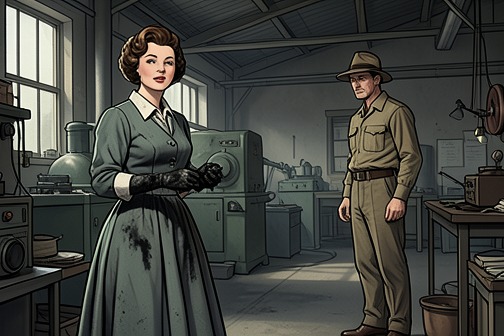
The [Industrial Revolution](entity:event-recall-event-industrial-revolution-9bf79fcd4c89) marks a decisive change in the economic history of women: industrial production draws them beyond the household and makes their labor necessary on a scale that older social arrangements had not required. In [Simone de Beauvoir](entity:character-recall-character-simone-de-beauvoir-b0ac2b46e30f)’s account, machinery can diminish the practical importance of differences in physical strength, opening a path from domestic confinement toward productive work and economic autonomy. Yet employment is not emancipation by itself. Women enter industry under unequal conditions, while unpaid household labor and child care remain largely theirs; the transformation creates new possibilities without abolishing the structures that restrict them.
## Background: Labor, property, and women’s subordination
De Beauvoir places industrialization against a longer historical shift in the organization of work. In the account of historical materialism she discusses, early agricultural tools allowed women to contribute substantially to production at home, alongside men’s hunting and fishing. The introduction of metal tools and the plow expanded cultivation and intensified labor. As men turned to other men’s labor, reduced them to slavery, and became owners of land and property, women too came to be treated as part of the patrimony. The shift from maternal to paternal inheritance helped establish the patriarchal family and diminished the economic importance of domestic work relative to men’s productive activity.
That account links women’s social oppression to economic dependence: in the property-owning household, a husband could claim authority while enjoying sexual freedoms unavailable to his wife. De Beauvoir describes women’s infidelity, where customs made it possible, as one defense against domestic subjection, but not a route to equality. She presents women’s entry into production on a large social scale as essential to emancipation, while also criticizing any explanation that treats economic change alone as a complete account of women’s condition.
## Industrialization opens the factory door
The immediate change comes from the conjunction of technology and labor demand. Machines cancel out the physical-force difference between women and men in many kinds of work, while rapid industrial expansion creates a need for more labor than male workers alone can supply. Women’s collaboration becomes necessary to production. De Beauvoir calls this the great nineteenth-century revolution in women’s situation: not simply a change in arguments about women, but a material transformation that brings them into the labor force.
The possibility of equality depends, in this account, on the demands of particular work rather than on abstract claims about women’s capacities. When the minimum strength required by a machine does not exceed women’s capacities, women can become men’s equals at work; modern machinery can place enormous energy under the control of a switch. Industrial labor therefore unsettles the assumption that physical difference dictates a fixed social destiny. But the effect is conditional: technology can remove one practical obstacle, while the organization and rewards of work remain shaped by unequal power.
## Work as a difficult and unequal conquest
Industrial employment offered an alternative to poorly paid work done at home, but women entered factories from a position of severe economic disadvantage. In early nineteenth-century [France](entity:location-recall-location-france-f5cafc8a8ad4), more than 200,000 women workers reportedly earned less than fifty centimes a day. As factories took over activities such as lace making and millinery, women’s work outside them increasingly meant needlework, laundering, and housework—labor described as exhausting and paid at famine wages. Factory employment expanded in cotton, wool, and silk, particularly in spinning and weaving, but employers often preferred women because they could obtain more work for less pay.
The same employment that helped women gain a measure of human dignity exposed them to harsh conditions. In Lyon, women in trimmings workshops had to work in a kind of harness, using both hands and feet. In 1831, silk workers could work from three in the morning until eleven at night—seventeen hours—in unhealthy workshops without sunlight. De Beauvoir records that many young women developed consumption before completing their apprenticeships. These circumstances show the double character of industrialization in her account: it opens a route out of economic dependence, yet the labor market exploits women’s vulnerability and does not distribute the benefits of production equally.
The scale of women’s employment grew beyond the first factory expansion. In France, 900,000 women worked at home in 1900, making clothing, leather goods, wreaths, purses, beadwork, and souvenirs, though that number later fell. By 1906, 42 percent of French women of working age were employed in farming, industry, commerce, banking, insurance, offices, and the professions. The labor crisis and world war of 1914–18 spread the movement more widely, drawing lower- and middle-class women as well as working-class women into employment and professional life. These figures register a historical shift in women’s participation, not proof that work had already brought social equality.
## Emancipation, reproduction, and the work that remains
For De Beauvoir, women’s productive work cannot be considered separately from reproduction. Across history, women’s fertility was generally not regulated, and repeated pregnancies could make life an uninterrupted sequence of births. The burdens of maternity vary with social arrangements: numerous imposed pregnancies and the absence of help with feeding and raising children make them overwhelming; reproductive choice, support during pregnancy, and child care can make those burdens lighter and more compatible with paid work. Industrial employment changes women’s access to production, but does not automatically change who bears the costs of reproduction and care.
The same imbalance persists in the present conditions she describes. Birth control is neither universal nor rigorously practiced, abortion is officially forbidden, and women may risk their health through unregulated abortions or face repeated pregnancies. Housekeeping and child care remain almost exclusively women’s responsibility; in France, a man may regard participation in chores traditionally assigned to women as demeaning. The result is that women have greater difficulty reconciling family and working life, and their existence becomes more burdensome where society expects them to sustain both.
The contrast is especially clear in the life of peasant women, who form the majority of French women engaged in productive labor in the account. Their work includes tending the garden and animals, cleaning the cowshed, spreading manure, sowing, plowing, harvesting, and sometimes loading wagons. They also prepare meals, manage the household, care for children, and shoulder pregnancy. A day may begin at dawn with feeding animals and serving the men’s first meal, continue through fieldwork and repeated household tasks, and end with mending, cleaning, or husking corn. Even during pregnancy, they may have no time to care for their health. Meanwhile, men can go to town or to the café on Sundays and fair days, meet friends, play cards, hunt, or fish, while women remain on the farm. Industrial transformation thus coexists with forms of work in which women’s productive contribution is joined to domestic labor rather than substituted for it.
## Historical force and its limits
The nineteenth-century entry of women into industrial production also changes the political stakes of the debate. As women’s demands acquire an economic basis, opponents become more aggressive. The bourgeoisie, anxious to preserve the family as a guarantee of private property, insists more fiercely that women belong in the home just as their emancipation becomes a practical threat. Working-class men, too, seek to impede women’s liberation when women’s lower wages make them competitors in the labor market. Antifeminist arguments accordingly add biology, experimental psychology, and other claims to the older appeals to religion and philosophy; the offer of separate but equal status masks rather than removes discrimination.
Marx and Engels recognize the significance of women’s productive work and associate women’s liberation with that of the proletariat. Engels argues that emancipation requires women’s participation in large-scale production and that modern industry has made such participation possible. De Beauvoir values this account’s attention to material conditions but rejects the idea that industrial development or the abolition of the family can, by itself, resolve women’s oppression. Women cannot simply be assimilated to workers: reproductive life matters both to social organization and to individual experience, and attachment to the state does not guarantee freedom from male authority. Industrialization is therefore a necessary historical opening in her analysis, but equality also depends on changing the social arrangements that preserve economic resistance, domestic subordination, and the unequal burden of care.
Event 7
The rise of patriarchal private-property society

[The rise of patriarchal private-property society](entity:event-recall-event-the-rise-of-patriarchal-d7634c571663) marks the decisive reversal in [Simone de Beauvoir](entity:character-recall-character-simone-de-beauvoir-b0ac2b46e30f)’s account of women’s history: as agriculture expanded and property became inheritable, women’s productive and domestic roles were reorganized under male authority. The transition did not follow automatically from biology or technology. It depended on social choices about ownership, labor, and domination, and its consequences persisted in the unequal burdens of work, reproduction, and access to a future of one’s own.
## From shared labor to private property
In the account Beauvoir discusses through Friedrich Engels, early communal life gave women an important economic role. In the [Stone Age](entity:time-recall-time-stone-age-26ea1df404dc), rudimentary hoes and spades limited cultivation to gardening. While men hunted and fished, women stayed near the home, but their work included pottery, weaving, and gardening; domestic labor was productive, and the two sexes’ roles were described as broadly equal.
The balance shifted with the discovery of copper, tin, bronze, and iron and the introduction of the plow. Agriculture could now expand across cleared fields, requiring more intensive labor. Men recruited other men as workers and reduced them to slavery; with private property, the man who became master of land and slaves also became proprietor of the woman. Beauvoir identifies this conjunction of technological change, expanding production, and ownership as the “great historical defeat of the female sex.”
The change also altered the perceived economic value of household work. Work once central to the clan’s livelihood was recast as an insignificant addition beside men’s productive labor. As property passed from father to son rather than through women to their clan, paternal right displaced maternal right, and the patriarchal family founded on private property took shape.
## The limits of an economic explanation
Beauvoir treats Engels’s account as an important advance because it links women’s status to material history rather than treating it as an unchanging biological destiny. But she argues that it leaves crucial questions unanswered. Engels acknowledges that the historical transition from communal arrangements to private property is not explained; the account also does not establish why property necessarily entailed women’s enslavement.
For Beauvoir, physical difference becomes a social disadvantage only in relation to particular tools and projects. Muscular strength could matter when work depended on bronze or iron implements, but it was not itself an eternal measure of women’s capacity. Nor did technology dictate what people would choose to produce: men’s ambition to clear and cultivate vast fields, rather than the tools alone, shaped the consequences of the new productive possibilities.
She also rejects reducing sexual oppression to class conflict. A slave or proletarian can confront the master or employer through a shared position in production and revolt against that position. Women’s situation is different: their lives and interests are entangled with men’s, and the community between the sexes complicates a simple class analogy. Women seek the abolition of specific consequences of sexual differentiation, Beauvoir argues, not the disappearance of their sex as a class.
## Property, family, and sexual power
In the patriarchal order Beauvoir describes, male ownership extended beyond land and labor into the regulation of women’s lives. Men could exercise sexual freedom through relations with slaves or courtesans and through polygamy. When custom permitted reciprocity, women’s infidelity could serve as a defense against the domestic subordination imposed on them. Beauvoir links that subordination to economic oppression rather than presenting it as a consequence of sexual nature alone.
The argument also connects the structure of property to women’s reproductive situation. Women cannot, in Beauvoir’s view, be understood only as workers: reproduction affects both social economy and personal life. Treating gestation as though it were simply a job or public service ignores its particular demands and the values involved. A state’s control of production or family policy, she warns, does not by itself ensure women’s freedom; eliminating the family as an institution is no sufficient guarantee against male domination.
This historical account has a philosophical counterpart in Beauvoir’s description of woman as an autonomous freedom whom men compel to assume the position of the Other. Oppression occurs when a person’s capacity to pursue projects is restricted and she is fixed in immanence. The history of property matters, then, not merely because it changes who owns resources, but because it helps organize the conditions under which women can act, work, and define themselves.
## The continuing burden of labor and reproduction
The social consequences of the property order remain visible in the labor that women perform. Beauvoir’s description of the French peasant woman, for example, shows that respect or authority within a household does not remove the weight of her work. She tends the garden and livestock, performs demanding field labor, prepares meals, manages the home, bears pregnancy and child-care responsibilities, and continues household tasks into the evening. Her husband, by contrast, may take leisure in town or at the café on Sundays and fair days. The comparison makes the unequal distribution of both labor and free time concrete.
Reproductive labor intensifies that inequality when pregnancies are frequent, birth control is inaccessible or inconsistently used, abortion is forbidden, and child care and housework remain women’s responsibility. Beauvoir notes that these burdens make it harder for women to reconcile family and employment, especially where men consider domestic chores beneath them. Formal access to work therefore does not by itself produce equality if women still carry the household’s recurring labor alongside paid employment.
The household can become a domain in which a wife claims activity and a measure of personal expression. By overseeing food, clothing, and care, she makes the home her own, even when she has help. Yet Beauvoir distinguishes this domestic activity from the freedom to pursue projects beyond it: managing the home may give a woman a role, while leaving her confined to repetitive work and without an independent affirmation of herself. Her account of housework as a task that must be begun again each day extends the history of patriarchal property into the ordinary organization of time.
## Historical explanation and freedom
The rise of patriarchal private-property society is therefore neither a self-sufficient economic explanation nor a completed, distant episode. It describes a transformation in ownership and labor whose effects continue in women’s economic dependence, domestic responsibilities, and constrained opportunities. Beauvoir insists that equal legal rights matter, and that women’s participation in large-scale social production can alter their position; but neither industrial employment nor abstract rights alone resolve the conditions of reproduction and family life.
Her standard for judging those conditions is freedom rather than a presumed measure of happiness. A situation that leaves women protected or content at the price of stagnation cannot count as emancipation. The history of property is significant because it helps explain how women came to be confined to a position defined by others, while the continuing question is whether they can secure the material and social possibilities to act as autonomous subjects.
Event 8
Russian Revolution
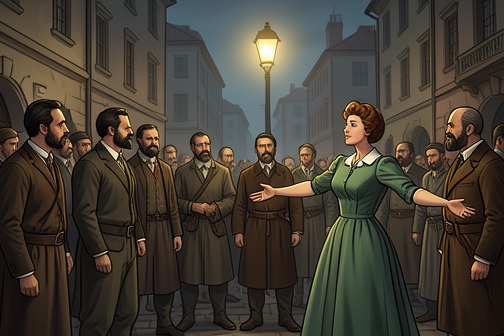
In The Second Sex, the [Russian Revolution](entity:event-recall-event-russian-revolution-6444f80ee8e1) is a test case for the possibility of collective liberation. Beauvoir invokes the proletariat’s revolution to show what women have been denied: the means to organize as a group, speak as a political subject, and transform subordination rather than wait for concessions. The Soviet claim that socialism had already secured women’s equality offers a promise, but her analysis treats that promise as incomplete unless women’s freedom is realized in concrete social conditions.
## Revolution and Collective Agency
Beauvoir compares women with groups that have acted collectively against domination. The proletarians, she writes, made the revolution in [Russia](entity:location-recall-location-e36341713c23); Black people made a revolution in [Haiti](entity:location-recall-location-e3cf92455220); and the people of [Indochina](entity:location-recall-location-3c4f9ef76693) were fighting in Indochina. These examples mark a distinction between enduring oppression and the capacity to oppose it through organized action. Women, by contrast, had not formed a unit able to set itself against male authority. They lacked a common space and solidarity of labor or interests, and were dispersed among men through family, work, and economic ties.
The comparison is not simply a claim that women’s situation is identical to that of other oppressed groups. Beauvoir notes that women are not a numerical minority and have no single historical event that explains their subordination. Unlike groups with a distinct past, tradition, or culture, women have always lived within a society divided by sex, as part of a couple whose two sides remain bound to one another. This intimacy with their oppressors makes women’s collective opposition unusually difficult: the sex division cannot be separated from society in the way a class or a colonized population might be imagined as a distinct political unit.
## The Limits of Historical Parallels
The revolution’s significance lies partly in the contrast between political agency and symbolic agitation. Beauvoir argues that women’s actions had won only what men were willing to concede; they had not taken power through a transformation of their own. Whereas the proletariat could say “we” and make its former rulers the “others,” women generally did not constitute themselves as subjects in the same way. Men named women as a category, and women adopted that designation without thereby overturning the perspective that made them inessential.
This account also emphasizes how class and race can divide potential allies. Women are dispersed across social groups: bourgeois women may share interests with bourgeois men rather than with proletarian women, while white women may align themselves with white men rather than with Black women. Beauvoir compares this problem to the conflict between women workers and male workers. Employers welcomed women’s labor partly because women accepted lower wages, which made male workers see them as threatening competition. Integration into unions offered women a way to defend their interests and to reduce that opposition, but solidarity required a recognition of common conditions rather than an assumption that shared class position automatically united them.
## Socialism and the Promise of Equality
In her discussion of Engels and August Bebel, Beauvoir presents a materialist account in which women’s subordination is bound to private property, inheritance, and the division of labor. The shift to paternal inheritance and the patriarchal family made women dependent within a social order organized around men’s ownership and productive work. On this account, women’s emancipation requires participation in production on a large scale and freedom from confinement to domestic labor.
Bebel’s argument links women’s liberation to the same economic development expected to free the proletariat. Machines and modern industry, it suggests, can make women economically equal to men; once capitalist paternalism is overcome, a socialist society would consist of workers equal among themselves. Soviet propaganda claimed that this equality had already been achieved in the U.S.S.R. Beauvoir presents that claim as a political assertion, not as proof that the problem is settled. She criticizes historical materialism for leaving important questions unanswered, including how private property arose and why it necessarily entailed women’s enslavement. Economic explanation reveals part of women’s history, but does not by itself account for the full structure of their subordination.
## Freedom Beyond a Political Promise
Beauvoir’s standard for judging social arrangements is not a presumed public good or a claim that women are happy within their assigned roles. She evaluates institutions by the concrete opportunities they make available to individuals. From the standpoint of existentialist morality, a subject realizes freedom through projects and movement toward an open future; when a person is confined to immanence, the result is oppression if that confinement is imposed. Women’s central conflict is that they are autonomous freedoms yet are compelled to assume the position of the Other, with their possibilities limited by another consciousness that claims sovereignty.
The Russian Revolution therefore functions both as an example of collective action and as a measure of what remains unresolved. A revolution can demonstrate that subordinated people may act as subjects, while the Soviet promise of equality still has to be assessed by women’s actual possibilities. Beauvoir’s emphasis falls not on a label of liberation but on whether women can organize, work, and pursue projects without being returned to dependence and repetitive domestic labor. The decisive question is whether social transformation opens a future in which women participate as free and equal subjects.
Event 9
Publication of The Second Sex in France

The publication of [Simone de Beauvoir](entity:character-recall-character-simone-de-beauvoir-b0ac2b46e30f)’s The Second Sex in [France](entity:location-recall-location-france-f5cafc8a8ad4) in [1949](entity:time-recall-time-1949-6aa51a77d044) marked a turning point in the public discussion of women’s lives: it made an expansive, searching account of women’s subordination into a shared intellectual and political resource. Beauvoir’s work connected intimate experience to history, economics, and philosophy, arguing that women were treated as the inessential Other in a world where men claimed the position of universal subject. Its importance lay not in offering a final word, but in making the question newly visible and collective.
## Publication and Reception
The Second Sex appeared in France in 1949, after Beauvoir had spent roughly fourteen months researching and composing it between [1946](entity:time-recall-time-1946-2eb191e2d998) and 1949. The book’s scale was striking: an eight-hundred-page inquiry drawing on folklore, customs, laws, history, religion, philosophy, anthropology, literature, economic systems, and received ideas. Beauvoir worked on it alongside other literary projects, travel, and her editorial and writing commitments to [Les Temps Modernes](entity:organization-recall-organization-les-temps-modern-1599e2e20c4a). Its ambition was both encyclopedic and personal, beginning from the question of why, when she tried to define herself, the first words that came to mind were that she was a woman.
The work’s publication marked a change in what could be said publicly about women. It addressed intimate fears, desires, and contradictions with unusual candor, refusing to treat them as private oddities. The argument’s reach depended not only on the accumulation of facts and theories but on its ability to connect individual experience to a common structure. As readers recognized their own uncertainties in Beauvoir’s analysis, indignation that had previously remained diffuse could become a shared consciousness and a basis for collective action.
## The Argument Made Public
A central claim of The Second Sex is that women’s subordination cannot be explained as an unchanging natural destiny. Beauvoir describes a world in which women, though autonomous human freedoms, are pressed to understand themselves through the position men assign them: as the inessential Other. Her existentialist framework measures human possibilities through freedom and projects toward an open future, rather than through a supposed state of happiness that can be declared on someone else’s behalf. When a person’s transcendence is restricted and she is confined to immanence, the result is oppression if that condition is imposed, and a moral failure if it is freely accepted.
The book makes this abstract conflict concrete through its account of work and domestic life. It contrasts creative activity that sets projects and opens the future with labor organized as repetition. [Childbirth](entity:state-recall-state-childbirth-f51d76790e08) and breastfeeding, it argues, do not by themselves provide women with a socially recognized project; women’s assignment to housework then confines them to tasks that must be performed again without producing a lasting conquest. The rural woman’s day, for example, joins field labor, care of animals, meal preparation, housework, pregnancy, and childcare. The weight of those responsibilities leaves little time for health or leisure, while men’s social outings remain available to them.
The same analysis follows women into paid employment, showing how work alone does not automatically secure independence. Women’s lower wages made them attractive to employers and could provoke hostility from male workers who feared competition. Beauvoir notes that women could defend their interests through integration into unions, while the broader movement of women into employment continued across occupations and countries. Yet women still faced the burden of reconciling paid work with family responsibilities, and the economic and social advantages attached to marriage could make dependence appear an easier path than independence.
## Difference, Solidarity, and Power
The book examines why women had not formed a collective subject capable of challenging male sovereignty. Unlike groups whose shared history, territory, or traditions could sustain a distinct community, women were dispersed among men and bound to fathers and husbands through household, work, and economic interests. Class and race further divided them: bourgeois women could share interests with bourgeois men rather than proletarian women, and white women with white men rather than Black women. Women’s oppression therefore could not be understood apart from the conditions that obstructed solidarity among women themselves.
Beauvoir also compares the logic used to subordinate women with the logic applied to racial and religious minorities. In each case, a ruling group helps produce the inferior position it then presents as proof of natural inferiority. The label of the “eternal feminine,” like racial or religious stereotypes, reduces individuals to a supposedly fixed essence and legitimizes their continued subordination. But the comparison is not absolute: women’s relation to men differs because the sexes live within a shared social unit and remain materially and intimately connected. That closeness, rather than guaranteeing reciprocity, helps explain the distinctive difficulty of women’s collective separation from those who dominate them.
## Limits and Legacy
The Second Sex did not settle every question it raised. Later feminist scholars disputed aspects of Beauvoir’s account of sexual difference, while some readers objected to her treatment of fertility and reproduction. The book’s authority was therefore neither immune to challenge nor dependent on being accepted as definitive. Its lasting force, as the account of its reception presents it, came from making a vast body of evidence serve a collective recognition: women’s experiences were not isolated anomalies but part of a social condition that could be named and contested.
That intervention helped prepare the ground for a women’s movement by turning private indignation into a common cause. The book’s historical significance lies in this passage from solitude to political consciousness. Its conclusion offers a vision of reciprocity between the sexes: both face time and death, both need one another, and both can find meaning in freedom. Fraternity, in that account, becomes possible when neither sex seeks false privilege over the other. The publication of The Second Sex thus stands not as the end of the debate, but as a landmark in the opening of a new one.
Event 10
First English-language edition of The Second Sex

The first English-language edition of The Second Sex, published in [1953](entity:time-recall-time-1953-6daba5373232), brought [Simone de Beauvoir](entity:character-recall-character-simone-de-beauvoir-b0ac2b46e30f)’s monumental study to English-language readers through [H. M. Parshley](entity:character-recall-character-h-m-parshley-d30878174bf1)’s translation. Its history also established a lasting tension between accessibility and fidelity: the American publisher requested cuts, and the resulting edition abridged and edited Beauvoir’s text, including its complex philosophical language. A later translation presented itself as the first complete English version, restoring the material and formal features that the earlier edition had altered.
## Discovery and commissioning
Blanche Knopf, wife of Beauvoir’s American publisher [Alfred A. Knopf](entity:organization-recall-organization-alfred-a-knopf-3e74e0a8291a), heard about the book while scouting in [Paris](entity:location-recall-location-paris-c02b439ce220). Expecting what she understood as a highbrow sex manual, she sought a reader’s report from H. M. Parshley, a retired professor of zoology at Smith College. Parshley’s report praised the book as intelligent, learned, and well-balanced, and said it was not feminist in a doctrinaire sense; his enthusiasm secured him the translation commission.
The publisher then asked Parshley to condense the work for the American market. He appealed to Beauvoir for guidance on the proposed minor cuts and abridgments. After receiving no immediate reply, he eventually received an indignant letter warning that much of what she considered important would be omitted. Beauvoir nevertheless approved the edition graciously.
## The 1953 text and its limits
Parshley approached the translation as a labor of love, but the account of its production notes that he lacked a background in philosophy and French literature. The edition was abridged and edited, and some of Beauvoir’s complex philosophical language was simplified. Long, dense passages were cut or reshaped, so English readers encountered a version that did not preserve the full extent or form of the original argument.
Those changes mattered because Beauvoir’s style was not merely a surface that could be regularized without consequence. Her long paragraphs and sentences carried the development of her reasoning. The later translators argued that cutting sentences and paragraphs, or substituting more conventional punctuation, failed to render her voice: her prose had a consistent grammar, and its form followed a logic.
## Restoration and translation principles
Constance Borde and Sheila Malovany-Chevallier produced the first complete English translation after Parshley’s. They translated the book without abridgment or simplification, retaining its philosophical language and restoring passages removed or altered in 1953. Their account emphasizes that paragraphs sometimes extending for pages are integral to how Beauvoir develops her arguments, rather than dispensable excess.
The translators also chose not to modernize Beauvoir’s language or to retrofit the vocabulary available to her in [1949](entity:time-recall-time-1949-6aa51a77d044). In particular, they avoided using the contemporary application of the word gender. They stayed close to her complicated syntax and punctuation, including her extensive use of semicolons, even where those usages might initially feel awkward to present-day English readers. Their stated aim was to find the original work’s voice and intent, not to simplify or readapt it for a new audience.
## Significance of the edition history
The contrast between the two English versions shows how translation and editing can shape the intellectual work available to readers. The 1953 edition carried The Second Sex into English but did so in a form constrained by a publisher’s demand for condensation; the later complete version treated the original’s length, syntax, and punctuation as part of its thought. The publication history therefore concerns not only when the book became available in English, but also which version of Beauvoir’s argument English readers could encounter.
Event 11
Transition from matrilineal to patrilineal descent

The transition from matrilineal to patrilineal descent marks the point at which descent and inheritance were organized around the father’s authority rather than the mother’s lineage. In the historical argument developed here, it was not a single revolution but a far-reaching reorganization of rights: the father became the recognized holder and transmitter of them, while the mother was assigned a secondary role. Its importance lies both in this change to kinship and in the larger patriarchal order it helped authorize.
## From kinship to paternal authority
The shift is described as one of the most consequential ideological changes of early society. Under agnatic descent, the father was recognized as the parent who possessed rights and passed them on; the mother was lowered to the status of nurse or servant. The text stresses that this hierarchy was not established by a new scientific discovery about conception. Rather, technical understanding that the father contributed to procreation could have supported recognition of the parents’ equal roles, but it was turned into a claim of paternal supremacy. The assertion that the father alone owned his posterity is presented as an act of faith serving a will to power.
This transformation also altered the meaning of children and inheritance. As agriculture became productive labor and land became property, men claimed both crops and children as their own. Heirs extended a father’s life beyond death by inheriting his possessions and sustaining the honors associated with his memory. Kinship thus joined economic succession to spiritual continuity: control over descent secured the transmission of property and the father’s authority across generations.
## The social conditions of the transition
The account places the change within the development of property and productive work, rather than explaining women’s subordination through physical strength alone. Earlier, women’s fertility could command reverence and give them a precarious power in relation to men. But when men acquired land and organized family labor for their fields, they sought to control the workers, their wives, and their children. Women’s exclusion from the new forms of work and from shared projects helped men treat them as unequal; their reduced economic role then reinforced their subordination.
The argument therefore resists a simple story in which a sudden conquest replaced a prior, egalitarian matriarchy. The text calls the supposed golden age of women a myth: even where women appeared as Earth, Mother, or Goddess, they were not necessarily treated as men’s peers or as autonomous political subjects. Across different systems of descent, women remained under male guardianship, with authority passing from a father or brother to a husband. Matrilineal affiliation did not, by itself, mean that women held the law or controlled the relationships between groups; women could serve as the means through which ties between men were established.
## Myths of victory and historical change
Myths gave dramatic form to the establishment of paternal right. In the account of the transition, Apollo’s speech in Aeschylus’s *Eumenides* declares the mother a nurse of the child rather than its parent, making the new hierarchy appear as a truth sanctioned by divine authority. The story of Bel-[Marduk’s battle with Tiamat](entity:event-recall-event-marduk-s-battle-with-ti-0ae8bee1352a) likewise depicts a male power killing the maternal figure and making an ordered world from her body. In the same dramatic tradition, [Orestes](entity:character-recall-character-d42cd1885e7b) kills Clytemnestra and is acquitted; the divine tribunal recognizes him as Agamemnon’s son before Clytemnestra’s. These stories cast the new order as a bloody victory of male authority and cosmic order over maternal right.
The text sharply separates that legendary account from its historical explanation. The transition to paternal rights, it argues, took place through gradual changes: masculine conquest was a reconquest, and law was brought into alignment with a reality already shaped by men’s growing control. The legends nevertheless matter because they turn the Other into a threat and represent male sovereignty as the defeat of disorder. Once patriarchal societies recorded their mythology and law, men wrote the codes and assigned women subordinate positions, often describing them as dangerous, impure, or naturally inferior.
## Historical meaning and consequences
The transition belongs to a wider history in which institutions and explanations of women’s status reflect men’s projects and interests. The account connects paternal descent to private property, family authority, religious doctrine, and laws that treated women as dependents. It also cautions against mistaking descriptions of women’s supposed nature for neutral accounts: such claims could serve to justify a hierarchy that had been produced through social arrangements.
Its consequences are not confined to ancient inheritance. The same analysis identifies domestic labor as repetitive work that confines women to the maintenance of life rather than opening a future through projects of their own. In its account of contemporary rural women, a woman might share her husband’s responsibilities and property while still bearing the work of fields, animals, meals, household management, pregnancy, and childcare, with little leisure. The historical argument thus links the old assignment of women to reproduction and service with later forms of unequal labor and restricted independence.
## Narrative and thematic significance
The transition is a central example of the book’s method: it treats a seemingly natural social order as a historical formation, and tests claims about women against the institutions and interests that support them. Its account does not describe a clean passage from a matriarchal golden age to patriarchy. Instead, it distinguishes women’s symbolic elevation as mothers or goddesses from their political standing, and distinguishes a gradual material transformation from myths that depict a decisive battle.
That distinction supports the broader claim that women’s condition is made within a world where men have occupied the position of sovereign subject. Women, though autonomous beings, have been compelled to assume the role of the Other and confined to immanence. [Patrilineal descent](entity:state-recall-state-patrilineal-descent-18223b912c78) is therefore significant not merely as a rule for tracing ancestry: it is part of the historical process by which male authority came to define kinship, property, and the possibilities available to women.
Event 12
Marduk’s battle with Tiamat

[Marduk’s battle with Tiamat](entity:event-recall-event-marduk-s-battle-with-ti-0ae8bee1352a) is an ancient Assyro-Babylonian creation legend in which Bel-Marduk kills [Tiamat](entity:character-recall-character-4ec889b86328), a mother figure who leads resistance against her descendants, and makes the ordered universe from her body. [Simone de Beauvoir](entity:character-recall-character-simone-de-beauvoir-b0ac2b46e30f) presents the story as a mythic image of patriarchy’s victory over maternal right, not as a factual account of how that social transformation took place.
## Origins and Conflict
The legend appears in a text dating from the seventh century BCE that recounts a still older story. At its beginning, Aton and Tiamat, the Sun and the Sea, give birth to the celestial and terrestrial worlds and to the great gods. Troubled by the turbulence of their offspring, they decide to destroy them. Tiamat then leads the struggle against Bel-Marduk, described as the strongest and most handsome of her descendants; he challenges her in combat.
## Death and Creation
Bel-Marduk kills Tiamat and divides her body. From one half he makes the vault of heaven, and from the other the foundation of the terrestrial world. He then brings order to the universe and creates humanity. The sequence turns defeat into creation: the maternal figure’s destruction supplies the material from which a male victor establishes an ordered world.
## Patriarchal Meaning
De Beauvoir places the legend alongside the story of [Orestes](entity:character-recall-character-d42cd1885e7b) and Clytemnestra in Aeschylus’s Eumenides. In both narratives, a male victory over a mother is made to signify the ascendancy of paternal authority over maternal right. The myth’s combat dramatizes a triumph that De Beauvoir says historical reality did not achieve through one decisive battle: the passage to paternal rights took place by gradual transitions. The legend therefore expresses patriarchy symbolically, casting a drawn-out social change as a violent victory and making the defeat of maternal authority appear to found cosmic order.
Event 13
Orestes’ matricide and acquittal

[Orestes’ matricide and acquittal](entity:event-recall-event-orestes-matricide-and-a-97d1e8041a66), presented in the Eumenides as part of the triumph of patriarchal right over maternal authority, turns a change in kinship and law into a story of violence and judgment. [Orestes](entity:character-recall-character-d42cd1885e7b) kills his mother, Clytemnestra; a tribunal of the gods absolves him, declaring him the son of Agamemnon before the son of Clytemnestra. [Simone de Beauvoir](entity:character-recall-character-simone-de-beauvoir-b0ac2b46e30f) reads the myth not as a factual record of a literal war between the sexes, but as an image through which male supremacy was made to seem rightful and enduring.
## The myth and its verdict
The episode belongs to the Eumenides, which Beauvoir describes as illustrating the triumph of patriarchy over maternal right. Its decisive act is not only the killing of Clytemnestra but the tribunal’s ruling afterward: the gods’ judgment gives precedence to Orestes’ paternal affiliation. The verdict makes a new ordering of descent appear authoritative, placing the father’s claim above the maternal bond.
Beauvoir sets this story beside the Assyro-Babylonian legend in which Bel-Marduk kills [Tiamat](entity:character-recall-character-4ec889b86328) and divides her body to form the heavens and the earth. In both myths, a male figure’s victory over a maternal figure is linked to the establishment of order. The parallel situates Orestes’ acquittal within a wider symbolic pattern in which masculine authority is represented as overcoming a feminine force associated with disorder.
## From maternal right to paternal authority
The myth gives dramatic shape to the replacement of matrilineal descent by agnation, a shift Beauvoir calls one of the most important ideological revolutions of the primitive period. In the patriarchal account of the change, the father holds rights and transmits them, while the mother is diminished to the role of nurse. The Eumenides’ judgment expresses that hierarchy as divine law: Orestes is defined chiefly through Agamemnon, not through the woman who bore him.
Beauvoir cautions, however, that the historical transition was gradual. The legends depict a violent victory, but, in her account, the movement toward paternal rights involved neither one decisive struggle nor a simple defeat of women. The change instead brought law into alignment with a social reality men already controlled. The tale’s force lies in converting that gradual reordering into an intelligible drama of revolt, judgment, and succession.
## Beauvoir’s interpretation
For Beauvoir, the acquittal reveals how myth can turn a social arrangement into an eternal principle. The story does not merely recount Orestes’ act; it authorizes a system in which the father’s lineage defines rights and the mother’s authority is subordinated. More broadly, it exemplifies the process by which male lawmakers, religious traditions, and philosophical accounts represented women’s subordinate condition as ordained in heaven and useful on earth.
The episode also belongs to Beauvoir’s argument that the category of woman as the Other is produced through relations of power. Once man asserts himself as subject, the Other is cast as threat and negation; myths of male victory then give that opposition a dramatic and religious form. Orestes’ acquittal thus functions as a narrative justification for patriarchal authority, even though Beauvoir distinguishes the symbolic battle from the slower historical transitions it represents.
## Place in the historical argument
Beauvoir’s wider account insists that women’s history has been written by men, whose laws, customs, and religions served their own interests. The Eumenides episode is one example of how a patriarchal order can present its supremacy not as a contingent social arrangement but as a verdict supported by divine authority. The acquittal is therefore significant less as an isolated plot resolution than as a compact image of a broader historical claim: paternal power is made to look natural by placing it at the center of myth and law.
Event 14
Repeal of the Oppian Law
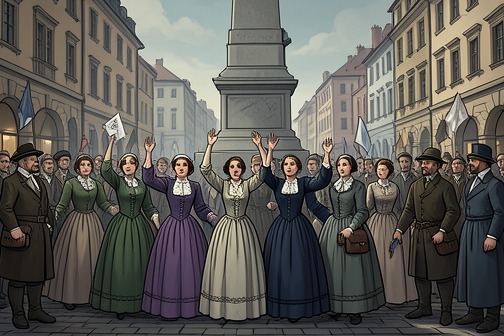
The [Repeal of the Oppian Law](entity:event-recall-event-repeal-of-the-oppian-la-8fa3eb9b4354) was a victory won by Roman matrons in the public square against a law that restricted women’s luxury. The episode marks both the force of collective action and the precariousness of women’s emancipation in Roman law: women could secure the removal of one restraint even as other legal measures curtailed their independence.
## Wartime Restriction and the Demand for Repeal
The [Oppian Law](entity:rule-recall-rule-oppian-law-0e22f8ed0395) had been passed when Hannibal threatened [Rome](entity:location-recall-location-f3877a21016f), banning luxury during a period of danger. Once that emergency had passed, women demanded that the restriction be repealed. The shift from wartime measure to peacetime grievance gave the matrons a specific cause around which to mobilize.
## Public Protest and Political Opposition
Cato argued in a famous speech that the law should remain in force. The matrons answered not only through a legal or private appeal but by assembling in the public square. Their demonstration carried the repeal despite Cato’s opposition, making the law’s reversal a visible instance of women exerting collective pressure on public decision-making.
## A Victory within Uneven Emancipation
The repeal did not mark a settled expansion of women’s legal standing. The account places the protest within a broader pattern in which measures that offered women some independence were countered by new restraints. As customs loosened, more severe laws were proposed; the Velleian Senate decree, in particular, barred women from interceding for others and deprived them of nearly all legal capacity. The episode therefore stands in contrast to later restrictions: matrons could prevail in a public contest, yet their gains remained vulnerable to a legal order that continued to limit women’s agency.
## Historical Significance
The protest demonstrates the political significance Roman women could achieve through collective action, while exposing the narrowness of that achievement. Women’s capacity to assemble and secure repeal did not itself provide a wider field in which to exercise their abilities. The law’s defeat was consequential, but it formed part of an unbalanced condition in which specific freedoms could coexist with renewed legal subordination.
Event 15
Scandal of the Vestal Virgins
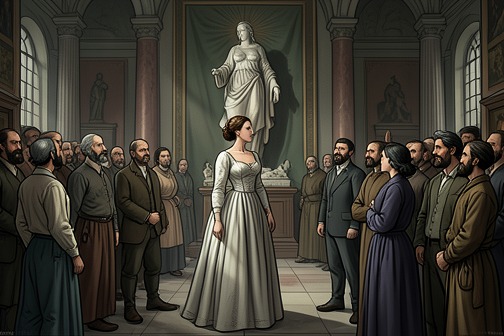
The [Scandal of the Vestal Virgins](entity:event-recall-event-scandal-of-the-vestal-v-e79ed4e543bd) refers to the episode in 114 CE when the college of Vestal Virgins was disbanded. In [Simone de Beauvoir](entity:character-recall-character-simone-de-beauvoir-b0ac2b46e30f)’s account, it is not narrated as a detailed reconstruction of the scandal itself; rather, it marks a moment in the unsettled history of Roman women, whose limited legal and personal freedoms did not amount to power in public life.
## Setting and Historical Context
De Beauvoir situates the episode in the Roman period when women’s circumstances were shaped by conflicting pressures. Some could inherit, make wills, exercise rights concerning their children, and escape certain constraints of marriage through divorce and remarriage. Yet these freedoms did not give women corresponding political authority or a recognized field of public action. Their economic independence, she argues, remained abstract when it could not be converted into the capacity to act.
This imbalance is central to the setting of the scandal. Roman women could become visible in public and exert pressure, but they did so within a political order whose formal authority remained in male hands. De Beauvoir presents their situation not as a simple transition from restriction to emancipation, but as a conflict between individual freedoms and a state that could intervene in women’s lives.
## The Scandal and the Disbanding
In her compressed chronology, de Beauvoir identifies a scandal involving the Vestal Virgins in 114 and states that their college was subsequently disbanded. She gives no further account of the allegations, the individuals involved, or the procedures leading to this outcome. The episode’s clearly stated consequence is institutional: the college ceased to exist after the scandal.
That concise reference also distinguishes the event from the broader forms of Roman women’s public activity described around it. Women demonstrated, besieged courts, and helped foment political turmoil; in the same historical passage, the scandal and the disbanding of the virgins’ college appear as another sign of how public life and state authority impinged on women’s position.
## Significance in de Beauvoir’s Account
The episode belongs to de Beauvoir’s argument that formal or personal liberty can remain incomplete when women lack the means to shape public life. Roman women might possess rights within property and family arrangements, yet those rights did not secure political capacity. Their freedom could therefore be both real in particular domains and precarious in the wider social order.
The disbanding of the college is presented as a consequence of scandal, but de Beauvoir does not claim that it alone explains Roman women’s status or establishes a general policy toward them. Its significance comes from its place in a larger, uneven history: women’s activity and independence existed alongside male control of institutions, and the apparent freedom of an individual woman did not necessarily alter the structure that limited women collectively.
Event 16
Siege of Siena against Montluc

The [Siege of Siena against Montluc](entity:event-recall-event-siege-of-siena-against-6f9f2439ed9a) is presented as a moment when women took organized military action in defense of their city: three thousand women assembled as troops under women commanders. [Simone de Beauvoir](entity:character-recall-character-simone-de-beauvoir-b0ac2b46e30f) invokes the episode as evidence that women could exercise collective courage and leadership, while arguing that such episodes did not by themselves overturn the male control of political authority.
## The siege in the historical argument
In her account of the [Italian Renaissance](entity:time-recall-time-8685f42ce639), Simone de Beauvoir places the defense of [Siena](entity:location-recall-location-0ee32b8af677) among examples of women whose circumstances permitted them to act publicly in ways usually associated with men. The women were not merely present during the siege: they marshaled a force of three thousand, and women commanded it. The detail makes the episode a case of collective organization as well as individual bravery.
The siege belongs to a wider series of examples in which women took up arms or assumed command. De Beauvoir also mentions women who fought for Forli’s freedom and a company of noblewomen led to the ramparts during the siege of Pavia. Against these instances, Siena stands out for the stated scale of its female force and the fact that its commanders were women.
## Leadership and the limits of exceptional agency
The episode complicates any claim that women were naturally incapable of military action or public responsibility. It records women acting together, taking on a defensive role, and exercising command in a city under threat. Their agency is concrete, but it appears in the account as an exceptional historical instance, not as proof that women generally held political power on equal terms with men.
That distinction is central to de Beauvoir’s broader history. She argues that women’s condition cannot be inferred simply from the presence of female figures who wielded authority or performed conspicuous deeds. Such cases show what some women could do under particular circumstances; they do not erase the more persistent structures that left political and social authority in men’s hands.
## [Renaissance](entity:time-recall-time-11a7f887e631) context and historical significance
De Beauvoir describes the Italian Renaissance as a period of individualism that could foster powerful personalities, regardless of sex. In that context, the women who defended Siena appear alongside female sovereigns, fighters, and writers whose accomplishments interrupt a history often told as though women were absent from public life. The siege gives this argument a collective dimension: its actors are not only distinguished individuals but a large body of women organized for a shared purpose.
Yet the example does not overturn her conclusion that society remained male-governed. In her account, episodes of female action coexist with women’s broader subordination; they reveal capacity without establishing an enduring transfer of power. The defense of Siena therefore functions both as evidence of women’s historical participation and as a measure of the distance between exceptional action and general equality.
Event 17
French Revolution
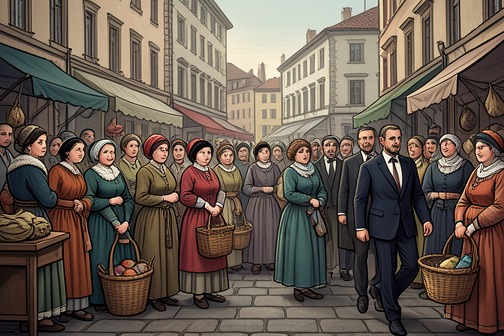
The [French Revolution](entity:event-recall-event-french-revolution-459ad436672d) was a turning point that promised political transformation but did not emancipate women. In The Second Sex, [Simone de Beauvoir](entity:character-recall-character-simone-de-beauvoir-b0ac2b46e30f) traces how women’s participation in the upheaval met the barriers of class and sex, how feminist demands were suppressed, and how the post-revolutionary settlement reimposed patriarchal authority through law. The revolution’s legacy is therefore not a simple advance or reversal: it reveals how freedom proclaimed in universal terms could coexist with women’s exclusion from the rights and institutions that defined it.
## Participation and unequal stakes
Before and during the Revolution, working-class women took part in economic life in ways that could give them considerable practical independence. Women ran businesses and worked as laundresses, shop assistants, and other tradespeople; women of modest means could move through public spaces and exercise a degree of control over their lives. Rural women were indispensable to agricultural work and often exercised authority within the household, though their labor and the burdens of motherhood made their circumstances difficult. These differences mattered: women were not a single political or economic class, and the freedoms available to a working woman did not erase the disadvantages imposed on women as a sex.
Women were visibly present in revolutionary demonstrations. In October 1789, they marched to Versailles to bring the royal family back to [Paris](entity:location-recall-location-paris-c02b439ce220), a protest remembered through the demand for the baker, his wife, and their little boy. Yet taking part in events did not mean controlling them or sharing equally in their gains. De Beauvoir’s account emphasizes the double constraint: working-class women could be obstructed by class, while women from politically active classes were pushed aside because they were women.
## Feminist claims and political exclusion
Some women from the bourgeoisie embraced the cause of freedom, and women’s political writing made the contradiction between revolutionary principles and women’s status explicit. In [1791](entity:time-recall-time-1791-f6d773c18787), Olympe de Gouges proposed a declaration of women’s and female citizens’ rights parallel to the declaration of men’s rights, calling for masculine privileges to be abolished. Her intervention belonged to a broader but fragile current of feminist argument; despite support from [Condorcet](entity:character-recall-character-condorcet-0df18e2e7f6d), these efforts failed to establish women’s political equality, and de Gouges was executed.
Women also organized collectively. Women’s clubs often merged with men’s organizations and came under male control. In [1793](entity:time-recall-time-1793-27eea7440c13), Rose Lacombe, president of the [Society of Republican and Revolutionary Women](entity:organization-recall-organization-18f7e60a1743), led a delegation that forced its way into the [Conseil Général](entity:organization-recall-organization-ea5d4c6055e8). The prosecutor Chaumette responded by assigning women domestic and maternal duties, treating political activity as a denial of their sex. Women were barred from the assembly and soon excluded even from the clubs where they had learned politics. The episode makes the limits of revolutionary inclusion concrete: women could make claims in public, but male authorities determined whether they were entitled to remain there.
## Reforms and the post-revolutionary reversal
The Revolution brought some changes to family law. In [1790](entity:time-recall-time-1790-4a26104dd527), masculine privilege in succession was abolished, giving girls and boys equal standing in inheritance; in [1792](entity:time-recall-time-1792-d08d52942d66), divorce law loosened the strictness of marital ties. De Beauvoir presents these as real but insufficient gains. Bourgeois women, economically dependent within the family, had little material basis for solidarity or for compelling the state to honor their claims. Legal change, without a corresponding shift in power and economic independence, could not secure lasting emancipation.
During the Revolution’s liquidation, women experienced what de Beauvoir describes as an anarchic freedom. The reorganization that followed sharply narrowed that opening. Napoleon sought to define women chiefly through motherhood, while preserving the authority of the husband and the family structure. The [Napoleonic Code](entity:rule-recall-rule-napoleonic-code-155e369c0fcc) denied wives and daughters full civic standing and restored the logic of marital guardianship. A married woman owed obedience to her husband; he controlled the family’s residence, held greater rights over the children, and generally had to authorize her contracts. The law treated the husband’s infidelity more leniently than the wife’s and gave him powers over her person and property. The unmarried woman, by contrast, retained a civil role that marriage curtailed.
## Historical significance
The Revolution’s treatment of women illustrates the distinction between taking part in a political upheaval and possessing the power to define its institutions. De Beauvoir situates women’s exclusion within a longer history in which men made the laws and presented their own supremacy as natural or divinely justified. The Revolution could alter inheritance and divorce rules, yet its gains remained vulnerable when women lacked independent economic and political power; under the Napoleonic settlement, marital authority was reinforced rather than dismantled.
The episode also anticipates a central argument of The Second Sex: women’s freedom depends not only on abstract recognition as human beings but on the concrete conditions that let them act as autonomous subjects. Women’s labor, demonstrations, and political proposals made them participants in revolutionary life, but participation alone did not overcome the institutions that assigned them to dependence. The Revolution’s promise and its reversal together show how a society can proclaim liberty while reserving its effective exercise for men.
Event 18
Women’s March on Versailles
The [Women’s March on Versailles](entity:event-recall-event-women-s-march-on-versai-6e9160f95a43) appears in [Simone de Beauvoir](entity:character-recall-character-simone-de-beauvoir-b0ac2b46e30f)’s account of women’s position during the [French Revolution](entity:event-recall-event-french-revolution-459ad436672d) as evidence that working-class women were present in public demonstrations, even when they did not lead the Revolution or secure its benefits. The reference also connects women’s political action to their material roles and to the gendered expectations that continued to constrain them.
## Setting and Historical Context
De Beauvoir argues that the Revolution did not transform women’s fate as its language of freedom might have suggested. It preserved bourgeois institutions and values and was waged almost exclusively by men. Against that account, she notes that working-class women under the ancien régime could have considerable economic independence: they worked in trades and production, and women of modest means could go out, visit taverns, and exercise substantial control over their lives.
The march is set against this varied picture of women’s labor and social standing. In the countryside, women’s work was essential and their interests often shared with men’s, but their burdens were severe; elsewhere, women could be visible in demonstrations and riots. De Beauvoir’s account therefore distinguishes women’s presence in revolutionary action from their access to the movement’s leadership and rewards.
## The March and Its Significance
Women appear alongside men in demonstrations, and De Beauvoir singles out their journey to Versailles to find the royal family. The episode brings women into the public action of the Revolution: they are not absent from the crowd or from the confrontation with political authority. But their participation, as she presents it, does not make them the people who led the Revolution or reaped its fruits.
The march thus serves as a concise example of a recurring disparity in the account: women may be indispensable participants in collective upheaval without gaining an equal share of political power. De Beauvoir sets their direct action beside the limits imposed on their political claims, emphasizing the gap between appearing in revolutionary events and shaping the institutions that follow.
## Participation and Unequal Political Gains
De Beauvoir contrasts the march with the frustrated efforts of women who sought explicit rights. In [1791](entity:time-recall-time-1791-f6d773c18787), Olympe de Gouges proposed a Declaration of the Rights of Woman and the Female Citizen, calling for the abolition of masculine privileges; these efforts failed, and de Gouges was executed. Women’s clubs, often merged with men’s clubs, were taken over by men, and women were soon barred from political clubs after Rose Lacombe and a delegation forced their way into the [Conseil Général](entity:organization-recall-organization-ea5d4c6055e8) in [1793](entity:time-recall-time-1793-27eea7440c13).
Some legal changes followed: masculine privilege in succession was abolished in [1790](entity:time-recall-time-1790-4a26104dd527), and divorce law was established in [1792](entity:time-recall-time-1792-d08d52942d66). De Beauvoir calls these gains feeble. Read beside the march, they sharpen the distinction between women’s capacity to enter public life and the limited, reversible recognition of their rights. The episode matters less as a story of completed emancipation than as evidence that revolutionary participation did not by itself dislodge women’s political subordination.
Event 19
Assassination of Jean-Paul Marat
The [Assassination of Jean-Paul Marat](entity:event-recall-event-assassination-of-jean-p-57fd33b0c651) is presented as a striking instance of a woman intervening directly in the [French Revolution](entity:event-recall-event-french-revolution-459ad436672d): Charlotte Corday’s killing of Marat significantly influenced the outcome. Its importance lies in the contrast between that consequential act and the broader exclusion of women from the Revolution’s leadership and gains.
## Revolutionary Context
The Revolution might have seemed likely to transform women’s fate, but the book argues that it preserved bourgeois institutions and values and was waged almost exclusively by men. Women appeared in demonstrations and riots, including the march to Versailles to find the royal family, yet popular participation did not mean that women led the Revolution or reaped its fruits.
## Corday’s Intervention
Among a small number of bourgeois women who ardently supported freedom, Corday stands out for the consequence of her action. Her assassination of Marat is singled out as significantly influencing the Revolution’s outcome. The account gives no further description of the killing, its immediate circumstances, or its precise political effects; its emphasis is on the exceptional force of a woman’s intervention in a movement whose power remained overwhelmingly male.
## Women’s Political Exclusion
Corday’s act appears alongside other attempts by women to claim a place in revolutionary politics. In [1791](entity:time-recall-time-1791-f6d773c18787), Olympe de Gouges proposed a declaration demanding the abolition of masculine privileges, but the effort failed and de Gouges was executed. Women’s clubs were largely absorbed or taken over by men. When Rose Lacombe and a delegation forced their way into the [Conseil Général](entity:organization-recall-organization-ea5d4c6055e8), prosecutor Chaumette insisted that women’s proper tasks were childcare and domestic work; women were then barred from the Conseil and soon from the clubs where they had learned politics.
The Revolution did bring limited legal changes: in [1790](entity:time-recall-time-1790-4a26104dd527), daughters and sons were made equal in succession, and the [1792](entity:time-recall-time-1792-d08d52942d66) divorce law loosened strict marital ties. The book treats these as feeble gains. Bourgeois women, integrated into family life and economically dependent, lacked the separate collective position needed to press demands; working women, meanwhile, were constrained by class. Corday’s consequential action therefore sharpens the account’s central contrast: a woman could affect revolutionary events, while women as a group remained excluded from the authority and benefits of the new order.
Event 20
Execution of Olympe de Gouges
The execution of Olympe de Gouges is presented as a stark measure of the [French Revolution](entity:event-recall-event-french-revolution-459ad436672d)’s limits: a woman who demanded that women receive the rights proclaimed for men was put to death, while the new order continued to exclude women from political life.
## Causes and Background
The Revolution might have seemed likely to change women’s fate, but, [Simone de Beauvoir](entity:character-recall-character-simone-de-beauvoir-b0ac2b46e30f) argues, it preserved bourgeois institutions and values and was waged almost exclusively by men. Women took part in demonstrations, including the march to Versailles, but participation did not mean that they would lead the Revolution or share its rewards.
Women’s efforts to claim political standing were explicit. In [1791](entity:time-recall-time-1791-f6d773c18787), Olympe de Gouges proposed a Declaration of the Rights of Woman and the Female Citizen, modeled on the Declaration of the Rights of Man and demanding the abolition of masculine privileges. Similar demands had appeared in satirical writings, and [Condorcet](entity:character-recall-character-condorcet-0df18e2e7f6d) supported them, but these initiatives proved abortive. De Gouges’s execution gives that failure its most consequential human form.
## The Execution and Its Context
De Gouges perished on the scaffold. The account does not detail the circumstances of her arrest, trial, or execution; it places her death within a broader pattern in which women’s political initiatives were allowed little room to endure. The newspaper she founded, L’Impatient, and a few other papers were short-lived, while women’s clubs were generally absorbed into organizations dominated by men.
The suppression became overt in [1793](entity:time-recall-time-1793-27eea7440c13). On 28 Brumaire, Rose Lacombe, president of the [Society of Republican and Revolutionary Women](entity:organization-recall-organization-18f7e60a1743), led a delegation that forced its way into the [Conseil Général](entity:organization-recall-organization-ea5d4c6055e8). Prosecutor Chaumette answered by insisting that women should remain within the roles of childcare, household work, and motherhood. Women were barred from entering the Conseil and soon excluded even from the clubs where they had learned politics. De Gouges’s death belongs to this political climate of curtailed female participation, though the account does not say that her execution was directly caused by the club ban or Chaumette’s speech.
## Consequences and Significance
De Gouges’s demand challenged the Revolution’s definition of universal rights: a declaration for women would have required the new political order to relinquish privileges it continued to reserve for men. Her execution stands beside the silencing of women’s publications and associations as evidence that revolutionary language did not itself secure women’s political agency.
The limits were not confined to political speech. The Revolution abolished masculine privilege in inheritance in [1790](entity:time-recall-time-1790-4a26104dd527), making daughters and sons equal in succession, and established a divorce law in [1792](entity:time-recall-time-1792-d08d52942d66) that loosened marital ties. Beauvoir calls these gains feeble. Bourgeois women, integrated into family life and economically dependent, lacked the separate collective position needed to compel broader change. De Gouges’s fate thus sharpens the account’s central contrast: women could appear in revolutionary events, yet class and sex together determined who could exercise power and inherit the Revolution’s fruits.
Event 21
Closure of women’s political clubs in revolutionary France
The closure of women’s political clubs in revolutionary [France](entity:location-recall-location-france-f5cafc8a8ad4) marked a decisive limit on women’s claim to take part in public life. In [1793](entity:time-recall-time-1793-27eea7440c13), after women had organized politically and entered the assembly, officials excluded them from the [Conseil Général](entity:organization-recall-organization-ea5d4c6055e8) and soon from the clubs themselves. The episode exposes the gap between revolutionary language about rights and the gender hierarchy that continued to govern who could exercise them.
## Background and Political Stakes
The clubs had offered women a place to learn politics and make collective demands. Their efforts formed part of a broader revolutionary moment in which women took part in demonstrations and a small number of prominent women pressed for political change. In [1791](entity:time-recall-time-1791-f6d773c18787), Olympe de Gouges proposed a declaration of women’s rights equivalent to the declaration of men’s rights; such efforts, however, remained fragile, and she was later executed.
Women’s participation was constrained by both gender and class. Working women appeared alongside men in popular demonstrations, while bourgeois women were often integrated into family life and lacked the economic basis for an independent collective movement. The Revolution’s political openings therefore did not translate into a stable institutional place for women.
## The 1793 Exclusion
On 28 Brumaire, 1793, Rose Lacombe, an actress and president of the [Society of Republican and Revolutionary Women](entity:organization-recall-organization-18f7e60a1743), led a delegation that forced its way into the Conseil Général. Prosecutor Chaumette answered by insisting that women should remain within the responsibilities assigned to them: childcare, housework, and motherhood. The exchange made the dispute explicit: women’s political action was treated not as a legitimate extension of citizenship but as a rejection of their prescribed sex role.
Women were barred from the Conseil, and soon afterward they were excluded even from the political clubs where they had been able to acquire political experience. The closure thus removed both a public platform and a means of developing collective political capacity. It was not simply a disagreement over one meeting; it restricted the spaces in which women could organize and speak together.
## Reversal and Historical Significance
The exclusion followed limited legal gains. In [1790](entity:time-recall-time-1790-4a26104dd527), masculine privilege in inheritance was abolished, and girls and boys were placed on equal footing in succession; in [1792](entity:time-recall-time-1792-d08d52942d66), divorce law loosened the strictness of marital ties. The book presents these measures as weak conquests: they did not prevent women’s political spaces from being closed or secure an enduring role for women in revolutionary institutions.
The episode illustrates a larger argument about women’s history: political authority and the terms of women’s participation were largely controlled by men. The revolutionary promise of equality could coexist with the assertion that women belonged in the home, while women’s attempts to act collectively were treated as a challenge to social order. The clubs’ closure therefore stands as a concrete reversal, showing how formal change could leave the underlying distribution of political power intact.
Event 22
French divorce law of 1792

The [French divorce law of 1792](entity:event-recall-event-french-divorce-law-of-1-c01908a011be) was one of the Revolution’s modest reforms of family life, relaxing marital ties at a moment when inherited privileges were being challenged. In The Second Sex, its significance lies as much in its limits as in its enactment: a change in law could loosen the marriage bond, yet women remained constrained by family authority, economic dependence, and political exclusion.
## Revolutionary reform
The law appears within a brief period of change. In [1790](entity:time-recall-time-1790-4a26104dd527), the rights of primogeniture and masculine privilege in succession were eliminated, making girls and boys equal in inheritance; in [1792](entity:time-recall-time-1792-d08d52942d66), divorce law was established. These measures weakened some of the legal arrangements that had bound family property and marital life together, but the account describes them as feeble conquests rather than a transformation of women’s position.
The reform took place amid women’s visible participation in revolutionary politics. Women joined demonstrations and riots, and the 1789 march to Versailles forced the royal family to leave for [Paris](entity:location-recall-location-paris-c02b439ce220). Some bourgeois women supported the cause of freedom, while feminist efforts demanded the abolition of masculine privilege. Yet women’s participation did not ensure that they would lead the Revolution or share in its fruits: political alliances were often absorbed by men, and the interests of women across class lines did not readily converge.
## Unequal power within marriage
The law’s limited reach is set against a longer history in which marriage and family structure organized women’s dependence. In the Roman example, the introduction of marriage with manus placed a wife under her husband’s authority, while the later development of marriage without manus altered the balance among husband, father, and paternal kin without making the woman fully independent. Across these arrangements, formal legal status alone did not determine women’s concrete power.
The book’s wider argument is that reciprocal dependence does not itself produce equality. Men’s dependence on women for sex and posterity had not freed women, just as economic need between [master and slave](entity:expression-recall-expression-c029507ca0ae) did not cancel domination. The same distinction clarifies why a reform easing marital ties could matter without overturning the conditions that made women socially and economically subordinate.
## Reversal and longer aftermath
The period of revolutionary freedom did not last. As society was reorganized, the [Napoleonic Code](entity:rule-recall-rule-napoleonic-code-155e369c0fcc) restored and strengthened women’s subordination within marriage. Wives were required to obey their husbands; husbands controlled the family residence and held greater rights over children, while their authorization was generally required for wives’ contracts. The 1792 reform therefore stands between an unsettled revolutionary opening and a legal order that again made marital power rigorous.
The subsequent history underlines how slowly the change in divorce law translated into practical equality. The Restoration abolished divorce in [1826](entity:time-recall-time-1826-ed794d85bdbd), and the [1848](entity:time-recall-time-1848-1ea2e284079a) Constitutional Assembly refused to restore it. Divorce returned in [1884](entity:time-recall-time-1884-1467ae5fabf8), but remained difficult to obtain, and the law preserved a sexual double standard: adultery was an offense only when committed by a wife. The sequence makes clear that access to divorce, when available, was neither stable nor equally administered.
## Significance in the book’s argument
The law serves as a concrete instance of the distinction between abstract rights and lived circumstances. A legal reform can alter the terms of marriage, but women’s ability to use that change depends on material resources, social custom, and their standing within the family. In the book’s existential framework, the central issue is whether a woman can act as an autonomous subject and pursue projects of her own, rather than being confined to a role defined by others.
The 1792 law is thus presented neither as a complete emancipation nor as an empty gesture. It briefly loosened a binding institution, but the later restoration of restrictions reveals how readily formal gains could be reversed when the surrounding structure of power remained intact.
Event 23
Enactment of the Napoleonic Code
The [Enactment of the Napoleonic Code](entity:event-recall-event-enactment-of-the-napole-54cbdbd357f5) marked a decisive reversal in the legal position of women in [France](entity:location-recall-location-france-f5cafc8a8ad4). In [Simone de Beauvoir](entity:character-recall-character-simone-de-beauvoir-b0ac2b46e30f)’s account, the revolutionary period had brought limited reforms, but the new code restored a firmly patriarchal order: marriage subjected a woman to her husband’s authority, while law treated her rights, property, residence, and children as matters largely governed by him. Its effects outlasted the regime that introduced it, helping to shape women’s legal subordination through the nineteenth century.
## Revolutionary gains and the political reversal
The Code followed a period of upheaval in which some legal and political restrictions had eased. In [1790](entity:time-recall-time-1790-4a26104dd527), masculine privilege and the right of primogeniture were abolished in inheritance, placing daughters and sons on equal footing in that respect. The divorce law of [1792](entity:time-recall-time-1792-d08d52942d66) also loosened the strictness of marital ties. These measures, however, did not establish broad or secure equality. Women were excluded from political clubs and public institutions, and their ability to act collectively remained limited by their position in the family and by class divisions.
During the Revolution’s liquidation, women briefly enjoyed what Simone de Beauvoir describes as an anarchic freedom. The subsequent reorganization of society brought a sharper restoration of hierarchy. The [Napoleonic Code](entity:rule-recall-rule-napoleonic-code-155e369c0fcc), she argues, sealed women’s fate for a century and significantly delayed their emancipation. Napoleon’s preference for defining women through motherhood did not make mothers legally sovereign: the system protected the marital and paternal order rather than transferring authority to women as parents.
## Marriage and the law of dependence
The Code distinguished sharply between unmarried and married women. An unmarried woman retained civil standing, while marriage preserved a form of legal guardianship over the wife. The husband’s authority was not merely a social convention: it structured the married woman’s practical capacity to act. She owed obedience to her husband, and his authorization was generally required for her contracts unless she managed a business.
The law also assigned husbands greater power over children and control over the family’s residence. A married woman’s legal identity and property were thus constrained within the household, where her husband exercised authority over her as a person and over her possessions. The arrangement made marriage a boundary between a woman’s civil capacity before marriage and her dependence within it.
The unequal treatment extended to adultery and divorce. A husband could have his wife confined for adultery and could obtain a divorce; if he killed her upon catching her in the act, the law excused him. A wife, by contrast, could seek divorce on the stated ground that her husband brought a concubine into the home. The Code therefore made marital fidelity an asymmetrical legal obligation, with the husband holding substantially greater remedies and authority.
## The Code’s long afterlife
The restoration of marital authority did not end with the Code’s enactment. Throughout the nineteenth century, the legal system continued to reinforce its severity, including by depriving women of rights of alienation. Divorce was abolished in [1826](entity:time-recall-time-1826-ed794d85bdbd) during the Restoration; the Constitutional Assembly of [1848](entity:time-recall-time-1848-1ea2e284079a) refused to restore it, and it returned only in [1884](entity:time-recall-time-1884-1467ae5fabf8), still difficult to obtain.
Simone de Beauvoir places this legal development within the broader social order of the nineteenth-century bourgeois family. Reactionary thinkers treated the family as an indissoluble unit and a model of social hierarchy: the husband governed, the wife administered the household, and the children obeyed. The legal subordination of wives was consequently reinforced by ideals of domestic order, not left as an isolated rule on paper.
## Historical significance
The Code illustrates the gap between formal revolutionary change and women’s concrete freedom. Limited gains in inheritance and divorce did not displace the husband’s authority over his wife’s legal actions, property, residence, or children. In Simone de Beauvoir’s historical argument, women’s status was repeatedly shaped by political and economic arrangements made by men, rather than determined by an unchanging feminine nature.
The Code’s importance lies both in the rights it restricted and in the durability of the structure it established. It made marriage a legal mechanism of dependence and helped preserve that dependence after the revolutionary moment had passed. The later restoration of divorce in 1884 did not immediately undo the wider pattern: legal reform arrived gradually, while the household remained an institution organized around male authority.
Event 24
French women’s rights campaign of 1848
The [French women’s rights campaign of 1848](entity:event-recall-event-french-women-s-rights-c-05b21bbe11aa) took shape through clubs, journals, and a delegation seeking recognition from the city government, but its demands achieved nothing. In [Simone de Beauvoir](entity:character-recall-character-simone-de-beauvoir-b0ac2b46e30f)’s historical account, the campaign’s setbacks reveal both the limits of women’s political access and the divisions among the women and reformers who might have supported their cause.
## Political Organizing and Public Appeals
In [1848](entity:time-recall-time-1848-1ea2e284079a), women founded clubs and journals, including La Voix des Femmes, published by Eugénie Niboyet with contributions from Cabet. A delegation went to city hall to demand women’s rights, but obtained no result. The attempt to bring a collective claim directly before civic authorities made the campaign’s central difficulty plain: women could organize and petition, yet the account records no corresponding transfer of political power.
The campaign’s activity unfolded alongside a broader nineteenth-century reform movement that often favored equality. But favorable ideas did not ensure women’s independent standing. In the [Saint-Simonian movement](entity:organization-recall-organization-f6d61dfd2ba0), for example, women remained in a secondary position; Claire Bazard, founder and principal support of La Femme Nouvelle for a brief period, was a notable exception. The period’s calls for women’s education could also stop short of demanding emancipation, leaving the terms of reform limited even where women’s claims were publicly discussed.
## Campaigns, Ridicule, and Uneven Support
The bid for political recognition continued after the 1848 appeals. In 1849, Jeanne Deroin ran for deputy, but her candidacy foundered in ridicule. Ridicule also helped defeat the Vesuvians and the Bloomerists, whose public appearances in unconventional dress became a target. These examples show how political claims could be dismissed not only by refusal but by making women’s organization itself seem ridiculous.
Support among prominent women was not uniform. Mme de Staël pursued her own cause rather than that of women collectively; [George Sand](entity:character-recall-character-bc23d62097ff) advocated free love but declined to collaborate with La Voix des Femmes, and her claims were described as primarily sentimental. Flora [Tristan](entity:character-recall-character-tristan-2fe42552783a) focused more on working-class emancipation than on the emancipation of her own sex. Daniel Stern and Mme de Girardin, by contrast, joined the feminist movement. The campaign’s limited reach thus belonged to a wider field of reform in which women’s political interests did not automatically become a shared priority.
## The Wider Struggle Over Equality
The campaign took place amid arguments about women’s place in society that intensified as women entered paid work. The [Industrial Revolution](entity:event-recall-event-industrial-revolution-9bf79fcd4c89) gave women’s demands an economic basis as well as a theoretical one, while employers’ use of women’s lower wages provoked hostility from male workers who viewed them as competitors. Women’s interests and those of the working class were therefore not automatically aligned; integration into unions offered a means to defend women’s interests while avoiding the division of workers against one another.
The account also sets women’s situation beside racial and class oppression without treating those histories as identical. Like other groups cast as inferior, women were subjected to arguments that justified a hierarchy produced by the society making the claim. Yet women lacked the shared past, separate communities, and occupational solidarity that could help other subordinated groups organize as a collective. Their ties to fathers and husbands, and divisions of class and race among women themselves, further complicated solidarity. The 1848 campaign’s failure belongs to this structural context, not simply to the outcome of one petition.
## Significance and Limits
The campaign’s significance lies in making women’s rights a public and organized demand, while its recorded outcome—no concession at city hall—marks the limits of that opening. In the book’s wider argument, formal agitation alone could not undo a condition in which men remained the political subject and women were treated as dependent or inessential. Women’s emancipation required more than access to public debate: it required practical means to organize, economic independence, and a transformation of the institutions that constrained their choices.
The episode therefore resists a simple story of inevitable progress. The clubs, journals, and delegation demonstrate collective initiative; the failure of the appeal, the ridicule of later campaigns, and the divisions among potential allies show how easily that initiative could be contained. The movement’s unfinished demand for equality remains the decisive fact of its place in the account.
Event 25
Jeanne Deroin’s 1849 legislative candidacy
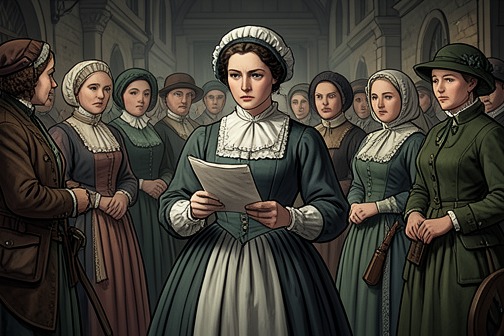
[Jeanne Deroin’s 1849 legislative candidacy](entity:event-recall-event-jeanne-deroin-s-1849-le-6d1b31f3b18e) was a direct attempt to enter political life, and its failure exposes the gap between arguments for equality and the power to make equality effective. [Simone de Beauvoir](entity:character-recall-character-simone-de-beauvoir-b0ac2b46e30f) places the campaign among the efforts of nineteenth-century women whose claims were publicly visible but easily dismissed, while tracing that dismissal to structures that had long defined women as subordinate.
## Background and political context
The candidacy followed a period of renewed feminist activity in [1848](entity:time-recall-time-1848-1ea2e284079a). Women had established clubs and journals, and Eugénie Niboyet published *La Voix des Femmes*, a magazine to which Cabet contributed. A women’s delegation also went to the city hall to demand rights, but gained nothing. These initiatives made the claims of women more public, without securing them political recognition.
De Beauvoir situates this activism within a broader nineteenth-century reform movement that generally sought justice through equality. Yet its advocates were not all aligned: some emphasized women’s education, while other doctrines cast women chiefly as emotional or amorous complements to men. Deroin’s candidacy belonged to a moment when women’s claims were moving beyond theory, but the political order remained unreceptive to their participation.
## The candidacy and its reception
In 1849, Deroin ran for deputy. Her campaign foundered in ridicule. De Beauvoir gives no further account of the campaign’s procedures or its immediate practical consequences; the outcome she emphasizes is the public mockery that accompanied the bid and helped defeat it.
The episode appears alongside other movements that were also ridiculed, including the Vesuvians and the Bloomerists, whose distinctive dress became a target. The juxtaposition shows how demands for women’s emancipation could be displaced by attention to their advocates’ appearance or unconventional public presence. In Deroin’s case, ridicule marked the boundary between making a political claim and being accepted as a legitimate political actor.
## Historical significance
De Beauvoir treats Deroin’s defeat as part of a history in which women’s collective actions rarely gained independent political force. Women, she argues, had not formed a unified group with the concrete means to organize against men’s authority. Their dispersed social and economic ties often connected them more closely to particular fathers, husbands, employers, or class interests than to women as a whole. Against that background, a woman’s candidacy could make a claim visible without overcoming the conditions that limited women’s collective power.
The candidacy also belongs to the book’s account of the difference between formal or declared equality and material possibility. De Beauvoir observes that women’s demands became economically consequential as women entered paid work, while their low wages could sharpen conflict with male workers rather than create immediate solidarity. Her account of Deroin’s campaign is brief, but its placement alongside the organizing of 1848 and the ridicule directed at other women’s movements makes the failure part of a larger pattern: women’s attempts to act publicly met both institutional exclusion and social contempt.
Event 26
World War I
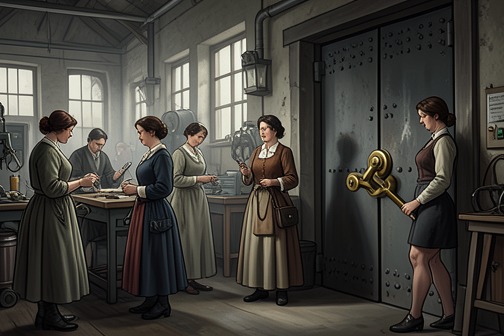
[World War I](entity:event-recall-event-world-war-i-f6ecad7962bb) is presented as a turning point in the expansion of women’s paid work, not as a moment when work by itself resolved women’s subordination. The war’s labor crisis drew more women into employment across social classes and professions, while the surrounding analysis stresses that access to production did not automatically bring equal pay, freedom from domestic duties, or control over reproductive life.
## Wartime labor and women’s employment
The labor crisis of 1914–18 spread women’s employment more widely and helped carry the movement into the lower middle and middle classes. Women entered liberal professions as well as the agricultural, industrial, commercial, financial, and clerical work in which they were already active. The book places this shift against earlier figures: in [France](entity:location-recall-location-france-f5cafc8a8ad4), 900,000 women had worked from home in 1900, making items such as clothing, leather goods, funeral wreaths, purses, beadwork, and souvenirs; by 1906, 42 percent of women aged eighteen to sixty were working across a broad range of occupations.
Prewar census figures show how widely women’s participation varied across countries: 42 percent in France, 37 percent in [Finland](entity:location-recall-location-927c8bd1cf14), 34.2 percent in [Germany](entity:location-recall-location-a3c24dd56e42), 27.7 percent in [India](entity:location-recall-location-600eec71fa3c), 26.9 percent in [England](entity:location-recall-location-england-b153c1f368ea), 19.2 percent in the Netherlands, and 17.7 percent in the [United States](entity:location-recall-location-united-states-2f533bc8d0b9). The account cautions that rural labor raised the figures for France and India. In France around 1940, outside peasant work, it counts approximately 500,000 women heading establishments, one million female employees, two million women workers, and 1.5 million women working alone or unemployed. These figures mark an enlarged presence in economic life, but not yet an equal one.
## Employment, class, and solidarity
Women’s employment could serve employers while provoking conflict among workers. Employers welcomed women partly because they accepted low wages, and male workers could view this cheaper labor as a threat to their own position. The book therefore rejects the assumption that women and the proletariat possessed an automatic solidarity simply because both were oppressed. It compares women’s position in this labor conflict with that of Black workers in the United States: groups subject to exploitation could be turned against other workers, and recognizing a shared structure of disadvantage required political consciousness rather than arising spontaneously.
The account identifies union organization as a change in this dynamic. Once women were integrated into unions, they could defend their own interests without being made to appear as competitors endangering the working class as a whole. In this framing, wartime labor expansion matters not only because it put more women to work, but because collective organization could alter who had the power to negotiate the terms of that work.
## Production and reproductive labor
The wartime expansion also exposes a persistent conflict between productive employment and reproductive responsibility. The book argues that women’s entry into paid work did not displace the burdens of pregnancy, childcare, and housekeeping. In France, domestic work and child care remained almost exclusively women’s responsibility; because the anti-feminist tradition discouraged men from doing household tasks, women faced greater difficulty reconciling family and work than their spouses did. Employment could thus enlarge a woman’s public activity without freeing her time from unpaid labor.
The discussion connects this imbalance to the absence of reliable control over fertility. Contraception was not universally available or consistently used, while abortion was officially forbidden. Women could consequently face health risks from unregulated abortion or be overwhelmed by repeated pregnancies. The book’s broader argument is that reproductive demands are not interchangeable with ordinary employment: pregnancy and maternity engage a woman’s life in ways that cannot be explained simply as a job or service, and a social account that treats women only as workers misses a central part of their situation.
## The limits of emancipation through work
The book’s historical account gives paid work a crucial but limited role in emancipation. Modern industry can reduce the significance of muscular differences, and large-scale employment can give women an economic basis for independence. Yet economic access does not itself undo patriarchal authority, household divisions, or the social expectation that women organize their lives around marriage and motherhood. The measure of change is therefore not simply whether women work, but whether they gain concrete freedom and the conditions to shape their own projects.
World War I’s significance in this account lies in the way its labor crisis accelerated an existing transformation while leaving its contradictions visible. Women’s work expanded across occupations and classes, but low wages, worker hostility, unequal domestic duties, and constrained reproductive choices continued to shape its meaning. The war marks a broadening of women’s participation in production; it does not stand as proof that employment alone completed their emancipation.
Event 27
France’s 1941 abortion decree

[France’s 1941 abortion decree](entity:event-recall-event-france-s-1941-abortion-d1b80947bef4) made abortion a crime against state security. [Simone de Beauvoir](entity:character-recall-character-simone-de-beauvoir-b0ac2b46e30f) places it within a history of laws governing pregnancy and abortion, arguing that reproductive burdens restrict women’s freedom and that legal prohibition does not eliminate abortion but drives it into dangerous, clandestine practice.
## The decree and its legal context
The decree of [1941](entity:time-recall-time-1941-e7ec7c3ccd92) marked a severe turn in [France](entity:location-recall-location-france-f5cafc8a8ad4)’s legal treatment of abortion: the act was defined as a crime against state security. It followed earlier restrictions, including a 1923 law that imposed forced labor on practitioners and accomplices while punishing the woman who had an abortion with imprisonment or a fine. In 1939, a further decree specifically targeted practitioners, denying them reprieve. The sequence shows the state tightening its response over time, culminating in the 1941 classification.
The history presented alongside the decree begins well before these twentieth-century measures. A 1556 edict against concealing pregnancy, originally directed at infanticide, was used to authorize the death penalty for people involved in abortion. Later laws shifted the framing: by the nineteenth century, abortion was treated not as homicide but as a crime against the state. The 1941 decree thus sharpened a political logic already embedded in French law, in which reproductive decisions were regulated as matters of public authority.
## Reproduction, work, and women’s freedom
The decree appears in a broader analysis of the conflict between reproductive life and women’s participation in productive work. Simone de Beauvoir argues that women’s reproductive capacities have historically been used to consign them to domestic labor and exclude them from shaping the public world. The consequences vary with social arrangements: repeated pregnancies and unsupported childcare impose heavy burdens, while birth control, social assistance during pregnancy, and childcare can make maternal duties more compatible with work.
This argument is not simply that economic participation will by itself secure equality. Simone de Beauvoir acknowledges that women’s freedom depends on concrete conditions, including control over fertility and relief from domestic responsibilities that remain disproportionately theirs. When abortion is forbidden, women may face unwanted pregnancies or risk their health through unregulated methods. Legal control over abortion therefore bears directly on whether women can act as autonomous subjects rather than being confined to a reproductive destiny.
## Enforcement and consequences
The decree’s classification did not mean that abortion ceased to occur. Simone de Beauvoir reports that in France an estimated 800,000 to one million abortions were performed each year, a number comparable to births; about two-thirds of those undergoing abortions were married, and many already had one or two children. These figures underscore the gap between prohibition and lived practice, and show that abortion was not limited to unmarried women or to a marginal group.
The account also contrasts French criminal law with religious authority. The Church, Simone de Beauvoir writes, maintained severe penalties for abortion, while legal codes and courts were often more lenient toward the woman than toward those who assisted her. Yet the French 1941 decree placed abortion at the level of state security, demonstrating how the state could intensify its claim over reproduction even as the practice continued despite legal and religious opposition.
## Significance in Simone de Beauvoir’s argument
The decree is significant not as an isolated legal measure but as an example of how institutions can convert women’s reproductive capacity into an obligation enforced in the name of collective needs. Simone de Beauvoir’s wider account rejects the idea that biological facts alone determine women’s situation: the social and legal meaning attached to those facts shapes the possibilities available to them. The 1941 measure makes that argument concrete by treating abortion as a threat to the state, while women bear the bodily and social consequences of restrictions on reproductive choice.
This discussion also fits the book’s distinction between abstract rights and practical freedom. A formal legal order does not establish equality if women cannot control the conditions of pregnancy, share childcare, and pursue work without disproportionate burdens. In that analysis, the decree represents the force of a reproductive policy imposed upon women, and the persistence of abortion despite prohibition reveals the limits of coercion as a solution to social needs.
Event 28
1840 World Anti-Slavery Convention in London
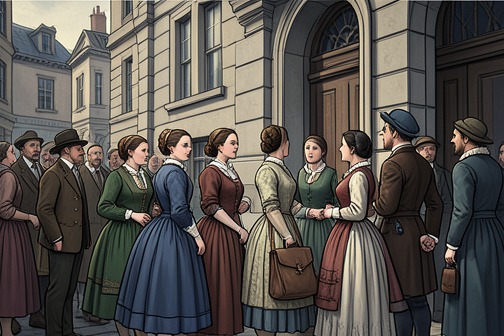
The [1840 World Anti-Slavery Convention in London](entity:event-recall-event-1840-world-anti-slavery-638b960fb772) excluded women from its proceedings, exposing the limits of a reform movement that challenged slavery while denying women a place in its own public forum. In [Simone de Beauvoir](entity:character-recall-character-simone-de-beauvoir-b0ac2b46e30f)’s account, this exclusion helped prompt [Lucretia Mott](entity:character-recall-character-lucretia-mott-ed762924a664) to establish a feminist association and connected antislavery activism with a new campaign for women’s political rights.
## Exclusion and the Formation of a Feminist Association
Women who sought to attend the antislavery congress in [London](entity:location-recall-location-1bfd335cdd1b) were turned away. The episode did not end their political activity: the Quaker Lucretia Mott responded by founding a feminist association. Exclusion thus became a point of organization, redirecting women’s participation in antislavery work toward an explicit effort to contest their own civic and political subordination.
## From London to [Seneca Falls](entity:location-recall-location-2e1a0846983d)
On July 18, 1840, women gathered at the [Seneca Falls Convention](entity:action-recall-action-e8f7d2a7bf4a) and drafted a declaration that, as Beauvoir presents it, set the tone for American feminism. Its Quaker-inspired language asserted that women and men were created equal and possessed inalienable rights. It also charged that marriage could make a woman civilly dead in the eyes of the law, and challenged men’s claim to assign women a sphere of action that belonged to conscience and [God](entity:character-recall-character-god-28f937b98b12). The London exclusion and the Seneca Falls declaration belong to a connected sequence: denial of access to an antislavery congress was followed by the formation of an association and then by a public statement of women’s rights.
## Antislavery, Political Rights, and Unequal Solidarity
The convention’s significance lies in the convergence of antislavery activism and women’s organizing, not in an assumption that the two struggles automatically advanced together. Beauvoir describes American women as campaigning for Black people’s rights, yet later records their unsuccessful demand during the Civil War that the constitutional amendment securing Black men’s suffrage prohibit denial of the vote on account of race, color, or sex. She also recounts [Susan B. Anthony](entity:character-recall-character-susan-b-anthony-2d62f5454b33)’s subsequent vote in Rochester with fourteen comrades, an action that brought a fine. These developments show the political stakes of women’s exclusion: women could participate in reform movements while still being denied equal standing and political power.
## Place in Beauvoir’s Account of Women’s Collective Action
Beauvoir sets the London episode against the difficulty women faced in acting as a unified political group. Unlike groups with a shared historical experience or concentrated community, women were dispersed among men and divided by class and race; their ties to fathers, husbands, homes, and work could bind them more closely to particular men than to other women. The antislavery congress therefore figures in a tension within reform: women’s participation in a cause did not guarantee recognition as political agents in their own right, but exclusion could help create the institutions and declarations through which they asserted that agency.
The episode also illuminates Beauvoir’s broader distinction between formal claims and concrete freedom. Her account judges institutions by the opportunities they afford individuals, and treats women’s emancipation as requiring more than the recognition of abstract equality. The movement from exclusion in London to association and declaration in the [United States](entity:location-recall-location-united-states-2f533bc8d0b9) gives that argument a historical shape: women’s political agency had to be organized and claimed even within movements whose stated purpose was liberation.
Event 29
Wyoming women's suffrage (1869)

Wyoming women’s suffrage (1869) was an early state-level grant of voting rights to women in the [United States](entity:location-recall-location-united-states-2f533bc8d0b9), marking a concrete advance in a campaign that would continue for decades. [Simone de Beauvoir](entity:character-recall-character-simone-de-beauvoir-b0ac2b46e30f) places it within a broader history in which women’s political claims gained force through organized pressure but remained constrained by male control of political institutions.
## Campaign and Legislative Context
Women’s organized political activity in the United States developed alongside campaigns against slavery. After women were excluded from the 1840 antislavery congress in [London](entity:location-recall-location-1bfd335cdd1b), [Lucretia Mott](entity:character-recall-character-lucretia-mott-ed762924a664) founded a feminist association. The [Seneca Falls Convention](entity:action-recall-action-e8f7d2a7bf4a) later articulated a claim to equal rights and objected to the civil and political disabilities imposed on married women. During the Civil War, women participated actively, but their demand that voting rights be extended without distinction of sex was not accepted.
## The 1869 Grant and Its Limits
In the account of the suffrage campaign, Wyoming granted women the right to vote in 1869. The measure stood out as an early state-level success, but it did not immediately produce a broad or uniform change. Colorado followed in 1893, and Idaho and Utah in 1896; elsewhere, progress remained slow. The sequence underscores the difference between securing a right in particular states and establishing it across the country.
## Significance in the Wider Struggle
The Wyoming measure belongs to a history of political gains achieved amid persistent institutional barriers. In Simone de Beauvoir’s interpretation, women’s demonstrations and campaigns could exert pressure, but men continued to hold decisive power over women’s political status. The state-level grant therefore represents both an opening and a limit: it made women’s voting rights politically real in one jurisdiction while leaving the larger struggle for equal participation unresolved.
Event 30
International Congress of Women's Rights (1878)
The [International Congress of Women's Rights (1878)](entity:event-recall-event-1878-67b582bffaf0), organized by [Léon Richer](entity:character-recall-character-l-on-richer-205d86e57e4a), was a milestone in the early organization of women’s rights activism. In [Simone de Beauvoir](entity:character-recall-character-simone-de-beauvoir-b0ac2b46e30f)’s account, it gave an international platform to a movement that was beginning to name itself, but remained cautious in its French campaigns and divided over how women’s freedom could be achieved.
## Organizing for women’s rights
In 1869, Léon Richer launched *Le Droit des Femmes* and organized the International Congress of Women's Rights (1878). The congress belonged to a period when activists were pressing primarily for civil rights; the right to vote had not yet become the movement’s central demand. Its international scope signaled an effort to organize beyond isolated individual protests, although the account does not describe the proceedings or enumerate the congress’s resolutions.
The congress followed a gradual build-up of public advocacy. In the preceding years, [Maria Deraismes](entity:character-recall-character-maria-deraismes-4c0072b8c3ec) had addressed women’s issues in public lectures, while [Hubertine Auclert](entity:character-recall-character-hubertine-auclert-780c1bd29782) began a suffrage campaign and created a group called [Women’s Suffrage](entity:organization-recall-organization-9b3a06f54c06) and a newspaper, *La Citoyenne*. These initiatives indicate that the demand for political participation was developing alongside the more limited civil-rights program associated with the congress.
## A cautious and divided movement
De Beauvoir characterizes the French and English movement of this period as timid, and says that women’s groups achieved little. She attributes this weakness in part to divisions of class: bourgeois and proletarian women did not share identical interests, and socialist feminists differed from reformers seeking new rights within existing society. The congress therefore stands not as proof of a unified campaign, but as one organizing effort within a movement whose constituencies and strategies remained unsettled.
The congress also belongs to a broader history in which organized pressure could matter without giving women control over political outcomes. De Beauvoir observes that collective demonstrations, including suffrage activism, exerted pressure when men were willing to yield to it. The congress’s significance in her account is thus both institutional and limited: it helped give women’s rights claims a public, organized form, while the structures governing legal and political change remained largely in male hands.
## Place in the history of women’s rights
The event forms part of a longer chronology of campaigns for equality. Earlier democratic advocates such as [John Stuart Mill](entity:character-recall-character-john-stuart-mill-95c7daff61df) had argued for equality in family and society; later, the 1879 Socialist Congress proclaimed the equality of the sexes. De Beauvoir presents these developments not as a smooth or inevitable advance, but as distinct interventions shaped by political interests, class divisions, and women’s restricted access to authority.
Her broader argument places the congress within a history written predominantly by men. Women’s movements could press claims and organize collective action, yet women did not thereby become an autonomous political force able to determine their own condition. The 1878 congress accordingly represents a meaningful step in public organization, but not the resolution of the conflict between formal claims to equality and the unequal power that governed their realization.
Event 31
Australian women's suffrage (1908)
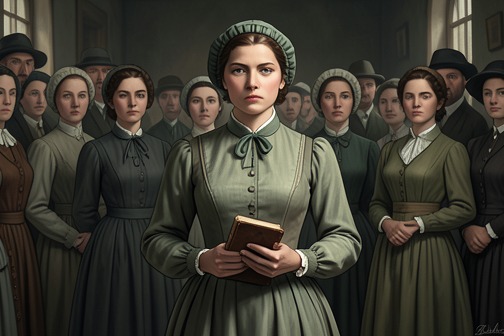
[Australian women's suffrage (1908)](entity:event-recall-event-53067e734085) marks a step in the international expansion of women’s political rights, but the book gives it only a concise place in a larger argument: formal gains mattered, yet they did not by themselves dissolve women’s subordination or make emancipation uniform.
## Place in the international chronology
The account names [New Zealand](entity:location-recall-location-1b610d9ff0fe) as granting women full rights in 1893 and [Australia](entity:location-recall-location-29432536e761) as following in [1908](entity:time-recall-time-1908-bb33e4cc5a2c). It sets these advances against the more difficult suffrage campaigns in [England](entity:location-recall-location-england-b153c1f368ea) and the [United States](entity:location-recall-location-united-states-2f533bc8d0b9), and against the long delay in [France](entity:location-recall-location-france-f5cafc8a8ad4), where women did not acquire political power until 1945. The comparison makes the Australian milestone part of a staggered chronology rather than an isolated or universal turning point.
## Political rights and the limits of formal change
The event’s significance is clearest in the contrast between political recognition and the broader conditions shaping women’s lives. The book argues that women’s historical subordination cannot be explained simply by their being a numerical minority: women are as numerous as men, but have lacked the common space and solidarity that could let them act collectively as subjects. They live dispersed among men and divided by class and race; bourgeois women may align with bourgeois men rather than working women, and white women with white men rather than Black women. In this analysis, a legal or political gain is important, but does not by itself undo the social relations that keep women dependent.
## The wider argument about emancipation
The book links women’s emancipation to material circumstances as well as political claims. Women’s entry into paid work could give their demands an economic basis, but employers benefited from low wages, and male workers often viewed women as cheap competition until women’s integration into unions made it possible to defend their interests collectively. The suffrage milestone therefore belongs to a broader history in which rights, labor, and the means of organization are intertwined.
The analysis also distinguishes freedom from a prescribed image of happiness. Women’s independence is constrained when marriage is presented as the surest route to security, while work remains poorly rewarded and domestic and childcare responsibilities fall disproportionately on women. Against these pressures, emancipation means access to concrete possibilities and the ability to pursue projects, not merely formal recognition or an assigned social role. Australian women's suffrage (1908) is thus a significant political advance within a history whose central question remains whether women can act as subjects in their own right.
Event 32
WSPU march on Parliament (1907)
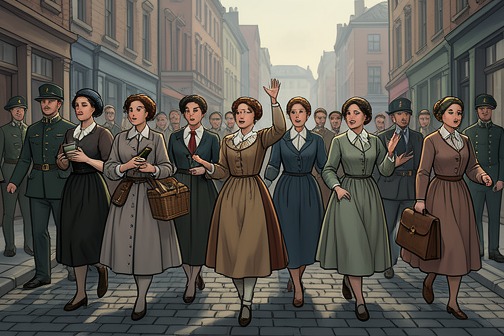
The [WSPU march on Parliament (1907)](entity:event-recall-event-3f62441d9b26) was an early landmark in the British women’s suffrage campaign: the [Women’s Social and Political Union](entity:organization-recall-organization-fe37a79c786b) put women’s demand for political rights into the streets and before Parliament in an organized public demonstration. The march joined workers and a small number of aristocratic women, but the police pushed them back. It inaugurated a sustained campaign of symbolic protest, mass meetings, arrests, and hunger strikes; women’s voting rights were eventually granted in restricted form in 1918 and without restriction in 1928.
## Political Setting
The march took place amid a long-running dispute over women’s political rights. Opponents argued that women lacked education and political experience, would vote according to their husbands’ wishes, or were unfit for the responsibility of voting. Such objections persisted despite the case for suffrage and the growing organization of its advocates. In the account of the campaign, the WSPU’s intervention made the demand visible as a cause women pursued collectively and in their own name.
The WSPU, created by the Pankhurst family in [London](entity:location-recall-location-1bfd335cdd1b) around 1903, took a more militant direction than the hesitant suffragist activity that had preceded it. It joined with the [Labour Party](entity:organization-recall-organization-5d8872c20a5c) and pursued a campaign of public action. The 1907 march brought that approach directly to Parliament: women workers wearing shawls marched alongside a few aristocratic women, making the demonstration a coalition across social positions as well as a challenge to women’s exclusion from political life.
## The March and Its Immediate Aftermath
The first march on Parliament met resistance from the police, who pushed the participants back. The demonstration did not secure the vote, but it made women’s organized presence at the seat of government a public fact. Its importance lay partly in that visible confrontation: the demand could no longer be treated only as a theoretical question or as a matter to be settled without women’s direct participation.
In the following year, the WSPU called a large meeting of Lancashire women workers after married women faced the prospect of being barred from work in certain mines. Further arrests followed, and imprisoned suffragettes answered with a long hunger strike. After their release, they organized new parades. These actions extended the campaign beyond the initial march, linking the claim to political representation with women’s position in working life.
## A Continuing Campaign
The WSPU’s methods combined demonstrations, meetings, lectures, delegation, and conspicuous symbolic action. Its supporters marched during Liberal Party meetings, gathered in Hyde Park and Trafalgar Square, and sought to enter the offices of political leaders. They carried banners demanding votes for women and used arrests and hunger strikes to keep the campaign in public view. In 1907, two hundred members of Parliament formed a committee for women’s suffrage; proposals for legislation followed, but were rejected year after year.
The campaign’s public imagery could be deliberately striking. In one parade, a woman rode a horse painted with the head of Queen Elizabeth. On July 18, 1910, when a women’s suffrage bill came before the House of Commons, a column nine kilometers long marched through London. The bill was rejected, and the response was further meetings and arrests. In 1912, the WSPU adopted more violent tactics, including attacks on empty houses and pictures, while also sending repeated delegations to Lloyd George and Sir Edward Grey and disrupting Lloyd George’s speeches at the Albert Hall. The march of 1907 thus belonged to a campaign whose methods and intensity changed over time.
## Outcome and Significance
The First World War interrupted the suffragettes’ activities. The account treats the effect of their actions on the timing of reform as difficult to determine, rather than claiming that the demonstrations alone secured victory. British women first received the vote in 1918 in a restricted form; equal voting rights followed in 1928. The campaign’s success is attributed in large part to the services women rendered during the war.
The 1907 march stands at the opening of this sustained public struggle: it joined women across class lines in a direct appeal to Parliament, and its rebuff did not end the movement but became part of a sequence of organizing, protest, and political pressure. Its significance is therefore both immediate and cumulative. It made women’s collective claim visible while exposing how little a demonstration, by itself, could alter a system whose lawmakers continued to reject suffrage.
Event 33
London women's suffrage march (18 July 1910)

The [London women's suffrage march (18 July 1910)](entity:event-recall-event-1910-67b5cb81d730) was a nine-kilometer procession through [London](entity:location-recall-location-1bfd335cdd1b) organized amid the British campaign for women’s voting rights. Its scale made the demand visible in public space, but the law before Parliament was rejected that day; the campaign continued, and women’s suffrage in Britain was secured in restricted form in 1918 and without restriction in 1928.
## Background and Campaign
The march arose from a militant phase of British suffrage activism that developed around 1903, when the Pankhurst family founded the [Women’s Social and Political Union](entity:organization-recall-organization-fe37a79c786b). The organization joined with the [Labour Party](entity:organization-recall-organization-5d8872c20a5c) and pursued public campaigning on a scale that made women’s political claims difficult to ignore. Its methods included marches, public meetings, lectures, symbolic actions, and hunger strikes by imprisoned campaigners.
The movement’s public actions unfolded alongside repeated parliamentary defeats. In 1907, two hundred members of Parliament formed a committee for women’s suffrage, and legislators introduced a suffrage bill each year thereafter, only for it to be rejected. The WSPU’s first march on Parliament in 1907 was pushed back by police. In [1908](entity:time-recall-time-1908-bb33e4cc5a2c), when married women faced the prospect of being barred from work in certain mines, the organization called Lancashire women workers to a large meeting, followed by arrests and a hunger strike by imprisoned suffragettes.
## The March and Its Immediate Outcome
On July 18, 1910, the day the women’s suffrage bill went before the Chamber, a procession nine kilometers long paraded through London. The scale of the column turned the day’s parliamentary question into a conspicuous collective demonstration: women’s political participation was asserted not only in debate but through organized presence in the streets.
The bill was rejected. The march therefore did not produce an immediate legislative victory. Its place in the campaign is instead defined by the contrast between the procession’s immense public visibility and Parliament’s refusal to grant the right sought that day. After the defeat, suffrage meetings continued and further arrests followed.
## Escalation and Later Results
The 1910 procession formed part of a longer campaign that became more confrontational. In 1912, suffragettes adopted more violent tactics, including damaging empty houses and pictures, while also continuing to send delegations to political leaders and interrupt speeches. The First World War interrupted the movement’s activities, and the book cautions that the extent to which suffragette actions hastened the eventual outcome is difficult to determine.
British women gained the vote in 1918, though initially under restrictions; in 1928, suffrage was extended without restriction. The account connects the eventual success in large part to women’s services during the war, rather than presenting the 1910 march as a single decisive cause. Its significance lies in its place within a prolonged campaign whose public demonstrations, political pressure, arrests, and wartime context accumulated toward reform.
## Historical Significance
The march exemplifies the book’s account of women’s political action as a struggle conducted within institutions and public movements largely controlled by men. Its rejection on the very day the procession filled London underscores the gap between making a demand visible and securing legal change. In the broader history presented in the book, suffragette demonstrations could exert pressure, but women’s political claims still depended on whether male-controlled institutions would act on them.
The episode also belongs to the author’s wider argument that women’s condition is historically made rather than fixed by an eternal feminine nature. The march presents women as organized political actors seeking access to a public sphere from which they had been excluded. Its long aftermath resists a simple story of inevitable progress: the procession was followed by rejection, the movement’s tactics changed, war interrupted its activity, and voting rights arrived in stages.
Event 34
British women's suffrage
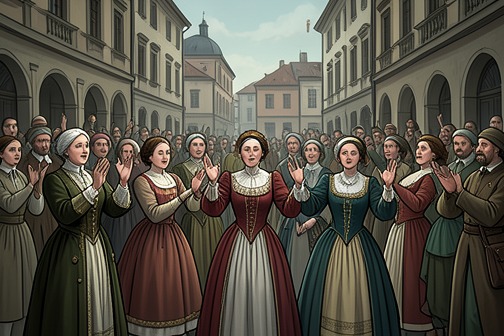
[British women's suffrage](entity:event-recall-event-2e63cc335e00) emerged from a prolonged campaign in which public demonstrations, political lobbying, imprisonment, and—in its later phase—property-directed militancy made women’s exclusion from the vote increasingly difficult to ignore. The account records a two-stage victory: limited voting rights in 1918, followed by suffrage without restriction in 1928, and links the first reform in large part to women’s contributions during the war.
## Campaign and Methods
For fifteen years, British suffragettes pursued a campaign that combined nonviolent protest with increasingly confrontational symbolic action. They carried “Vote for Women” banners at Liberal Party meetings in the [Royal Albert Hall](entity:location-recall-location-91ee37a5b6f3), entered Prime Minister H. H. Asquith’s office, held meetings in Hyde Park and Trafalgar Square, marched through the streets, and gave lectures. Some demonstrations brought arrests after protesters insulted police or threw stones; imprisoned activists then used hunger strikes to keep attention on their cause. The movement raised funds, rallied millions of women and men, and helped make suffrage a recurring question in Parliament.
In 1907, two hundred members of Parliament formed a committee for women’s suffrage, and from then on proposals for a suffrage law were introduced annually, only to be rejected with familiar arguments. That year, the [Women’s Social and Political Union](entity:organization-recall-organization-fe37a79c786b) organized its first march on Parliament, drawing workers in shawls alongside a small number of aristocratic women. Police pushed the marchers back, but the action made the campaign visible in the political capital.
## Escalation and Political Pressure
The following year, when married women faced the threat of being barred from work in certain mines, the Women’s Social and Political Union called a large meeting of Lancashire women workers. Arrests followed, and imprisoned suffragettes answered with a prolonged hunger strike. After their release, they resumed demonstrations; one marcher rode a horse painted with the head of Queen Elizabeth.
On July 18, 1910, as a women’s suffrage bill came before the House of Commons, a procession nine kilometers long crossed [London](entity:location-recall-location-1bfd335cdd1b). Parliament rejected the bill, and the campaign continued through further meetings and arrests. By 1912, activists had adopted more militant tactics: they set fire to empty houses, slashed pictures, trampled flower beds, and threw stones at police. At the same time, they continued sending delegations to [David](entity:character-recall-character-34e273e61eff) Lloyd George and Sir Edward Grey, and disrupted Lloyd George’s speeches after hiding in the Royal Albert Hall. Protest thus worked on several fronts at once, pairing visible disruption with persistent appeals to political leaders.
## Reform and Significance
The war interrupted suffragette activity. The account cautions that it is difficult to establish how much the campaign’s actions hastened reform, rather than presenting protest as a single sufficient cause. British women received the vote in 1918 in a restricted form; in 1928, the restriction was removed. Women’s services during the war are identified as a major reason for the first grant of suffrage.
The outcome was therefore both a political achievement and a staged change in women’s civic standing. The contrast between repeated parliamentary rejection and eventual reform underscores the limits of symbolic agitation on its own, while the succession of marches, arrests, hunger strikes, and lobbying shows how campaigners kept the demand in public and political view until voting rights were extended.
Event 35
White House suffrage pickets (1917)
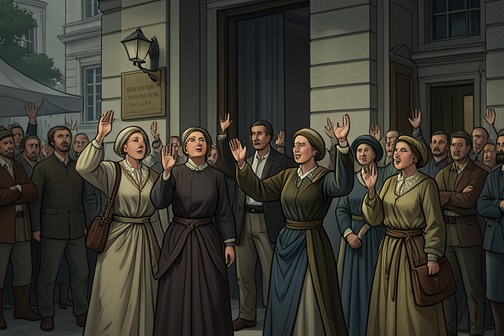
The [White House](entity:location-recall-location-9fd5fefc5ad5) suffrage pickets of 1917 were a campaign of public protest by American suffragists seeking voting rights for women across the country. By bringing banners to the White House gates—and, at times, chaining themselves there—the protesters made a national political demand visible at the seat of executive power. Their arrests and hunger strike intensified the campaign, though the amendment they sought first failed in the Senate.
## Background and aims
In 1913 the American suffrage movement adopted militant tactics modeled on the English campaign. Doris Stevens and [Alice Paul](entity:character-recall-character-alice-paul-71a4518bfd7f) led the effort, securing permission from President Wilson for women to march with banners and signs. The movement organized lectures, meetings, marches, and other demonstrations, while women from the nine states where they could already vote traveled to the Capitol to press for a nationwide vote.
The pickets emerged from this broader campaign. The demand was not simply for recognition in states that had already enfranchised women, but for a national amendment establishing women’s right to vote. The White House protest brought that demand to the president’s doorstep and followed earlier public organizing with a sustained, conspicuous presence.
## The White House protest
In 1917, suffragists stood at the White House doors holding banners. Some chained themselves to the gates so they could not be driven away. They maintained the protest for six months before authorities stopped them and sent them to the Occoquan penitentiary.
In prison, the women went on a hunger strike. They were eventually released, but their return to protest did not end the confrontation: further demonstrations led to the beginning of riots. The sequence—from a visible vigil at the gates to imprisonment, hunger strike, release, and renewed demonstrations—made the campaign’s persistence as consequential as its initial appeal.
## Legislative struggle and aftermath
The government eventually agreed to appoint a House Committee on Woman Suffrage. The [Women’s Party](entity:organization-recall-organization-5639d3fa3f68) executive committee held a conference in Washington, and an amendment supporting women’s voting rights went before the House, which approved it on January 10, 1918. The measure still required Senate approval. Wilson would not promise to exert sufficient pressure, and the Senate rejected the amendment by two votes after the suffragists demonstrated again at the White House doors and the president appealed to the Senate.
A Republican Congress voted for the amendment in June 1919, but the struggle for complete equality between the sexes continued for another decade. The 1917 pickets therefore formed part of a longer campaign rather than a self-contained victory: their arrests and public pressure helped keep suffrage before national lawmakers, while the initial Senate defeat showed how far the movement remained from its goal.
## Significance
The account presents the pickets as organized political action, not merely an appeal for sympathy. The women used banners, marches, sustained presence, and the risk of imprisonment to press a claim to political participation. Their campaign also exposed the gap between a public demand and its institutional acceptance: even after the House acted, the Senate could reject the amendment, and the fight for equality continued beyond the vote.
The episode sits within a broader argument that women’s political history has been shaped by institutions and decisions controlled by men. The suffragists’ actions exerted pressure, but the outcome still depended on political bodies and leaders who could delay or refuse the change. Their protest made that dependence visible while insisting that women be recognized as participants in public life.
Event 36
Passage of the Nineteenth Amendment by Congress
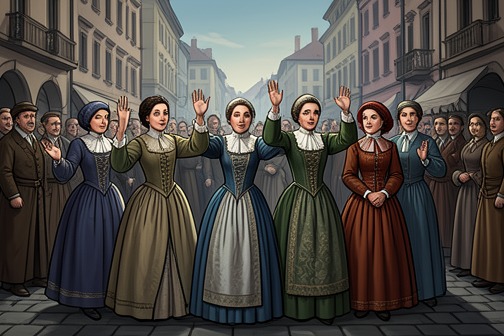
The passage of the Nineteenth Amendment by Congress is presented as a hard-won milestone in the American women’s suffrage movement, not as the end of women’s struggle for equality. In [Simone de Beauvoir](entity:character-recall-character-simone-de-beauvoir-b0ac2b46e30f)’s account, organized campaigns, protest, imprisonment, and hunger strikes preceded congressional action; the amendment’s adoption opened a path to political enfranchisement, while wider social and economic inequalities persisted.
## Background and Mobilization
Women’s political organizing in the [United States](entity:location-recall-location-united-states-2f533bc8d0b9) developed alongside their participation in economic and civic life. By 1900, five million women worked, including in industry and business, and women had entered professions such as law and medicine. They also formed clubs with about two million members. Yet only nine states had granted women the vote, leaving national suffrage unresolved.
In 1913 the movement adopted a more militant model associated with the British campaign. Doris Stevens and [Alice Paul](entity:character-recall-character-alice-paul-71a4518bfd7f) led the effort, securing permission from President Wilson to march with banners and signs. Activists then organized lectures, meetings, marches, and other public demonstrations. Women who already had the vote in nine states traveled to the Capitol in a highly visible show of support for nationwide enfranchisement. A gathering in [Chicago](entity:location-recall-location-73935e623d95) formed the [Women’s Party](entity:organization-recall-organization-5639d3fa3f68), giving the campaign an organized political vehicle.
## Protest and Congressional Action
In 1917 suffragettes stationed themselves at the [White House](entity:location-recall-location-9fd5fefc5ad5) gates with banners, sometimes chaining themselves there so they could not be removed. After six months, authorities sent them to [Occoquan Workhouse](entity:location-recall-location-f764d2c70fb9). They went on hunger strike and were eventually released. Further demonstrations led to riots, after which the government agreed to establish a House Committee on Woman Suffrage.
The Women’s Party executive committee held a conference in Washington, and a suffrage amendment went to the House, which approved it on January 10, 1918. Senate approval remained necessary. Wilson would not promise to exert sufficient pressure, and a renewed demonstration at the White House followed. Although Wilson then appealed to the Senate, the amendment was rejected by two votes. The setback did not end the campaign: in June 1919, a Republican Congress voted for the amendment.
## Significance and Limits
The congressional passage represented the culmination of a sustained campaign that had moved from public demonstrations and organized lobbying to the amendment process. The account underscores the cost and persistence behind that advance: activists faced imprisonment, undertook hunger strikes, and returned to protest after an initial Senate defeat.
Yet Beauvoir distinguishes formal political progress from complete equality. The struggle continued for the next decade, and later gains included the establishment of the [Inter-American Commission of Women](entity:organization-recall-organization-d094dd09b3b3) in 1928 and treaties signed by nineteen American republics in 1933 that recognized women’s equality in rights. The amendment’s passage thus stands as a decisive step in enfranchisement within a longer, unfinished movement for equal standing.
Event 37
French Senate rejection of women's suffrage (1932)

The [French Senate rejection of women's suffrage (1932)](entity:event-recall-event-1932-2f17247cf8d0) was a decisive setback in a long campaign for women’s political rights in [France](entity:location-recall-location-france-f5cafc8a8ad4). Although the Chamber had approved the voting and eligibility amendment by 319 votes to one, the Senate voted it down after debate across several sessions. The episode made visible the persistence of arguments that cast women as unsuited to political life, even as women’s work and public activity increasingly challenged their exclusion.
## Background and legislative path
The parliamentary struggle had advanced in fits and starts. In 1901 Viviani first raised women’s suffrage in parliament, proposing a restricted vote for unmarried and divorced women. In 1909, the [French Union for Women’s Suffrage](entity:organization-recall-organization-1c8f83a7ed36), led by [Mme Brunschvicg](entity:character-recall-character-mme-brunschvicg-834e6fde4779), organized lectures, meetings, congresses, and demonstrations. Bills supporting women’s suffrage appeared repeatedly: one passed the Chamber in 1919 but failed in the Senate in 1922. The majority then used delaying procedures to avoid discussing suffrage bills.
In 1932 the Chamber voted for an amendment granting women the right to vote and to be eligible for office, with 319 votes in favor and one against. The Senate held a debate extending over several sessions before rejecting it. The contrast between the overwhelming Chamber vote and the Senate’s refusal captures the limits of formal momentum: parliamentary approval in one chamber did not translate into political rights.
## Arguments used to oppose suffrage
The Senate record assembled antifeminist claims that had circulated for half a century. Some were presented as compliments: women were supposedly too charming to enter politics, already ruled men without ballots, or stood on a pedestal from which voting would make them fall. This gallantry treated political exclusion as a privilege while leaving the electorate and political authority male.
Other objections invoked domestic order. Opponents argued that a woman’s place was in the home and that political disagreement would divide spouses. They also appealed to sex difference, military service, education, and political experience, suggesting that women would vote according to their husbands’ wishes or were not worthy of the vote. The claim that women should first free themselves from their dressmakers made political participation seem trivial or frivolous. These arguments framed exclusion as either protection, family duty, or evidence of incapacity rather than as a denial of equal political standing.
## Significance and aftermath
The author presents the rejection as part of a larger history in which women’s lives and rights were shaped by decisions made by men. In this account, laws and customs that limit women often reflect the interests and anxieties of those who hold authority, while descriptions of women’s supposed weakness can serve to justify that authority. The Senate debate is therefore not merely a procedural defeat: its listed objections reveal how political inequality was defended through both paternalistic praise and explicit claims of male superiority.
The setback also stood against the broader conditions of women’s lives. Women could be expected to combine paid work with household labor and childcare, while unequal economic circumstances and the ideal of marriage continued to pull them toward dependence. The book’s existentialist perspective distinguishes freedom as the ability to pursue projects and an open future from confinement to repetitive roles imposed by others. The suffrage debate concerned access to public decision-making, but it belonged to this wider struggle over whether women could act as autonomous subjects rather than be defined by a social position assigned to them.
French women did not obtain political rights until 1945. The thirteen-year interval after the Senate’s rejection underscores the delay between acknowledged claims and institutional change. The 1932 vote thus marks both the organized campaign’s reach—evident in the Chamber’s decisive tally—and the continued power of the institutions and assumptions that blocked its realization.
Event 38
French women's suffrage (1945)

[French women's suffrage (1945)](entity:event-recall-event-30914ba548a8) marks the delayed acquisition of political rights by French women after decades of organized demands and repeated obstruction. In the book’s account, the 1945 outcome is not an isolated legal milestone: it follows a long contest over women’s status as citizens and belongs to a broader argument that formal equality cannot by itself secure practical freedom.
## The road to the vote
In 1932, after years in which parliamentary majorities used delaying procedures to avoid discussing women’s suffrage, the Chamber voted for women’s right to vote and stand for office by 319 votes to 1. The Senate then debated the amendment over several sessions and rejected it. The author emphasizes the Senate record because it gathers the arguments used against women’s political participation over the preceding half-century, exposing how resistance could dress exclusion in the language of gallantry, family welfare, or political competence.
Some opponents claimed that women were too cherished to be allowed to vote, that voting would diminish their charm, or that women already governed men without ballots. Others argued that political disagreements would unsettle marriages, that women lacked education or political judgment, or that they would simply follow their husbands’ wishes. The argument that women were unworthy of a right recast the denial of citizenship as a judgment on women’s capacity. Despite the weakness of these objections, French women had to wait until 1945 to acquire political power.
## A delayed enfranchisement
The account places [France](entity:location-recall-location-france-f5cafc8a8ad4)’s delay beside earlier advances elsewhere. [New Zealand](entity:location-recall-location-1b610d9ff0fe) granted women full political rights in 1893, and [Australia](entity:location-recall-location-29432536e761) followed in [1908](entity:time-recall-time-1908-bb33e4cc5a2c). In France, by contrast, the parliamentary defeat of 1932 preceded another thirteen years of waiting. This contrast makes the 1945 change both a concrete victory and evidence of how persistent institutional resistance could be, even after the case for suffrage had been debated and a strong majority in the Chamber had supported it.
The book also describes women’s political exclusion as part of a larger condition in which rights on paper and the ability to act freely in daily life do not automatically coincide. Suffrage gives women political standing, but it does not by itself redistribute the work, income, and authority that shape their practical choices.
## Rights and the conditions of freedom
The argument distinguishes political recognition from the material conditions needed to make freedom real. Women’s work had expanded across agriculture, industry, business, and the professions, yet reproductive demands and household responsibilities continued to restrict their time and opportunities. The book notes that birth control was neither universally available nor consistently practiced, abortion was officially forbidden, and childcare and housekeeping remained almost exclusively women’s responsibility. In France, the antifeminist tradition could make men regard participation in household chores as demeaning, leaving women to reconcile family and professional life under unequal burdens.
The contrast is especially clear in the account of peasant women. A married woman might share her husband’s interests and property, possess considerable moral prestige, and sometimes exercise real authority in the home. Yet she could still carry an exhausting daily workload: tending animals and gardens, doing heavy field labor, preparing meals, maintaining the household, and caring for children. Political rights alone could not erase the unequal distribution of such labor or give women equal command of their time.
The book therefore treats women’s enfranchisement as a necessary but incomplete step. Its wider standard is not a claim that women are happy when assigned a supposedly suitable place, but whether institutions give individuals concrete opportunities to pursue projects and expand their freedom. The vote changes women’s recognized political position; the continuing burdens of work, reproduction, and domestic care show why legal equality does not, by itself, complete emancipation.
Event 39
Montevideo women's equality treaties (1933)
The [Montevideo women's equality treaties (1933)](entity:event-recall-event-8f09907197a6) were an international agreement that, in the account, gave women equality in all rights across nineteen American republics. Their importance lies both in that stated commitment and in the contrast it sharpens: formal recognition could advance women’s status, but did not by itself undo the economic, legal, and social arrangements that limited women’s freedom in practice.
## Background: From Local Campaigns to International Recognition
The treaties appear within a history of feminist organizing that had long struggled to turn demands for equality into enforceable rights. In the [United States](entity:location-recall-location-united-states-2f533bc8d0b9), suffragists had campaigned through marches, public meetings, and protests at the [White House](entity:location-recall-location-9fd5fefc5ad5); the movement’s achievements remained incomplete even after women won the vote nationally. The account presents international cooperation as a further step beyond these national campaigns.
At the sixth International Conference of American States, held in Havana in 1928, women secured the creation of the [Inter-American Commission of Women](entity:organization-recall-organization-d094dd09b3b3). The commission provided a regional institutional setting for advancing women’s status. The Montevideo agreement followed five years later, translating that wider effort into a convention signed by nineteen American republics.
## The Convention and Its Scope
The account describes the 1933 treaties as elevating women’s status through international convention. Their stated reach was equality in all rights, and the number of signatories—nineteen American republics—makes the agreement a collective regional undertaking rather than a reform confined to a single country.
The convention’s significance in this narrative is therefore not merely symbolic: it placed women’s equality within an international framework. At the same time, the evidence establishes the agreement’s declared scope, not the details of its implementation in each signatory state. It does not specify particular enforcement mechanisms or describe how individual governments changed their laws as a result.
## Formal Rights and Material Conditions
The wider analysis cautions against treating legal recognition as equivalent to lived equality. Women could possess rights in the abstract while remaining disadvantaged by custom, economic dependence, unequal employment, and limited access to influential positions. In the labor market, women’s lower wages could also be used by employers to undercut the interests of male workers, creating hostility rather than automatic solidarity between women and the working class. The account argues that organizing women within unions helped them defend their interests while building a basis for broader cooperation.
This distinction between a declared right and the means to exercise it also appears in the discussion of women’s historical subordination. Women were dispersed within families and social classes rather than united by a shared workplace, territory, or independent institutional life; class and racial divisions could further separate them. Against that background, a convention recognizing equality across nineteen republics represents a significant formal advance, but the account’s broader argument makes clear that collective legal language alone could not supply the economic independence and social power required to realize it.
## Place in the History of Women’s Equality
The treaties form part of a gradual widening of the political and legal claims made on women’s behalf. In the account, the creation of the Inter-American Commission in 1928 leads to the 1933 convention, which is described as elevating women’s standing by international agreement. The sequence shows a movement from organizing and campaigning toward regional recognition of equality as a matter for governments collectively.
The event’s lasting significance in the book’s framework rests on this tension: international recognition can challenge women’s subordinate status, while the structures that reproduce that status may persist beneath the language of equal rights. The treaties are presented as a concrete milestone, not as proof that equality had already been achieved in everyday life.
Event 40
Inter-American Commission of Women (1928)
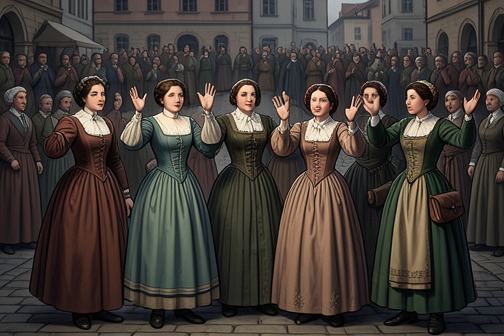
The [Inter-American Commission of Women (1928)](entity:event-recall-event-b0d2519f630a) emerged from a campaign that moved women’s political demands from marches and national organizing toward regional institutions. Its establishment in 1928, followed by the 1933 Montevideo treaties affirming women’s equality in rights, represented an important advance; in [Simone de Beauvoir](entity:character-recall-character-simone-de-beauvoir-b0ac2b46e30f)’s account, however, formal recognition did not by itself overcome the material and social conditions that limited women’s freedom.
## Background: Unequal access to collective power
Simone de Beauvoir distinguishes women’s subordination from the histories of groups whose shared past, culture, or separate community helped them organize against domination. Women were not a numerical minority, but were dispersed among men and tied to fathers and husbands through homes, work, economic interests, and social conditions. Differences of class and race further divided them: bourgeois women could align with bourgeois men rather than working women, and white women with white men rather than Black women. This fragmentation made collective action difficult even as the principle of reciprocal recognition made women’s subordinate status open to challenge.
The comparison with other struggles is illuminating but not complete. Simone de Beauvoir notes that women’s relation to men differs from that of a class or a racially subordinated group: women and men remain bound within the intimate and social unit of the couple, and women’s interests are not reducible to those of workers. Women’s liberation therefore required both collective organization and attention to the distinct conditions of gendered life.
## From suffrage activism to a regional commission
The commission followed years of political organizing across the Americas. In the [United States](entity:location-recall-location-united-states-2f533bc8d0b9), women’s suffrage campaigners used marches, meetings, and other demonstrations; in 1917, some stationed themselves at the [White House](entity:location-recall-location-9fd5fefc5ad5) gates with banners and chained themselves there to resist removal. After six months, authorities sent them to [Occoquan Workhouse](entity:location-recall-location-f764d2c70fb9), where they went on hunger strike before being released. Continued demonstrations and congressional activity formed part of the longer campaign for a national vote.
The movement also developed beyond the United States. At the sixth International Conference of American States, held in Havana in 1928, women secured the creation of the [Inter-American Commission of Women](entity:organization-recall-organization-d094dd09b3b3). In 1933, the Montevideo treaties advanced women’s standing through an international convention: nineteen American republics signed an agreement granting women equality in all rights. The sequence connects organized pressure to regional recognition, while distinguishing the commission’s establishment from the later treaty commitment.
## Recognition and its limits
The commission’s creation belonged to a broader movement in which women sought political equality as well as access to education, work, and liberty. Yet Simone de Beauvoir stresses the distance between rights in principle and control over everyday life. She describes women’s claims as historically constrained by their lack of independent organizing space and by economic and social ties that often bound them more closely to men in their own families or class than to women as a group.
Economic divisions also complicated alliances. Employers welcomed women workers’ low wages, while male workers could view them as a threat to their own livelihoods. Simone de Beauvoir argues that integration into unions enabled women to defend their interests without being cast as competitors to workers as a whole. In this wider analysis, a regional commission could mark meaningful institutional progress, but neither formal equality nor representation alone erased the divisions and dependencies that had made collective action difficult.
Event 41
Russian Revolution of 1905
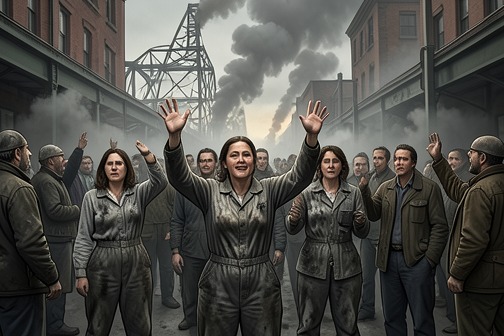
[Simone de Beauvoir](entity:character-recall-character-simone-de-beauvoir-b0ac2b46e30f) places the [Russian Revolution of 1905](entity:event-recall-event-1905-21a3c2020305) within a history in which women’s political emancipation is inseparable from the struggle of workers. Women participated actively in the mass strikes and mounted the barricades; their action forms an early stage in a sequence that leads to the demonstrations of 1917, the [October insurrection](entity:action-recall-action-54ae04d5f09a), and the political and economic equality granted under [Vladimir Lenin](entity:character-recall-character-vladimir-lenin-34f94d23ace7). The episode matters not as a self-contained victory, but as evidence that women were already acting within revolutionary politics before the state formally recognized their rights.
## Background and Political Consciousness
The account traces the Russian women’s movement to the end of the nineteenth century, when it arose among women students of the intelligentsia. These women were described as less focused on a separate personal cause than on revolutionary action generally. Some joined efforts directed against the [Okhrana](entity:organization-recall-organization-735a10ea0b92); in 1878, [Vera Zasulich](entity:character-recall-character-vera-zasulich-91913057e576) shot police chief Trepov. During the Russo-Japanese War, women took the place of men in many kinds of work, and their political consciousness grew. The [Russian Union for Women’s Rights](entity:organization-recall-organization-38e8d825e81f) demanded equality between the sexes, while a women’s-rights group in the first Duma had little power. This background connects organized demands for equality with both political repression and women’s growing participation in public and economic life.
## Women in the Revolution of 1905
In 1905, women workers took an active part in the mass political strikes breaking out across [Russia](entity:location-recall-location-e36341713c23) and mounted the barricades. Beauvoir gives no individual biography or detailed account of a particular confrontation; the emphasis is collective participation. The episode marks a transition from women’s demands being voiced through organizations with limited influence to women taking part directly in mass political action. It also anticipates the larger roles women would assume in the revolutionary upheavals that followed.
## From 1905 to 1917 and the Civil War
The book situates 1905 within a longer sequence rather than treating it as the endpoint of women’s political mobilization. On March 8, 1917, International Women’s Day, women demonstrated in the streets of St. Petersburg, demanding bread, peace, and the return of their husbands, just days before the revolution. Women also took part in the October insurrection. Between 1918 and 1920, they played important economic and military roles in the [Soviet Union](entity:location-recall-location-67657886d3d4)’s fight against invading forces. In this chronology, 1905 is an early demonstration of active participation; the events of 1917 and the civil war extend that participation into mass protest, insurrection, and the defense of the new order.
## Political Equality and Its Limits
Beauvoir presents the revolution as a route to formal advances. In keeping with Marxist tradition, Lenin linked women’s liberation to the liberation of workers and granted women political and economic equality. Article 122 of the [1936](entity:time-recall-time-1936-a3036a6b53f1) Soviet Constitution declared equal rights for women and men across economic, official, cultural, public, and political life. Women obtained equal wages with male workers and took an active role in production, gaining political and social importance. These changes make the earlier participation of women in 1905 part of a history that culminates, institutionally, in recognized equality.
That progress is not presented as complete freedom. Beauvoir notes that Soviet women remained strictly subordinated to the state and bound to the home, even while they had access to political life and the dignity associated with productive work. The state’s restrictions on abortion and near suppression of divorce also constrained women’s choices. The episode of 1905 therefore belongs to a broader, unresolved argument: revolutionary participation and legal equality can expand women’s public agency, while social and political arrangements continue to limit their independence.
## Significance in Beauvoir’s Historical Argument
The revolution supports Beauvoir’s account of women’s history as shaped by material and political conditions rather than by an unchanging feminine nature. Women’s entry into strikes and barricade action shows them participating as political actors in a struggle bound up with labor and social transformation. Yet Beauvoir cautions against reading emancipation as a simple, completed progression: feminist movements have often depended on broader political struggles, and gains in public life can coexist with continuing subordination. The Russian Revolution of 1905 is thus significant both for the collective action it records and for the questions it raises about how far political revolution can alter women’s concrete conditions.
Event 42
February Revolution
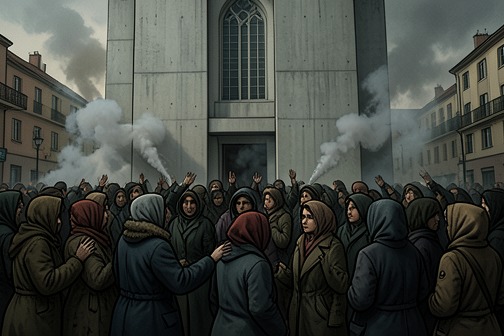
The [February Revolution](entity:event-recall-event-598f1988a838) appears in The Second Sex as a decisive instance of women acting collectively within a political upheaval, rather than remaining at its margins. Women’s mass demonstration in St. Petersburg on March 8, International Women’s Day, demanded bread, peace, and the return of their husbands; the account says it may have triggered the revolution, but also cautions that the demonstration was a signal rather than the sole cause. Its significance lies both in the demands voiced in the streets and in the argument it supports about the conditions under which women can become historical actors.
## Background and Political Context
The demonstration belongs to a longer account of women’s political activity in [Russia](entity:location-recall-location-e36341713c23). By the late nineteenth century, women students associated with the intelligentsia had entered revolutionary movements, often directing their efforts toward revolution in general rather than a personal feminist cause. In 1878, [Vera Zasulich](entity:character-recall-character-vera-zasulich-91913057e576) shot police chief Trepov. During the Russo-Japanese War, women replaced men in many kinds of work, and the [Russian Union for Women’s Rights](entity:organization-recall-organization-38e8d825e81f) demanded political equality. A women’s rights group formed in the first Duma, though it had little power.
Women were also active in the mass political strikes of 1905, including on the barricades. Against this background, the 1917 demonstration was not an isolated appearance in public life. It followed years of political activity and a growing recognition among women workers that emancipation was tied to the transformation of society.
## The Demonstration and Its Demands
On March 8, 1917, a few days before the revolution, women demonstrated en masse in the streets of St. Petersburg. Their demands joined immediate hardship and political hope: bread, peace, and the return of their husbands. The demonstration’s place on International Women’s Day gives the scene a collective character, while its demands show how public action could arise from needs directly bound up with women’s everyday lives and families.
The account does not present the women’s march as a complete explanation of the revolution. It says that the day may have triggered the upheaval, but calls it a signal. This distinction preserves the importance of women’s intervention without turning a mass demonstration into the only cause of a wider political event.
## Revolution and Women’s Political Agency
Women took part in the [October insurrection](entity:action-recall-action-54ae04d5f09a) as well as the earlier demonstrations. Between 1918 and 1920, they played an important economic and even military role in the [Soviet Union](entity:location-recall-location-67657886d3d4)’s fight against invading forces. These developments extend the significance of the February events: women’s political participation was not confined to a single march or to the expression of protest, but continued through revolutionary struggle and the work of the new society.
The book places these actions against a broader account of women’s historical exclusion. Women had often been permitted to revolt or to set events in motion without being allowed a lasting role in the positive construction of political life. The February demonstration offers a pointed counterexample to that pattern: women appear together in the streets with publicly stated demands, and their action is acknowledged as a possible catalyst. Yet the distinction between a signal and the forces that carry a revolution forward also reflects the limits the book sees in women’s political power under unequal conditions.
## Interpretation and Aftermath
The revolutionary period brought formal claims of equality. Lenin linked women’s liberation to workers’ emancipation and granted women political and economic equality. Article 122 of the [1936](entity:time-recall-time-1936-a3036a6b53f1) Soviet constitution declared equal rights for women in economic, official, cultural, public, and political life. The book also records striking gains in women’s employment and social importance, while treating official principles and material conditions as distinct questions.
The February Revolution therefore holds a double place in the argument. It demonstrates women’s capacity for collective political action and shows how a demonstration rooted in immediate demands can become part of revolutionary change. At the same time, the larger discussion insists that political rights and revolutionary participation do not by themselves resolve the burdens of reproduction, domestic labor, and unequal social power. The event’s importance is neither diminished to a mere pretext nor inflated into a self-sufficient cause: it is a visible act of agency within a transformation whose promises and limits remain in view.
Event 43
October Revolution

The [October Revolution](entity:event-recall-event-e4be4913f923) marks a decisive moment in [Simone de Beauvoir](entity:character-recall-character-simone-de-beauvoir-b0ac2b46e30f)’s account of women’s political participation: women took part in revolutionary action and the subsequent struggle, while the revolution’s promise of equality raised questions about how political rights, work, reproduction, and domestic responsibility shaped women’s actual freedom.
## Revolutionary Participation
Before the revolution, Russian women had already entered public and political life. In 1905, women joined mass strikes and mounted the barricades. On March 8, 1917, a few days before the revolution, women demonstrated in the streets of St. Petersburg on International Women’s Day, demanding bread, peace, and the return of their husbands. Beauvoir emphasizes that their action was not separate from the crisis affecting the country: demands for daily necessities and an end to war became a public political intervention.
Women also participated in the [October insurrection](entity:action-recall-action-54ae04d5f09a). Between 1918 and 1920, they played an important economic and even military role in the [Soviet Union](entity:location-recall-location-67657886d3d4)’s fight against invading forces. The account thus traces women’s involvement from strikes and street demonstrations to insurrection and the defense of the new state, presenting them as participants in revolutionary change rather than merely its beneficiaries.
## Equality as a Political Program
Beauvoir situates the revolution within a Marxist tradition that links women’s liberation to workers’ emancipation. Lenin, she writes, connected the two struggles and granted women political and economic equality. The [1936](entity:time-recall-time-1936-a3036a6b53f1) Soviet constitution declared equal rights for women in economic, official, cultural, public, and political life. The [Communist International](entity:organization-recall-organization-5868b042b9c2)’s program called for equality before the law and in daily life, changes to marriage rights and family law, recognition of maternity as a social function, and social responsibility for children’s care and education.
These commitments made the revolution significant beyond the transfer of political power: they proposed changes to the institutions that organized family life and assigned care to women. In Beauvoir’s analysis, however, declarations and programs must be distinguished from the concrete conditions under which women can exercise freedom. Formal rights matter, but do not by themselves settle how reproductive duties and domestic labor are distributed.
## Work, Reproduction, and the Limits of Emancipation
The account describes striking gains in women’s employment and public influence. Women obtained equal wages with male workers and assumed an active role in production. In the 1939 general elections, 457,000 women served in regional, district, town, and village soviets; 1,480 served in the higher soviets of the socialist republics, and 227 sat in the Supreme Soviet. Close to ten million women belonged to unions, and women made up 40 percent of the Soviet Union’s workers and employees. During the Second World War, women also worked in fields where men predominated, including metallurgy, mining, timber rafting, and railways, and served as pilots, parachutists, and partisans.
Yet Beauvoir resists reducing women’s liberation to their capacity for paid work. Reproductive life remains consequential in both social organization and personal experience; gestation cannot simply be treated as a job or public service. Nor does abolishing or reorganizing the family automatically end male domination: Beauvoir invokes [Sparta](entity:location-recall-location-1e4aa364bef0) and the [Nazi regime](entity:organization-recall-organization-nazi-regime-7fc7354c4ca2) as examples in which women could remain oppressed despite being directly attached to the state. The revolution’s egalitarian program therefore supplies both a historical achievement and a test: whether collective institutions can recognize maternity and provide care without turning women’s bodies and labor into instruments of state needs.
## Significance in Beauvoir’s Argument
The October Revolution belongs to a broader argument about the difference between abstract equality and lived freedom. Women’s participation in demonstrations, insurrection, production, and military activity shows that their social role is not fixed by biology. At the same time, the continuing weight of reproduction and domestic responsibilities makes emancipation a problem of social arrangements, not simply access to employment or political office.
This tension accords with Beauvoir’s existentialist framework: a person’s freedom requires real possibilities for action and a future not confined to repetitive duties. The revolutionary moment opens such possibilities for women, but the account does not treat its promises as proof that subordination has disappeared. Its significance lies in making women visible as agents of political transformation while exposing the unfinished work of translating equality into the conditions of everyday life.
Event 44
Russian Civil War
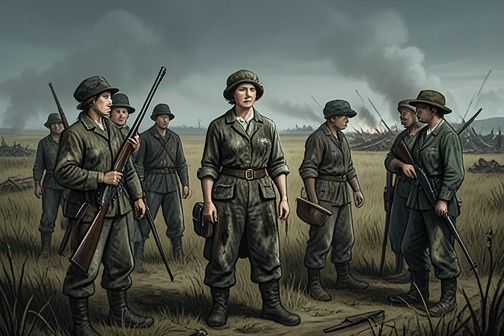
The [Russian Civil War](entity:event-recall-event-2e8848dd8381) is presented as a struggle in which women in the U.S.S.R. contributed to the fight against invading forces from 1918 to 1920, taking on important economic and military roles. In [Simone de Beauvoir](entity:character-recall-character-simone-de-beauvoir-b0ac2b46e30f)’s broader argument, their participation demonstrates women’s capacity for public action, but does not by itself resolve the question of whether political and economic change can secure lasting equality.
## Background and Revolutionary Participation
The account places women’s wartime contribution within a longer history of Russian political engagement. Women students of the intelligentsia had joined revolutionary activity in the late nineteenth century; [Vera Zasulich](entity:character-recall-character-vera-zasulich-91913057e576) shot the police chief Trepov in 1878. During the 1905 strikes, women participated in mass political action and mounted the barricades. On March 8, 1917, International Women’s Day, women demonstrated in St. Petersburg demanding bread, peace, and the return of their husbands. They also took part in the [October insurrection](entity:action-recall-action-54ae04d5f09a) that year.
## Role in the Conflict
Between 1918 and 1920, women played an important economic and military part in the U.S.S.R.’s fight against invaders. This account links wartime participation to a wider transformation: women were not described only as dependents awaiting political change, but as participants in the work and struggle on which the new society relied. Their contribution also sits alongside the book’s insistence that women’s reproductive and domestic responsibilities remained material constraints; public action did not automatically remove those burdens.
## Emancipation and Its Limits
Simone de Beauvoir describes the revolutionary program as connecting women’s liberation to workers’ emancipation. Lenin granted women political and economic equality, and the [1936](entity:time-recall-time-1936-a3036a6b53f1) Soviet constitution formally affirmed equal rights in economic, official, cultural, public, and political life. The wartime role of women thus belongs to a history of expanded public participation, not a claim that the conflict alone produced equality.
The book also cautions against treating economic transformation or the abolition of the family as a complete solution. [Women’s condition](entity:state-recall-state-women-s-condition-2f0a2a9a3cff), it argues, cannot be reduced to their capacity for wage labor: reproductive life and personal freedom matter as well. It further notes that a woman’s direct attachment to the state does not necessarily protect her from male oppression. The Russian Civil War therefore marks both a substantial arena of women’s participation and part of a larger, unfinished struggle over the concrete conditions of freedom.
Event 45
Soviet women's participation in World War II
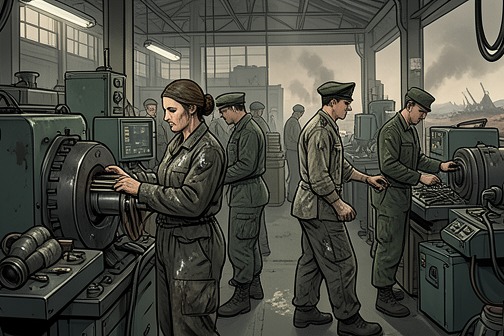
[Soviet women's participation in World War II](entity:event-recall-event-b82ca4746243) was both industrial and military: women sustained production in fields where men had traditionally predominated, served as pilots and parachutists, and formed partisan forces. In the book’s account, this wartime contribution demonstrates women’s capacity for public action while also exposing the unresolved tension between productive work, family responsibilities, and state policy.
## Historical Background
The wartime role followed a wider expansion of women’s participation in Soviet public life. Women had taken part in the [October insurrection](entity:action-recall-action-54ae04d5f09a) and, from 1918 to 1920, played an important economic and military role in the [Soviet Union](entity:location-recall-location-67657886d3d4)’s fight against invading forces. The book presents these earlier actions as part of a political project that linked women’s liberation to workers’ emancipation and promised women political and economic equality.
The scale of women’s participation in the years before the war was also visible in formal political and economic life. In the 1939 elections, 457,000 women were elected to regional, district, town, and village soviets; 1,480 served in the higher soviets of the socialist republics, and 227 in the Supreme Soviet. Nearly 10 million women belonged to unions, and women constituted 40 percent of Soviet workers and employees. These figures establish the context for the wartime mobilization, though they do not by themselves show that equality had been achieved in everyday life.
## Work and Military Service
During the war, Soviet women supplied a vast labor force in production. They entered branches in which masculine occupations were dominant, including metallurgy, mining, timber rafting, and railways. The account stresses the breadth of this participation: women were not confined to light or conventionally feminine work, but contributed in demanding industrial sectors central to the wartime economy.
Women also served in military roles. They distinguished themselves as pilots and parachutists and formed partisan armies. These activities extended women’s public contribution beyond production into direct participation in the war effort. The book treats such work and service as evidence of women’s practical capacity, while keeping the focus on their collective role rather than describing individual campaigns or battles.
## Work, Family, and State Policy
The wartime achievements did not resolve the division of labor within the family. The book sets women’s public participation against the continuing burden of domestic work and childcare, which remained largely assigned to women. Earlier Soviet measures—including childcare centers, kindergartens, and maternity leave—had sought to ease that burden, but the state’s priorities shifted as population growth became a pressing concern.
That shift brought stricter family policy. Abortion was banned under the [1936](entity:time-recall-time-1936-a3036a6b53f1) law, reinforced in [1941](entity:time-recall-time-1941-e7ec7c3ccd92), and divorce was nearly suppressed; women were expected to contribute as workers while remaining closely bound to household responsibilities. The resulting position was contradictory: women could gain public standing and the dignity associated with productive labor, yet remain subordinated to state direction and domestic demands. Their wartime service therefore signifies not a completed emancipation, but participation achieved within institutions that continued to regulate family life and distribute its work unequally.
Event 46
German occupation of France

The [German occupation of France](entity:event-recall-event-german-occupation-of-fr-fe18544733db) becomes a political test of [Henry de Montherlant](entity:character-recall-character-henry-de-montherlan-53555b03d8aa)’s cultivated ideal of superiority. [Simone de Beauvoir](entity:character-recall-character-simone-de-beauvoir-b0ac2b46e30f) sets his contempt for defeated compatriots beside his admiration for the occupiers: he placed himself above the national defeat, although he had done no more than others to prevent it and had not even consented to serve as an officer. His wartime posture, in her account, was not a courageous independence from political causes but a performance of sovereignty that found its strongest confirmation in identifying with the winners and praising force.
## Contempt for the Defeated
At the beginning of the Occupation, Montherlant indulged in what Beauvoir calls an orgy of scorn for his vanquished fellow countrymen. He behaved as though he were neither French nor defeated, standing outside the collective circumstances he condemned. Yet this distance was not earned through resistance or action: Beauvoir stresses that he had done no more than others to prevent the defeat and had not even agreed to become an officer. He nevertheless resumed his accusations with fury, making other people’s failure the ground on which to stage his own superiority.
The contrast matters because Montherlant’s scorn presents itself as judgment from a higher position, while the Occupation exposes the lack of a corresponding public deed. Beauvoir treats his denunciations of foolishness and cowardice as a self-exemption: by condemning others, he could imagine himself intelligent and brave without risking himself among them. The defeated countrymen become an audience for his posture, not companions in a shared historical predicament.
## Admiration of the Occupiers
Montherlant’s stance was not simply a refusal to identify with the defeated. Beauvoir notes that he admired Nazi ideology and welcomed the triumph of its symbols, interpreting the swastika and sun wheel as signs of a principle of change that he felt governed his own life. He also presented the Germans, whom he described as breathing the great style of strength, as an example for the French during the Occupation. His praise therefore aligned his ideal of grandeur with the power of the occupying side.
Beauvoir emphasizes the reversal in this alignment: the man who claimed sovereign freedom bowed before the victors, and through that bowing imagined himself a victor too. He had praised the “totalitarian magicians” even before their victory. His admiration of strength, in this reading, did not depend on what strength served or what political aims it pursued. It gave the appearance of independence while drawing its authority from the very power to which he submitted.
## Force Without a Human Aim
Montherlant’s celebration of combat was, in Beauvoir’s account, detached from the purposes that might give a conflict meaning. He maintained that every war was beautiful whatever its aims and that force was admirable whatever it served. In [1941](entity:time-recall-time-1941-e7ec7c3ccd92), his formula of combat without faith had a particular resonance. Yet this indifference to causes did not lead him toward resistance: his ideal of sovereign freedom chose submission, and his search for heroic wisdom looked to the conquerors rather than the Maquis.
That choice exposes what Beauvoir sees as an ethical vacuum. Nazi mythology, she argues, had a historical infrastructure, joining nihilism to a cult of the hero in the service of positive aims for which millions of soldiers died. Montherlant’s attitude had no comparable counterweight: its apparent grandeur expressed his existential choice rather than a human project. He imagined privilege as the right of a race, nation, or exceptional individual to rule over others, and his morality could therefore justify war and persecution without answering what they were for.
## Women, Theater, and the Politics of Domination
Beauvoir connects the political posture of the Occupation to the structure of Montherlant’s imagined victories over women. In his fiction, [Costals](entity:character-recall-character-costals-445e44e40be6) takes the leading role while women provide the responses through which he can crown himself with laurels. Beauvoir calls this a private stage: the performance depends on partners whose vulnerability and dependence permit him to appear sovereign, but it cannot establish a freedom tested among equals. Costals himself recognizes the farcical quality of these victories. The contrast clarifies why Beauvoir reads Montherlant’s praise of the conquerors as part of the same pattern: domination supplies the proof of superiority where reciprocal risk is avoided.
[The Occupation](entity:time-recall-time-the-occupation-3836483a052e) also sharpens the consequences of that pattern. In Beauvoir’s reading, Montherlant’s admiration for force and his contempt for humanity are not separable from a worldview that grants some beings absolute privilege over others. His political and literary gestures make submission to power look heroic and turn the suffering of those placed beneath it into evidence of the ruler’s supposed elevation. The historical moment thus provides more than background to his writing: it reveals the stakes of an ethic in which people can be sacrificed while the language of grandeur conceals the absence of a human purpose.
## Judgment and Historical Consequence
Beauvoir refuses to treat Montherlant’s posture as an abstract aesthetic preference. She contrasts its hollow mysticism with ordinary morality rooted in life and reality, and suggests that such a grounding is more authentic than grand language that makes destruction seem noble. Her argument culminates in a warning about the political uses of empty ideals: they can authorize persecution precisely because they demand no accountable, positive end. In the context of the Occupation, the discrepancy between his exaltation of strength and his failure to risk himself among his peers becomes a measure of the gap between proclaimed heroism and action.
The event therefore functions as a historical judgment on Montherlant’s sovereignty. He scorned the defeated, admired the victorious Germans, and presented their strength as a model, but Beauvoir interprets his identification with power as an escape from confronting humanity rather than an achievement of freedom. The Occupation makes visible the consequence of that escape: a private performance of superiority can echo the logic of political domination, while calling destruction and persecution by the names of heroism and grandeur.
Event 47
Defeat of France

[Simone de Beauvoir](entity:character-recall-character-simone-de-beauvoir-b0ac2b46e30f) invokes [France](entity:location-recall-location-france-f5cafc8a8ad4)’s defeat to show how [Henry de Montherlant](entity:character-recall-character-henry-de-montherlan-53555b03d8aa) turned national catastrophe into an occasion for self-exemption. At the beginning of the Occupation, he condemned his defeated compatriots as though he stood outside their country and its defeat; yet he had done no more than they had to prevent it, and had not even agreed to serve as an officer. His accusations therefore reveal not independence from the failure but a refusal to recognize his own place within it.
## Defeat as a Setting for Scorn
The defeat supplies the historical setting for Montherlant’s display of contempt. De Beauvoir describes him as indulging in an “orgy of scorn” for his fellow countrymen at the beginning of the Occupation, positioning himself as neither French nor defeated—as if he could rise above both national identity and the consequences of national disaster. The posture converts a shared crisis into a stage on which he can present himself as uniquely untouched.
## Accusation and Self-Exemption
De Beauvoir sets Montherlant’s denunciations against his own conduct. He did not prevent the defeat any more than other people did, and he did not even consent to being an officer. That contrast undermines the authority of his accusations: he casts himself as judge of the defeated while evading the ordinary measure he applies to them. His scorn becomes a means of claiming superiority without evidence of greater responsibility or action.
## Significance in the Critique of Contempt
The episode extends De Beauvoir’s broader criticism of contempt as an alibi. Montherlant’s condemnations let him imagine himself intelligent in contrast to others’ foolishness and brave in contrast to their cowardice; in the case of France’s defeat, the same logic makes him appear exempt from the fate he reproaches. The episode thus connects his treatment of women and his denunciation of his countrymen: in each case, De Beauvoir argues, he magnifies his own imagined elevation by placing others beneath him, while refusing to face the limits of his own conduct.
Event 48
Fall of Man
The [Fall of Man](entity:event-recall-event-1b4616d1e1ae) is recast as a paradox within a benevolent creation: [Eve](entity:character-recall-character-eve-09bb1968b5f4)’s disobedience brings sin and the loss of paradise, yet becomes part of the divine purpose through which free will and redemption are possible. This reading reverses the usual condemnation of Eve and her daughters, making the Fall not an irreparable catastrophe but a stage in the world’s renewal.
## The Fall within divine providence
The argument adopts the perspective of an all-powerful, omniscient, and benevolent Creator. On that premise, the Fall was foreseen when [God](entity:character-recall-character-god-28f937b98b12) brought the world into being; sin and hell are bound to the possibility of free will, while salvation gives the Fall a place in a larger design. Evil is therefore not treated as an independent force that can invalidate creation: even what appears destructive may serve a purpose within it.
## Eve’s disobedience and redemption
In Jewish and Christian traditions, Eve’s disobedience has placed women in a deeply compromised position, a legacy reflected in the mistreatment of women by the Church Fathers. The interpretation presented here turns that inherited blame around. Eve remains the source of sin, and through her man loses paradise; yet her act also provides the flesh through which redemption can take place. Her disobedience is thus described as a service to divine purposes, not simply as a transgression for which women must bear an unending penalty.
## Paradise renewed
Redemption changes the meaning of the lost paradise. Human sin has been redeemed, and the world is described as blessed anew: humanity has not, in this account, been finally expelled from the paradise God first gave it. The claim that every land is a promised land extends that affirmation beyond Eden, while the insistence that nothing made by God is in vain binds all creation together. The Fall’s significance lies in this reversal: the story moves through sin, but does not end in loss.
Event 49
1908 Messina earthquake

The [1908 Messina earthquake](entity:event-recall-event-1908-messina-earthquake-9f6dc2bb7f05) enters the book not as a narrated disaster but as a subject in a young girl’s questions. In an account of Anna’s childhood curiosity about pregnancy and birth, the earthquake becomes a temporary focus for her anxieties, linking public news to the intimate mystery of how children come into the world.
## The earthquake in Anna’s questions
Anna was about four when her younger brother was born. After her mother explained that the baby had grown inside her, Anna asked how he had come out and proposed several possibilities, including that a stork had brought him. The widely discussed earthquake then furnished a pretext for her anxieties: she repeatedly asked about it and imagined her brother in [Italy](entity:location-recall-location-125be658b0d0), living in a house made of cloth and glass that did not collapse. She soon lost interest in the earthquake itself and asked to see photographs of an eruption instead.
## A public event within a private explanation
The episode belongs to a wider sequence in which Anna tries to understand reproduction through the things she sees and hears. Her questions move between pregnancy, birth, death, and the earthquake; after seeing her father in bed, she wonders whether he, too, has a plant growing inside him. Later, an explanation of how the father contributes to conception appears to calm her. The earthquake therefore marks one moment in an evolving inquiry, rather than the subject of an independent disaster narrative.
## Narrative significance
The book uses Anna’s response to show how a child’s imagination draws public events into personal questions. For a time, the earthquake supplies a setting for her fears about her brother’s whereabouts and safety; once that imagined possibility changes, her attention shifts elsewhere. The disaster’s place in the passage is thus defined by its temporary role in Anna’s attempts to make sense of birth and family, not by an account of the earthquake’s historical course or consequences.
Event 50
1942 French marriage law reform

The [1942 French marriage law reform](entity:event-recall-event-1942-bac51fa7d14b) abrogated the legal duty of a wife to obey her husband, but did not make spouses equal. [Simone de Beauvoir](entity:character-recall-character-simone-de-beauvoir-b0ac2b46e30f) presents it as a limited legal change within a longer history of married women’s subordination: the law’s language expanded women’s formal powers while leaving substantial authority and practical constraints in place.
## Historical Background
In de Beauvoir’s account, marriage and property had long helped organize women’s dependence. In ancient [Rome](entity:location-recall-location-f3877a21016f), a wife in a marriage with manus passed under her husband’s authority, while later arrangements could leave her property in the hands of guardians and divide authority between her father and husband. These changing legal forms did not erase the underlying problem: a woman’s situation depended not only on abstract rights but also on her economic role and the powers exercised within the family.
The [French Revolution](entity:event-recall-event-french-revolution-459ad436672d) briefly disrupted established arrangements, but the reorganization of society brought renewed legal subordination. The [Napoleonic Code](entity:rule-recall-rule-napoleonic-code-155e369c0fcc) restricted married women’s civil rights and required a wife’s obedience to her husband. De Beauvoir describes the Code as a decisive restraint on emancipation, with its marital authority governing both a wife as a person and her possessions. Subsequent nineteenth-century law maintained and reinforced this severity; divorce, abolished in [1826](entity:time-recall-time-1826-ed794d85bdbd), was not restored until [1884](entity:time-recall-time-1884-1467ae5fabf8), and remained difficult to obtain.
## The Reform and Its Limits
The change came in stages rather than through a single break. In 1884, divorce was restored, though the rules preserved a sexual double standard: a wife’s adultery was an offense, while a husband’s was treated as such only if he brought a concubine into the home. Women’s legal capacities expanded further in the twentieth century, but de Beauvoir stresses how slowly the married woman’s status changed under the Napoleonic framework.
The reforms of 1938 and 1942 abrogated the wife’s duty of obedience. Yet the father remained head of the family and continued to determine the place of residence; a wife could oppose his choice only by advancing valid arguments. Her powers were increasing, but the law’s formulation remained internally qualified: the declaration that a married woman had full legal powers was limited by the marriage contract and by law. De Beauvoir therefore treats the reform as a real alteration in formal status, not as the achievement of equality between spouses.
## Law and Everyday Power
The reform’s significance lies partly in the difference between legal recognition and the ability to exercise a right. De Beauvoir argues that long-standing customs can prevent formally recognized rights from appearing concretely in everyday life. Legal change must therefore be considered alongside economic dependence and the habits that preserve male authority; a change in the wording of the law does not by itself redistribute the resources and influence that make autonomy possible.
That distinction connects the reform to her broader account of women’s condition. She describes women as autonomous freedoms whom social arrangements nevertheless pressure to accept the position of the Other, restricting their ability to set their own projects and reach beyond assigned roles. The reform loosened one explicit legal requirement, but the continuing authority of the husband and father showed how much of that position remained embedded in family organization.
## Significance
For de Beauvoir, the 1942 reform belongs to a history of uneven change, not a simple progression from subjection to equality. The removal of a wife’s formal duty to obey mattered, yet the husband’s continuing powers and the law’s qualifications exposed the limits of reform confined to legal status. Its significance is thus both practical and analytical: it marks a change in the rules governing marriage while clarifying why formal rights alone cannot secure women’s concrete independence.
Event 51
Papin sisters case

The [Papin sisters case](entity:event-recall-event-f414efc21686) is recalled as a murder whose significance lies in the charged household relations surrounding it: the women who were killed are described through their vigilance about cleanliness and their hatred of their servants, the world, and each other.
## The Household and Its Tensions
The passage evokes women determined to ensure that no dust remained on the furniture. This exacting concern for domestic cleanliness is set beside their hostility toward the servants who worked for them. The account thus places the crime within a household marked not only by unequal relations between employers and servants, but also by antagonism among the women themselves.
## Recollection and Significance
The murders are mentioned retrospectively as having occurred several years earlier. No further circumstances, identities, or outcome are supplied here. Instead, the recollection draws attention to the entanglement of domestic order and hostility: the demand for immaculate furniture appears alongside hatred of servants, the surrounding world, and one another. The case enters the discussion as a brief but stark example of violence emerging from an atmosphere of layered household conflict.
Event 52
Marriage of Leo and Sophia Tolstoy

The [Marriage of Leo and Sophia Tolstoy](entity:event-recall-event-b0b7a8985276) is presented as a turning point at which a young woman’s hopes of marriage give way to separation, uncertainty, and a future that seems already prescribed. Through Sophia’s diary, the wedding is not a simple passage into adult happiness: it is a departure from family life and an entry into a household where her new role offers little sense of freedom or purpose.
## Background and Significance
The episode appears within an analysis of how marriage can close off a young woman’s imagined future. Before marriage, a girl may experience freedom through hopes and refusals while remaining sheltered by her family. Once she becomes a wife, the text argues, the horizon can contract to a home, a husband, and repeated domestic tasks. Sophia’s experience gives this argument a specific historical and personal shape: she had enthusiastically married the writer she admired, yet the transition left her feeling cut off from her past and uncertain how to inhabit her new life.
The marriage is significant not as a general account of every wife’s experience, but as a vivid instance of the gap between romantic expectation and lived circumstance. The wedding establishes a new relationship and social position; it does not immediately make Sophia feel adult, secure, or at home. Her diary makes that disjunction visible through the details of departure, travel, and the first moments shared with her husband.
## The Wedding and Departure
On September 23, 1862, Sophia married Leo and left her family that evening. Her diary recalls the departure as painful: she reserved her farewell to her mother until last, and after leaving her mother’s embrace, she entered the carriage without turning back. Her mother’s cry remained with her, while the rain and the journey accompanied Sophia’s sorrow and fear. These details mark the wedding as a separation from the intimate world in which she had lived, not merely a public celebration or change of status.
The journey also reveals the distance Sophia felt from Leo at the outset of married life. She records that he seemed surprised, and at times discontented, by her distress. At the first stop, Birioulev, he was tender and attentive to her needs, but she remained withdrawn and afraid. When he asked her to serve the tea, she obeyed; she also avoided addressing him by name or using the familiar form. The small acts of serving tea and maintaining formal address show how little ease she felt with the man who had become her husband.
## Arrival and Early Married Life
Leo and Sophia reached [Yasnaya Polyana](entity:location-recall-location-352927fd8721) twenty-four hours after leaving. When Sophia resumed her diary on October 8, she described anxiety about her husband’s past. She had imagined loving someone entirely new and untouched by prior attachments, and found it difficult to relinquish that expectation. His earlier experience remained present to her even in moments of affection, making intimacy a reminder that she was not the first woman he had loved.
The broader account describes Sophia as having admired Leo and entered marriage with enthusiasm. Yet after the wedding, she felt disgust toward carnal love, estrangement from her family, and distance from a husband seventeen years her senior, whose past and interests seemed wholly foreign to her. Her sense of the future narrowed into emptiness and repetition. Marriage had brought her into adulthood, but it had not given her a purpose she could claim as her own.
## Narrative and Thematic Role
Sophia’s diary changes the scale of the discussion from the general structure of marriage to its lived particulars. The account’s historical argument concerns women’s constrained position within social and legal arrangements; the wedding passage renders that condition through one woman’s departure, silence, obedience, and anxiety. It does not require the wedding itself to be an exceptional catastrophe. Its force lies in showing how a socially recognized transition can coincide with isolation and a loss of imagined possibilities.
The episode also complicates the ideal of marriage as the fulfillment of a young woman’s hopes. Sophia had chosen a man she admired, but admiration did not erase the unfamiliarity of their shared life, the weight of leaving her family, or the fixed domestic future she feared. Her diary thus records the beginning of a marriage while exposing the emotional and existential uncertainty concealed by the ceremony: becoming a wife did not, by itself, make her feel at home, free, or complete.
Event 53
Nora's departure
Nora’s departure marks a decisive refusal of the idea that a woman must find her identity by living through her husband. [Simone de Beauvoir](entity:character-recall-character-simone-de-beauvoir-b0ac2b46e30f) invokes Nora’s decision to establish herself as a person before being a wife and mother as a test of what marriage would have to become: not an arrangement of dependence and possession, but a relationship between two autonomous people.
## The Marriage That Makes Departure Necessary
De Beauvoir frames the crisis not as disappointment that marriage fails to guarantee happiness—no relationship can guarantee happiness—but as the damage done when marriage confines a woman to repetition and routine. The early years of a woman’s life may encompass discovery, sexuality, marriage, motherhood, and an expanding sense of the world; yet, in the conventional pattern De Beauvoir criticizes, a woman may become mistress of a home at twenty, bound to one man and caring for a child, with her prospects of meaningful activity sharply diminished. Domestic tasks may exhaust her without fulfilling her, while work and purposeful activity remain coded as privileges of men.
Devotion, praised as a woman’s virtue, does not resolve this inequality. A wife may be expected to sustain her husband and family while her own capacities go unused; the demand to forget herself becomes hollow when neither the purpose of that sacrifice nor its beneficiary is allowed to be questioned. Her care can even be recast as tyranny by the husband who resents it, although he has made her devotion the basis of her supposed purpose.
## The Double Demand of Marriage
The central conflict is a demand for incompatible things. The husband expects his wife to be wholly given to him but also not to weigh on him: she must secure the stability of daily life without becoming an inconvenience, belong to the couple without claiming him, and remain available while leaving him free. De Beauvoir describes this contradiction as a betrayal that the wife spends her life measuring. Marriage promises her a defining place in her husband’s life, but does not require him to accept the same bond in return.
De Beauvoir sharpens the imbalance through the example of [Sophia Tolstoy](entity:character-recall-character-sophia-tolstoy-39c2f3c4dd7f), whose insistence that she lived through and for her husband and wanted the same from him can appear excessive in isolation. The relevant context, however, is that her husband demanded that she live for him without offering reciprocity. The wife’s demand for mutual dependence is condemned even as the husband’s one-sided claim to her devotion is treated as legitimate. In this account, Nora’s decision answers that structural contradiction rather than merely rejecting a private disappointment.
## Personhood Before Wifehood
Nora understands that she must first be a person before she can be a wife and mother. De Beauvoir uses this recognition to distinguish a relation between independent selves from one in which each partner is expected to complete the other. Drawing on [D. H. Lawrence](entity:character-recall-character-d-h-lawrence-dcced3cf6808)’s criticism of love founded on such completion, she argues that a couple should not be a withdrawal from the world, an annexation of one person by another, or a remedy for an imagined lack. Marriage can join two autonomous lives; it cannot justly require one person’s self-erasure as the price of union.
The alternative is not isolation. De Beauvoir proposes that each individual should be able to thrive as a member of society without requiring a partner to make life possible. From that basis, two people may form bonds through generosity and mutual recognition. Nora’s departure therefore signifies a demand for the conditions of genuine partnership: personhood must not be surrendered in order to enter marriage.
## The Equal Couple as an Alternative
De Beauvoir insists that a balanced couple is possible, including within marriage, though she says it is more common outside the institution. Such relationships need not take a single form. Some partners share sexual love while retaining freedom in friendship and work; others share friendship without restricting sexual freedom; still others are both lovers and friends without making one another the exclusive reason for living. Companionship, pleasure, confidence, tenderness, complicity, and love can enrich both people rather than bind one to the other as a dependent.
The conclusion shifts the explanation for marriage’s failures away from individual partners and toward the institution’s underlying terms. Against accounts that blame women’s demands or idealize marital authority, De Beauvoir locates the problem in a structure that makes a wife responsible for devotion while denying her equal standing. Nora’s decision to become a person first gives that critique its clearest formulation: a shared life is viable only when it recognizes two freedoms, not when one partner is absorbed into the other.
Event 54
Marriage of Pierre Bezukhov and Natasha Rostova
The marriage of [Pierre Bezukhov](entity:character-recall-character-pierre-bezukhov-c5f31d9c4b4a) and [Natasha Rostova](entity:character-recall-character-natasha-rostova-881ee187c6a6) is presented in [Simone de Beauvoir](entity:character-recall-character-simone-de-beauvoir-b0ac2b46e30f)’s analysis as a celebrated portrait of domestic harmony whose apparent perfection conceals a structural vulnerability. In the epilogue of War and Peace, Natasha gives up her former interests and devotes herself to Pierre and their children; Pierre, in turn, withdraws from his former social life. Their devotion brings real contentment, but the arrangement makes Natasha’s security depend on a love she cannot guarantee will last. De Beauvoir uses the couple to question whether a wife’s self-surrender can constitute a durable or equal freedom.
## The Ideal Domestic Couple
Tolstoy’s epilogue presents a striking transformation in Natasha. Once coquettish and romantic, she loses interest in her appearance, society, and pastimes after marriage and concentrates instead on Pierre and their children. The change is so complete that those who knew her before are astonished. In the portrait De Beauvoir examines, the animation that had once made Natasha charming seems to have receded: her identity is shown chiefly through her body, her strength, and her fertility, while her inner life has become less visible.
The devotion is not represented as Natasha’s alone. She demands from Pierre the same exclusive attachment she gives him, and he answers by relinquishing clubs, dinners, old friends, and prolonged absences except on business. His intellectual pursuits also fall under the scope of her concern, even though she does not understand them. The couple’s arrangement thus reverses the familiar picture of the husband’s unchallenged independence: Pierre is described as being under his wife’s sway, while Natasha organizes the home around what she takes to be his wishes.
De Beauvoir nevertheless emphasizes the happiness Tolstoy attributes to them. When Pierre returns from a long absence, Natasha greets him impatiently because she has suffered from being without him. At home, their attachment is so close that they understand one another with scarcely a word. Her children, her household, and her loved and respected husband give her nearly untroubled joy. The ideal is therefore not dismissed as merely false: its emotional concord is part of what makes its underlying risk harder to see.
## Devotion and Dependence
The apparent reciprocity does not, in De Beauvoir’s reading, settle the question of equality. The image of Natasha and Pierre joined like soul and body makes their union seem indivisible, but it also invites a test: if Pierre’s love ended, what would become of Natasha? The image promises unity while leaving the partners’ consequences unequal. Inconstancy or mistaken love might constitute abandonment for either person, but a woman whose life has been organized around her husband faces a more devastating loss of her established place and support.
De Beauvoir imagines several possible consequences rather than treating the couple’s harmony as a guaranteed future. Pierre might become attracted to other women; Natasha might grow jealous; and the relationship could sour. If he left, her life would be ruined; if he remained while lying or resenting her, his life too would be spoiled; if they stayed together through compromise and half-measures, both might become unhappy. These alternatives expose how little protection an ideal of exclusive love offers when it rests on one partner’s continued choice.
Children do not, by themselves, remove this danger. De Beauvoir argues that they bring joy within a balanced family structure, in which the husband remains one of its essential supports. For a neglected and jealous wife, the same children may become a burden rather than a remedy for loneliness. Natasha’s happiness is consequently represented not as something secured by motherhood alone, but as dependent on a relationship whose balance can change.
## A Contested Model of Marriage
The marriage also raises a question of judgment and intellectual independence. Natasha’s devotion to Pierre’s ideas is admired by Tolstoy, while [D. H. Lawrence](entity:character-recall-character-d-h-lawrence-dcced3cf6808) mocks the couple and the model of a wife’s submission it represents. Their disagreement matters because male authority cannot provide a neutral answer to what a woman should believe or how she should live: one writer makes the husband an ideal, another treats that ideal with contempt. Natasha cannot simply echo a husband’s principles and thereby claim an independent basis for her existence. What she shares must be reached through her own judgment, not borrowed from him.
This critique connects the fictional marriage to De Beauvoir’s wider account of women’s historical subordination. She argues that a relationship of mutual need does not automatically produce social equality: even in a reciprocal bond, dependence can work to the advantage of the person who holds greater power to satisfy the other’s needs. Her account of women’s history likewise distinguishes abstract rights from practical circumstances shaped by economic position, law, and custom. In this framework, the affectionate intimacy of Pierre and Natasha cannot on its own establish that both partners possess equal independence.
The comparison with Tolstoy’s own marriage sharpens the contrast between the literary ideal and lived marital conflict. De Beauvoir sets the contented Pierre-and-Natasha tableau beside the misery associated with Leo and [Sophia Tolstoy](entity:character-recall-character-sophia-tolstoy-39c2f3c4dd7f): Sophia is described as repelled by her husband, jealous, bored, and frustrated by repeated pregnancies, while the home is arid for her and hell for him. Their ending, as presented in the discussion, is a final break rather than the near-wordless harmony attributed to the fictional couple. The contrast does not make Natasha and Pierre’s happiness unreal; it shows why an ideal portrait cannot settle what marriage means under conditions of dependence and unequal freedom.
## Significance and Narrative Frame
This marriage is a literary example analyzed within a philosophical argument, not an independently narrated event with a reported later outcome. De Beauvoir moves from Tolstoy’s domestic portrait to a conditional inquiry into what could undermine it, and then places that portrait beside competing judgments and a painful real-life contrast. The sequence turns apparent fulfillment into a problem to examine: what appears harmonious in the present may be precarious if one partner’s security rests on the other’s continuing love and authority.
The episode’s significance lies in its refusal to equate devotion with equality. Natasha and Pierre seem to reciprocate one another’s attachment, and their home offers them happiness; yet the terms of that happiness leave open the possibility that the wife’s self-abandonment will outlast the husband’s love. De Beauvoir therefore treats the couple not as proof that ideal marriage has been achieved, but as a test of whether affection, domestic harmony, and shared sacrifice can sustain a genuinely free and equal union.
Event 55
托尔斯泰离开亚斯纳亚·波利亚纳

Tolstoy’s departure from [Yasnaya Polyana](entity:location-recall-location-352927fd8721) closes the account of a marriage that makes the idealized union of Pierre and Natasha look untenable. Sophia’s unhappiness, the couple’s estrangement, and Tolstoy’s eventual flight expose the cost of treating a wife’s devotion as the foundation of marital harmony.
## Marriage and Disillusionment
Sophia feels repelled by her husband and finds him tedious. His infidelity with the surrounding peasants intensifies her jealousy, while repeated pregnancies frustrate her; the children do not relieve the emptiness she feels in her heart or her days. The home offers no refuge: it is an arid desert for her and a hell for him.
That reality sharply contradicts the ideal of Natasha’s devotion to Pierre. A wife cannot be expected to draw her reasons for living from her husband or to accept his values without independent judgment. Nor do children compensate for a marriage in which the wife is neglected and jealous; in that circumstance, they become a burden rather than a source of joy.
## Departure and Ending
The marriage ends in separation. Sophia is described as an old, distressed woman left in the forest at night, while Tolstoy flees, finally renouncing the lifelong union. The episode turns the idea of marital unity against itself: a commitment lasting a whole life has not brought the couple into a shared life, but leaves each in misery and estrangement.
## Significance in the Argument About Marriage
The account calls Tolstoy’s case exceptional, but uses it to question the assumptions behind marital harmony. Some couples reach a compromise and live beside one another without open antagonism, yet boredom remains a recurring danger. Whether the husband makes his wife an echo of himself or each spouse retreats into a separate world, the couple may lose autonomy without overcoming solitude. Tolstoy’s departure gives that broader critique a concrete ending: lifelong marriage, by itself, guarantees neither reciprocity nor companionship.
Event 56
Marie Lafarge case
[Simone de Beauvoir](entity:character-recall-character-simone-de-beauvoir-b0ac2b46e30f)’s reference to the [Marie Lafarge case](entity:event-recall-event-550fa7ac54f5) in The Second Sex situates it among acts of violence against husbands that may arise from prolonged, intolerable marital conditions. The case serves as a concise example in her argument that women’s conduct must be read in relation to the constraints imposed on them, rather than reduced to individual criminality.
## Context in the discussion of marriage
De Beauvoir considers the restricted options available to wives who cannot escape their circumstances. She describes responses ranging from domineering behavior and self-sacrifice to withdrawal into fantasy, illness, and private emotional worlds. When a wife has no opportunity to act or love, the feeling that her life is empty can intensify; in some cases, the attempt to find compensation in romantic imaginings and personal adornment is frustrated even within the home.
## The case as an example of conjugal crime
Within this discussion, de Beauvoir says that symbolic forms of escape can become obsessions and that such obsessions may lead to crime. She distinguishes crimes driven by hatred from those motivated by material interest, then names the Marie Lafarge case alongside the fictional attempt by [Thérèse Desqueyroux](entity:character-recall-character-th-r-se-desqueyroux-8d15a448ea1f) to poison her husband. The reference is brief: it gives no account of the case’s chronology, evidence, trial, or outcome, and does not specify Lafarge’s circumstances.
## Significance in the argument
The case’s function is illustrative rather than biographical. De Beauvoir uses it to connect conjugal crime with the larger problem of women’s constrained lives and the absence of effective ways to leave an intolerable marriage. Elsewhere, she insists that biological facts matter to women’s situation without determining a fixed destiny, and that the body acquires lived meaning within social and historical conditions. Read in that framework, the Lafarge reference contributes to a structural analysis of marital violence and constraint without establishing details about the case beyond its use as an example of a wife’s crime against her husband.
Event 57
Boer War

The [Boer War](entity:event-recall-event-db6e53086422) is mentioned in [Simone de Beauvoir](entity:character-recall-character-simone-de-beauvoir-b0ac2b46e30f)’s account of women’s political attitudes as an example of women in [England](entity:location-recall-location-england-b153c1f368ea) supporting a national cause with particular fervor. The reference is significant not for a description of the war’s campaigns, but for the way it helps frame her argument: women’s political responses may intensify under conditions of limited participation in historical change, even as women’s situations differ from those of other subordinated groups.
## Context in the Argument
The Boer War appears in a discussion of women’s attachment to established laws and causes. Simone de Beauvoir contrasts men’s capacity to view history as a process of change with women’s exclusion from that process; in her account, this exclusion can encourage distrust of the future and a wish to preserve existing arrangements. The war is one of her examples of this pattern in England.
The reference is part of a wider comparison of political reactions across different settings. Simone de Beauvoir also points to women’s support for slavery in the American South during the Civil War and to women’s opposition to the [Paris Commune](entity:event-recall-event-09d927942b3a) in [France](entity:location-recall-location-france-f5cafc8a8ad4). These comparisons make the Boer War an instance in a recurring argument about political loyalty, rather than a self-contained narrative of battle or diplomacy.
## Women’s Political Response
In discussing the Boer War, Simone de Beauvoir characterizes English women as especially fervent supporters of the war. She connects this intensity to a broader claim that people whose ideas are expressed chiefly as attitudes may defend causes without considering their historical direction. The account presents such fervor as a response shaped by women’s constrained access to public and historical agency, not as evidence that all women held the same views.
Her analysis also describes a contrast between women’s political commitment and men’s relation to change. Men, she argues, can understand history as becoming and adapt their actions and ideas accordingly; women kept outside historical participation may instead seek to stop time and defend the authorities or causes already presented to them. The Boer War example thus illustrates the political consequences she associates with exclusion, while remaining part of her interpretation rather than a detailed record of women’s wartime activity.
## Comparative Significance and Limits
The reference contributes to Simone de Beauvoir’s broader effort to compare the social mechanisms that subordinate women with those affecting other groups. Elsewhere in the book, she draws parallels between women’s situation and the treatment of Black people, while also emphasizing that such parallels have limits: the groups have different histories, forms of solidarity, and relationships to their oppressors. The Boer War passage belongs to this wider inquiry into how social position shapes political response; it does not establish an equivalence between women’s situation and that of any other group.
The event’s function in the discussion is therefore analytical rather than narrative. It provides a historical example through which Simone de Beauvoir examines how political fervor, resignation, and attachment to existing authority can intersect with women’s restricted agency. The book gives no account here of the war’s course or outcome; its focus is the meaning assigned to women’s support within her argument about gender and history.
Event 58
巴黎公社
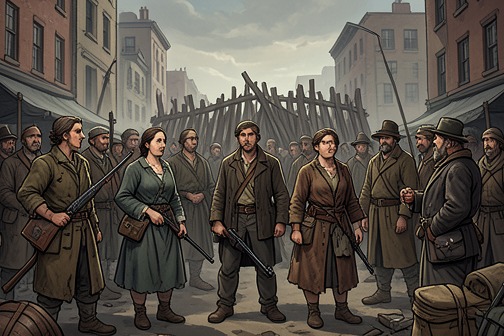
In [Simone de Beauvoir](entity:character-recall-character-simone-de-beauvoir-b0ac2b46e30f)’s analysis, the [Paris Commune](entity:event-recall-event-09d927942b3a) represents both women’s participation in revolt and the limits imposed on that participation. Women could fight against the established order alongside men, but their actions took place within a social structure that denied them equal access to political power and the work of building a new order.
## Women in Revolutionary Action
De Beauvoir places the Commune among episodes in which women intervened against existing authority. Their participation was real, but she distinguishes such resistance from the sustained, institution-shaping action she associates with historical agency. Women might take part in revolt, yet the conditions of their lives restricted their ability to determine what followed.
This distinction is part of a wider contrast in her account: women could act through refusal, revolt, or indirect influence, while positive construction remained a sphere from which they were excluded. The Commune therefore figures not as evidence that women were absent from political history, but as an example of their participation being constrained and subordinated.
## The Limits of Political Agency
De Beauvoir argues that women’s actions had often been symbolic or dependent on decisions made by men. Even demonstrations and initiatives acquired practical force only when male authority carried them forward. In this framework, women’s presence in a revolt does not by itself mean they control its aims or consequences.
The Commune also belongs to her account of the conflict between women’s freedom and a social situation that casts them as inessential. Women are autonomous beings capable of projects, she writes, but are forced to assume a subordinate position in a world where men claim the role of essential subjects. Political action is thus not simply a matter of courage or willingness: access to collective organization and power determines whether resistance can reshape society.
## Historical and Thematic Significance
The Paris Commune sharpens the difference between taking part in opposition and possessing the means to direct history. De Beauvoir’s examples of women fighting alongside men sit beside her claim that women had rarely been allowed to participate in positive construction. The event serves as a concrete instance of that contradiction: women could enter collective struggle without gaining equal authority over its political course.
Her discussion also warns against treating women as a unified group whose interests automatically align. Elsewhere, she notes that class and race divide women’s solidarities: bourgeois women may side with bourgeois men rather than working-class women, and white women may be aligned with white men rather than Black women. The Commune’s place in her argument is therefore not a self-contained account of its events, but part of a broader examination of how women’s resistance, social position, and limited access to power shape their historical role.
Event 59
德雷福斯事件

In The Second Sex, the [Dreyfus Affair](entity:event-recall-event-6aa5836e047b) is a brief but pointed example in [Simone de Beauvoir](entity:character-recall-character-simone-de-beauvoir-b0ac2b46e30f)’s argument about women’s political situation. She observes that women were even more violently anti-Dreyfusard than men, using the episode to illustrate how women could participate in public controversy without thereby gaining an independent political position. The reference is not a chronicle of the affair’s events: it is evidence in a wider account of the ways women’s political attitudes and actions were formed within a society whose institutions and history were controlled by men.
## The Affair in the Historical Argument
The Dreyfus Affair appears in a discussion of the ways women may interpret social conflict through a stark opposition between good and evil. De Beauvoir describes women who, excluded from active responsibility and public decision-making, may look for a culpable enemy and imagine that a good government will simply remove it. She says women were more violently anti-Dreyfusard than men, but does not supply names, individual cases, or a detailed account of the dispute. The example supports her analysis of political attitudes rather than establishing a separate narrative of the affair.
## Political Passion and Social Position
The reference complicates any simple picture of women as politically indifferent. De Beauvoir’s claim is that women could take sides with exceptional intensity; that intensity, however, did not necessarily translate into independent power or a sustained challenge to the social order. Her broader account holds that women’s history was written by men and that women rarely formed a separate political force. Even collective pressure, she argues, succeeded when men were willing to yield to it. Read in this context, the affair illustrates the distinction between strong political feeling and the ability to shape political institutions.
## The Wider Critique of Political Agency
De Beauvoir places women’s responses within a history in which men created the dominant values, customs, and religions and held women’s fate in their hands. Women’s interventions in world affairs, she writes, generally took place alongside men and from a masculine point of view. The Dreyfus Affair reference therefore does not explain women’s stance through an inherent female character; it forms part of her argument that political attitudes emerge within historically produced conditions of dependence and exclusion.
Elsewhere, de Beauvoir rejects the idea that femininity is an immutable essence, treating human characteristics as shaped by social situations. Her use of the affair follows the same method: rather than treating women’s political behavior as timeless, she relates it to the structures that limit women’s agency and shape their available forms of participation. The episode’s significance in the book lies in this analytical role, not in a developed account of its participants, chronology, or outcome.
Event 60
Loi Marthe Richard
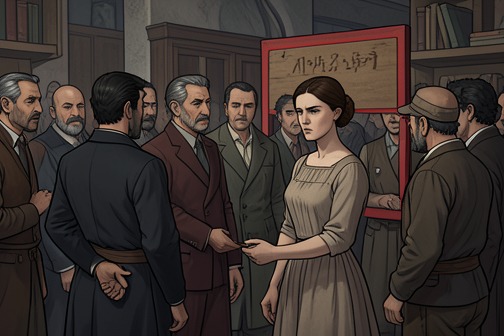
The [Marthe Richard law](entity:rule-recall-rule-marthe-richard-law-8f24ad8853c0) appears in [Simone de Beauvoir](entity:character-recall-character-simone-de-beauvoir-b0ac2b46e30f)’s discussion of women’s political and social activity as an example of a prohibitionist measure whose negative approach, she argues, cannot by itself build a better social order. Its significance in this account lies less in a detailed description of the law than in the use made of it: it exemplifies the limits of opposing a perceived evil without creating the material conditions for change.
## Context and Reference
Simone de Beauvoir places the law in a broader argument about women who, lacking specialized roles in politics, economics, or technical work, have little concrete influence over society. She describes their public morality as formal and prohibitive: instead of developing programs or creating new situations, such activists may organize against alcohol, prostitution, or pornography. The Marthe Richard law is named alongside the failure of prohibition in the [United States](entity:location-recall-location-united-states-2f533bc8d0b9) as evidence for the limits of this approach.
## Role in the Argument
The law functions as a concise illustration rather than as a narrated legislative episode. The passage does not specify its provisions, date, enforcement, or immediate effects. Instead, it invokes the measure to support a causal claim: purely negative efforts are unlikely to succeed because they seek to eliminate an existing evil without working out constructive paths of progress. The example thus shifts attention from the stated object of prohibition to the method and social conditions of reform.
## Economic Position and Agency
The argument connects this limited political effectiveness to economic dependence. Beauvoir says that as long as women remain economically parasitic, they cannot effectively participate in building a better world. She distinguishes such constrained activity from that of women who are committed to a cause, pursue definite ends, and act as autonomous producers; those women can have real impact, though Beauvoir presents this transformation as rare. The law’s place in the passage therefore reflects a larger distinction between protest as occupation and action supported by independent productive agency.
## Significance
The reference also echoes Beauvoir’s wider analysis of the difference between formal rights and practical power. Women may possess abstract standing while habit, economic disadvantage, and male dominance restrict their ability to turn it into effective participation. Within this framework, the Marthe Richard law is not treated as proof that every measure against prostitution is futile; rather, it is cited as an example of the limits of a merely prohibitive response. The decisive issue is whether women can act as autonomous participants in shaping social conditions, rather than remain confined to moral opposition from a position of dependence.
Event 61
Lefebvre case
The [Lefebvre case](entity:event-recall-event-609779273541) is the 1925 killing of a pregnant daughter-in-law by her sixty-year-old mother-in-law, [Mme Lefebvre](entity:character-recall-character-mme-lefebvre-36d935875c9d). In [Simone de Beauvoir](entity:character-recall-character-simone-de-beauvoir-b0ac2b46e30f)’s account, it gives a horrifying outcome to an escalating conflict over maternity: the older woman, desperately attached to her own identity as a mother, treated the younger woman’s pregnancy as a threat and killed her. The case does not stand as an isolated eruption of inexplicable female violence; it is placed within an analysis of how women’s social situation and the meanings imposed on motherhood can shape intimate hostility.
## Background and Family Conflict
Mme Lefebvre was a bourgeois woman from the North who lived with her husband and children. Simone de Beauvoir describes her as having long hated her daughter-in-law. The conflict sharpened when the younger woman was suspected of being pregnant: the announcement of pregnancy was the point at which, in the book’s account, Mme Lefebvre decided to kill her.
The episode follows an analysis of the tensions that may arise between a mother and her son’s wife. The mother can interpret the new relationship as an intrusion and watch the daughter-in-law for signs that confirm her distrust; pregnancy intensifies the conflict by making the younger woman’s place in the family and the continuation of life beyond the older mother newly visible. Mme Lefebvre’s actions exemplify the extreme end of that pattern, rather than establishing that such violence is typical.
## The Killing and Its Circumstances
In August 1925, during a car trip, Mme Lefebvre killed her daughter-in-law, who was six months pregnant, while her son was driving. After suspecting the pregnancy, Mme Lefebvre had bought a revolver, supposedly to defend herself against robbers. The stated explanation masked the weapon’s connection to the family crisis that preceded the murder.
Mme Lefebvre was condemned to death and then pardoned. She spent the rest of her life in a reformatory and showed no remorse. She believed that [God](entity:character-recall-character-god-28f937b98b12) approved of the killing, which she compared to removing a weed, a bad seed, or a savage beast. The only act of defiance she offered as evidence against her daughter-in-law was the young woman’s statement that, since she was now part of the family, Mme Lefebvre had to take her into account. That ordinary assertion of recognition and standing became, in the older woman’s account, justification for murder.
## [Maternity](entity:state-recall-state-maternity-5f95c283e691) and the Book’s Interpretation
The case is linked to Mme Lefebvre’s intense attachment to maternity after menopause. For twelve years she had suffered ailments that manifested themselves, in Simone de Beauvoir’s description, as an imaginary pregnancy. This detail makes the murder part of a longer crisis of identity: the daughter-in-law’s actual pregnancy arrived in a life where Mme Lefebvre remained bound to motherhood even after her own reproductive period had ended.
In the surrounding argument, motherhood is neither a simple biological destiny nor an uncomplicated source of fulfillment. The book describes reproduction as a bodily reality that can impose hardship, while insisting that biological facts acquire their meaning within social and psychological circumstances. It likewise argues that the body is essential to a woman’s situation but cannot alone define her or explain her subordination. Read in this framework, the Lefebvre case shows maternity turned into an absolute claim: Mme Lefebvre’s imagined and possessive attachment to being a mother culminates in the violent rejection of another woman’s pregnancy.
## Significance
Simone de Beauvoir uses the case to make the stakes of intergenerational conflict concrete. The daughter-in-law’s pregnancy signifies a future that does not belong to the older woman; Mme Lefebvre experiences that change not as continuity but as displacement. Her belief that the killing had divine approval and her lack of remorse reveal how thoroughly she rationalized the act, while the contrast between that justification and the young woman’s modest demand to be taken into account exposes the gulf between domination and reciprocal recognition.
The case is a specific, extreme instance, not proof that biology dictates violence or that maternal attachment inevitably produces hostility. Its force lies in the opposite claim: bodily and reproductive conditions matter, but their consequences are shaped by history, social relations, and the meanings people attach to them. The victim was six months pregnant; the perpetrator had spent years imagining pregnancy after menopause; and the murder turned their unequal, competing claims around maternity into an irreversible act.
Event 62
French women’s suffrage
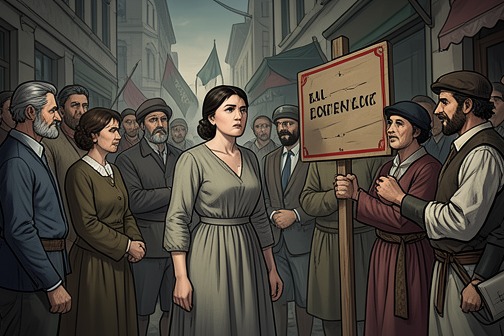
[French women’s suffrage](entity:event-recall-event-french-women-s-suffrage-44b37bf8a7e8) marks a real civic change, but not the completion of women’s emancipation. In this account, women have become voters and French law no longer lists obedience as a wife’s duty; yet those formal liberties remain abstract without economic autonomy. The decisive question is whether women can shape their own lives and projects, rather than merely hold rights on paper while remaining dependent on men and responsible for an unequal share of domestic and reproductive labor.
## Civic Rights and Their Limits
The franchise and the change in marital law remove important formal restrictions, but they do not by themselves alter the conditions that make freedom practical. A woman maintained by a man, whether as wife or mistress, is not independent simply because she can vote. Nor do fewer customary constraints necessarily dissolve the dependence built into her social position. Political citizenship is therefore a threshold, not a guarantee: the ballot does not automatically give its holder control over her livelihood or a concrete means of acting in the world.
The account distinguishes these negative liberties from substantive freedom. A right may exist in law while economic dependence continues to direct a woman’s choices. As long as she must rely on masculine support as her route to security, a man remains an intermediary between her and the wider world. Suffrage matters, but its significance is limited if it is not accompanied by the means to live and act independently.
## Work and Economic Autonomy
Work is identified as the principal means by which women can narrow the gap separating them from men. Productive activity can restore a woman’s capacity to act as a subject: through projects, responsibility, earnings, and rights she can appropriate for herself. Even a woman in a low-paid occupation may experience the importance of self-sufficiency. The account recalls a hotel cleaning woman who, while washing a lobby floor, expressed pride in having asked nobody for anything and having made her way on her own.
That example does not make employment synonymous with liberation. Most workers remain exploited, and women’s entry into paid work has not deeply transformed the social structures that shape their lives. Factory employment may give a woman an income while leaving domestic work untouched; women workers can thus face paid labor and household labor together. The choices available to them are also conditioned by class: economic independence may be achieved within an economically oppressed class, without making the work itself free or the worker equal.
## Reproductive and Domestic Labor
The unequal relation between productive work and reproduction is central to the account’s explanation of women’s condition. Women’s capacity for pregnancy has historically helped confine them to domestic labor, while the possibility of managing fertility has not been equally available across societies and periods. Contraceptive practices existed in antiquity but remained limited and secretive; for many women, life instead consisted of repeated pregnancies. Reproductive demands therefore shaped whether women could enter work and what burdens they carried when they did.
The problem persists even where those burdens have been partly limited. Birth control is neither universally available nor consistently used, while abortion remains officially forbidden in the setting described. Some women risk their health through unregulated methods; others are overwhelmed by repeated pregnancies. Childcare and housekeeping remain almost exclusively women’s responsibility, and in [France](entity:location-recall-location-france-f5cafc8a8ad4) the antifeminist convention that a man should not perform work reserved for women makes it harder to combine employment and family life. Where women are expected to manage both, their lives become harder than their spouses’.
Housework also restricts the meaning of work itself. By administering the home, a wife can make the household her own and experience herself as active in its care. But this activity does not necessarily free her from immanence or affirm her as an individual beyond the domestic role. The recurrent labor of maintaining a household sustains family life without assuring the woman who performs it an independent economic or civic standing.
## Suffrage as Part of a Larger Emancipation
The argument locates French women’s suffrage within a broader conflict between legal recognition and lived conditions. A vote and a job are not, in combination, enough to ensure total liberation: work can remain exploitative, domestic responsibilities unequally assigned, and social institutions shaped by male authority. Formal reform and material change must therefore be considered together, rather than treating electoral rights as proof that equality has already been achieved.
The account’s standard is freedom understood as the capacity to pursue projects and extend one’s possibilities. On that measure, suffrage is consequential because it establishes women as citizens, but its promise remains incomplete while economic dependence and reproductive and domestic burdens restrict their choices. Political equality becomes substantive only when women also have the practical resources and social conditions to act independently.
Event 63
Abolition of the wife’s duty of obedience in France
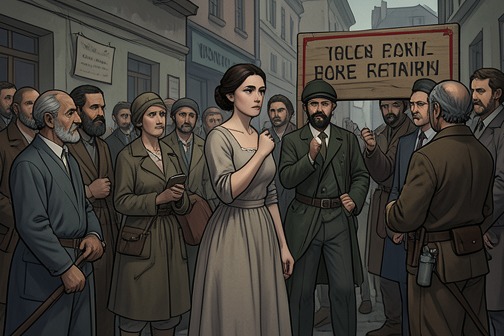
The abolition of a French wife’s duty to obey her husband was a limited but important legal reform, removing a rule that had made marital subordination explicit. [Simone de Beauvoir](entity:character-recall-character-simone-de-beauvoir-b0ac2b46e30f) presents it as a change in formal status rather than a completed emancipation: economic dependence, the father’s continuing authority in the family, and women’s unequal share of work continued to restrict their freedom.
## Legal and Historical Background
Under the [Napoleonic Code](entity:rule-recall-rule-napoleonic-code-155e369c0fcc), marriage placed a woman under her husband’s authority in both personal and material matters. The husband determined where the family lived and held greater rights over the children; outside certain business circumstances, his authorization was required for his wife’s contracts. The legal order also treated adultery differently by sex: a husband could seek divorce and, in specified circumstances, confine his wife, while a wife had grounds to divorce him only if he brought a concubine into the home. These provisions made obedience part of a broader system of marital power, rather than an isolated rule.
The Code followed a revolutionary period in which women had briefly experienced greater freedom, but the reorganization of society under Napoleon restored strict subordination. The nineteenth-century legal system sustained that pattern. Divorce, abolished in [1826](entity:time-recall-time-1826-ed794d85bdbd), was not restored until [1884](entity:time-recall-time-1884-1467ae5fabf8) and remained difficult to obtain; even then, adultery was treated as an offense only when committed by a wife. Reforms proceeded unevenly: guardianship rights were granted with restrictions in 1907 and fully in 1917, and the right to establish natural paternity was authorized in 1912.
## The Reform of 1938–1942
Changes in 1938 and 1942 modified the status of married women and abrogated the duty of obedience. The reform therefore removed a direct legal command that had defined the wife’s relation to her husband as one of submission. Yet it did not transfer full authority to the wife. The father remained head of the family and determined the place of residence, although the wife could oppose his choice by presenting valid arguments.
The legal formulation itself exposed the limits of the change: married women were described as having full legal powers, but those powers remained subject to the marriage contract and the law. De Beauvoir emphasizes the contradiction between the language of legal capacity and its qualifications. The reform altered the formal rule without bringing about equality between spouses.
## Formal Rights and Material Dependence
The event belongs to a larger distinction between abstract legal rights and the practical ability to exercise them. De Beauvoir argues that a woman’s legal position cannot by itself determine her concrete situation: economic role and social custom also shape the power available to her. In her account, men retained better jobs, higher wages, greater chances of success, and disproportionate influence in industry and politics. Habit could also prevent formally recognized rights from becoming effective in everyday life.
That gap remained visible after the obedience requirement was removed. De Beauvoir’s later discussion of women’s independence distinguishes civic liberty from economic autonomy: a wife or mistress maintained by a man was not freed from dependence simply by possessing a ballot. Work, she argues, could give women concrete independence and allow them to act as subjects through their own projects, but employment alone did not secure liberation. Workers remained exploited, and women workers still carried domestic responsibilities.
## Continuing Domestic and Social Constraints
The legal change did not redistribute the daily work of maintaining a household or caring for children. De Beauvoir describes childcare and housework as falling almost entirely on women, making it harder for them to combine family life with paid employment. Her account of a French peasant woman makes that burden concrete: alongside pregnancy and childcare, she tends animals and gardens, undertakes demanding farm labor, prepares meals, and manages household tasks, often with little leisure or time for her health.
Social expectations also continued to steer women toward marriage as a route to security. Parents often raised daughters for marriage rather than for independent development; women consequently received less specialized training and were less firmly established in professions, reinforcing the economic advantage of finding a husband. The removal of a legal duty to obey thus mattered, but it did not undo the material and customary relations that could keep a woman dependent.
## Significance in De Beauvoir’s Argument
The reform illustrates De Beauvoir’s broader account of women’s situation as a conflict between freedom and imposed dependence. In her existentialist framework, a person realizes freedom through projects and movement toward an open future; oppression arises when that transcendence is constrained and the person is fixed in immanence. A legal provision could recognize a wife’s capacity without supplying the economic means, social arrangements, or freedom from repetitive domestic work that would make that capacity effective.
The abolition of obedience was therefore a real change in law but an incomplete change in lived relations. De Beauvoir treats it neither as proof that women were already equal nor as a meaningless gesture: it removed one explicit form of subordination while leaving the surrounding hierarchy in place. Its significance lies in that tension between a newly recognized legal power and the conditions that continued to limit women’s ability to use it.
Event 64
Saint Teresa’s transverberation

[Saint Teresa’s transverberation](entity:event-recall-event-saint-teresa-s-transver-47d565302878) is an episode of mystical ecstasy in which Teresa describes an angel’s spear piercing her heart and her union with [God](entity:character-recall-character-god-28f937b98b12) as an experience felt through the body. [Simone de Beauvoir](entity:character-recall-character-simone-de-beauvoir-b0ac2b46e30f) uses the account to challenge the separation of spiritual experience from bodily life: Teresa is neither reduced to her nerves nor explained away as a hysteric, but understood as a person whose faith reaches into the most intimate regions of embodied existence.
## The Vision and Its Bodily Language
Teresa’s account presents the experience through an image of an angel holding a golden spear. The vision describes the spear entering her heart and the pain of its withdrawal; Teresa interprets the encounter as leaving her consumed by divine love. The episode’s language is at once spiritual and physical, making the body the medium through which the encounter is experienced rather than an incidental detail.
## Interpretation Beyond Pathology
The passage notes that critics and admirers alike may treat the erotic character of Teresa’s description as grounds for classifying her as hysterical. Beauvoir rejects that inference. Bodily expression, she argues, does not by itself make a person enslaved to bodily impulses; the important distinction is whether freedom is subjugated and annulled. Teresa’s experience is not presented as a hidden sexual desire diverted toward a religious object, but as an immediate movement toward God that is experienced bodily.
## Faith, Freedom, and Significance
The account therefore holds together physical intensity and spiritual intention without treating one as a disguise for the other. Teresa seeks union with God and experiences that union in her body; the bodily character of the event does not invalidate the religious meaning Beauvoir attributes to it. Its value, the discussion insists, is measured by the experience’s meaning and scope, not simply by the way it was subjectively felt. Teresa’s mystical experience is distinguished from other women’s religious visions because Beauvoir sees it as addressing the relationship between the individual and a transcendent Being in an intellectually significant way, extending beyond a specifically feminine search for redemption.
Event 65
Catherine Emmerich’s stigmatization

[Catherine Emmerich’s stigmatization](entity:event-recall-event-catherine-emmerich-s-st-58b608487335) is described as a sequence linking a vision of Christ’s Passion to bodily signs and, four years later, to a further ecstatic experience. In the book’s account, her story exemplifies how religious devotion can make the body a site where suffering is understood as divine love.
## The First Vision and Its Aftermath
At twenty-four, Emmerich desired the sufferings associated with Christ’s crown of thorns. She then saw a radiant young man approach and place the crown on her head. The next day, her temples and forehead were swollen and bleeding. The account presents the bodily change as following the vision, rather than as an independently explained medical event.
## A Later Ecstasy
Four years afterward, Emmerich experienced another vision of Christ. She saw rays like fine blades issuing from his wounds; blood then appeared from her hands, feet, and side. The episode extends the earlier association between the crown of thorns and her body, shifting from a vision focused on the head to signs corresponding to Christ’s wounds.
## Meaning in the Book’s Argument
The book places Emmerich’s experience within a wider interpretation of women’s mystical devotion. [Stigmata](entity:state-recall-state-stigmata-2e48758d0578), it argues, make divine love present through bodily pain, while the image of blood becoming glory gives form to a religious transformation women are described as seeking. Emmerich’s account is especially prominent because she is called the best-known stigmatic and because her experience began unusually early, at twenty-four.
The episode is therefore treated not only as a biographical account of visions and bodily signs, but also as an instance of the book’s broader analysis of feminine mysticism. Its movement—from desire for the Passion, to vision, to physical signs, and then to a later ecstatic vision—binds devotion to the body as the medium through which religious meaning becomes manifest.
Event 66
Soviet Revolution

The [Soviet Revolution](entity:event-recall-event-soviet-revolution-1d5e61c8b0e4) appears in the book chiefly as a promise and a test of women’s emancipation, not as a narrated sequence of revolutionary events. Its imagined social order joins equal education and employment to reproductive autonomy and shared social responsibility for children. Yet the promise does not settle the question of equality: the book insists that economic transformation must also change the moral, social, and cultural conditions through which women are made into women.
## The Revolution’s Promise
The revolution is invoked as a model of a world in which women and men would be educated alike, work under the same conditions, and receive the same wages. [Erotic freedom](entity:concept-recall-concept-erotic-freedom-0271fa778d0c) would be accepted by custom, while sex would no longer be treated as a remunerated service. Women would be expected to earn their own livelihood rather than depend on men, and marriage would rest on a free commitment that either spouse could end.
This proposed equality also depends on reproductive autonomy. [Motherhood](entity:state-recall-state-motherhood-6b70eccb4fd4) would be freely chosen, with birth control and abortion permitted; mothers and children would have equal rights, and society would pay maternity leave and assume responsibility for children without taking them from their parents. The proposal therefore connects women’s independence not only to access to paid work but to the social organization of care and the consequences of pregnancy.
## Material Conditions and Reproductive Labor
The promise answers a history in which women’s reproductive role and productive work have been set against one another. The account argues that the burdens of pregnancy depend on social arrangements: they become overwhelming when pregnancies are numerous and women must raise children without help, but can be eased when women control whether to have children and society provides support and child care. The issue is not simply women’s capacity to work; it is who bears the continuing labor of reproduction and domestic life.
The contrast is visible in the depiction of rural women in [France](entity:location-recall-location-france-f5cafc8a8ad4). A peasant woman may share her husband’s responsibilities and property, yet her work extends from fields and animal care to cooking, washing, mending, pregnancy, and child care. Her day begins at dawn and leaves little time for her health or leisure. The example makes concrete why formal access to work cannot by itself produce equality: women may participate in production while remaining responsible for an additional, largely unshared working day at home.
The book likewise distinguishes technological possibility from social emancipation. Modern machines can reduce the importance of muscular differences, and pregnancy and child care can be made less burdensome by social support. But these developments do not automatically change who controls resources or who performs domestic labor. The proposed revolutionary settlement addresses those arrangements directly; its significance lies in treating care and reproductive choice as collective questions rather than private burdens assigned to women.
## The Limits of Economic Change
The Revolution’s promise is not presented as an accomplished reality. The book states that the new consequences of women’s economic development had been realized nowhere—not in the [Soviet Union](entity:location-recall-location-67657886d3d4), France, or the [United States](entity:location-recall-location-united-states-2f533bc8d0b9). A changed economic position is described as the primordial factor in women’s development, but equality requires the moral, social, and cultural changes that must follow from it. Until those changes take hold, women remain divided between inherited expectations and a changing present.
This argument also resists reducing women’s emancipation to becoming workers. Women’s reproductive function matters both to social life and to individual life, and gestation cannot simply be treated as another job or service. The book further argues that abolishing the family or attaching women directly to the state would not necessarily free them: examples such as [Sparta](entity:location-recall-location-1e4aa364bef0) and the [Nazi regime](entity:organization-recall-organization-nazi-regime-7fc7354c4ca2) show, in its account, that state-directed arrangements can leave women oppressed by men. A just socialist ethic must therefore pursue justice without suppressing liberty or replacing individual freedom with a new compulsory arrangement.
## Equality as a Collective Transformation
The broader existential argument clarifies why the revolutionary promise remains incomplete. Every person is an autonomous freedom who realizes existence through projects and movement toward an open future. Women share that capacity, but are placed in a world where men define them as the Other and constrain their ability to act as independent subjects. The problem is therefore not only unequal wages or legal rights; it is the social organization that turns women’s freedom toward dependence and repetition.
[Childhood](entity:time-recall-time-childhood-f086c112e36f) formation is one of the mechanisms that would have to change. The gulf between girls and boys, the book argues, is deliberately produced from early infancy, and a girl raised like a boy in an unequal society would still be marked as an exception. A genuinely different outcome would require collective change: girls would need the same demands and honors, severity and freedom, studies and games, and promised futures as boys, among adults who recognize women and men as equals. The Revolution’s lasting significance in the argument is thus both its concrete program of shared rights and care, and the larger challenge it poses: equality must be built into the conditions of life from the beginning, not proclaimed in law or economic policy alone.